معرفی
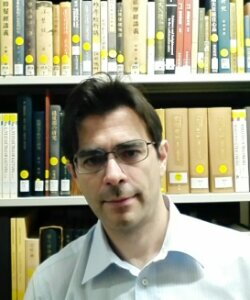
Brian Steininger is an Associate Professor in the Department of East Asian Studies at Princeton University, where he has taught since 2013. His office is located in 213 Jones Hall, and he can be contacted at bsteinin@princeton.edu or (609) 258-1752. He teaches undergraduate courses including "Manga: Visual Culture of Modern Japan", "Japanese Literature to 1800", and "The Book in East Asia: Oracle Bones to Smartphones".
His educational background includes:
- Ph.D. in East Asian Languages & Literatures, Yale University
- B.A. in English and Asian Studies, Macalester College (MN)
Steininger's research centers on the reception of Chinese textual culture in premodern Japan through literary form, social practice, and media history. He examines how Sinitic literary traditions were reshaped in Japan during the 10th-14th centuries through practices of exchange, ritual performance, and evolving media technologies. His work spans vernacular recitation, tonal prosody, manuscript circulation, woodblock printing, and commentary traditions.
He co-organizes the Colloquium on Literacies across East Asia, a collaborative forum held alternately at Princeton and Columbia Universities that promotes comparative studies of Literary Chinese across East Asian intellectual history. His current research investigates the intermingling of manuscript and print modes in thirteenth and fourteenth-century Japanese scholarship.
His publications analyze medieval Japanese paratexts, Kamakura-period manuscript culture, and Heian-era reception of Tang poetry, collectively demonstrating how Chinese literary forms were transformed through material and procedural contexts in Japanese scholarly practice.
Scientific Awards: None mentioned in source materials.
As an educator, Steininger advises students through Princeton's Junior Seminar (EAS 300) and teaches core humanities sequences. His research has been supported by visiting appointments at Keio University, Waseda University, and the Institute for Advanced Study, reflecting institutional recognition of his scholarly contributions to premodern East Asian studies.
He actively participates in the Colloquium on Literacies across East Asia, fostering transnational academic collaboration on the history of Literary Chinese across East Asia.