معرفی
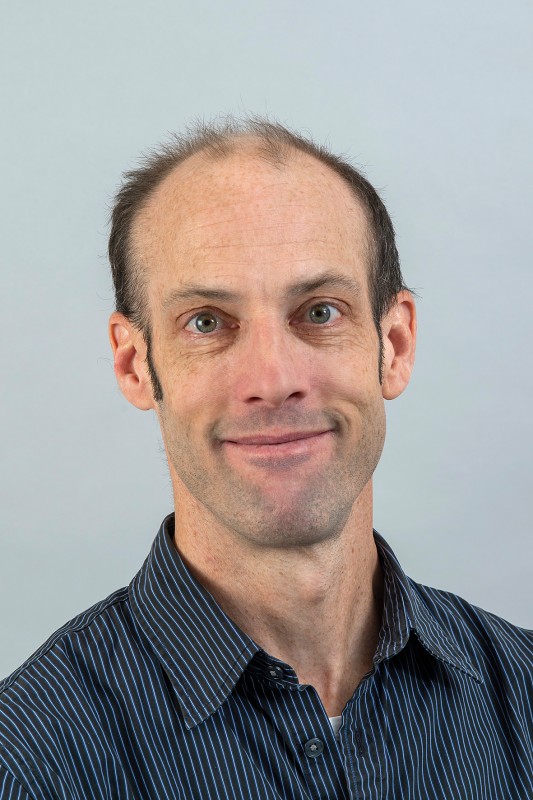
Brian Patton is a Senior Lecturer in the Department of Physics at the University of Strathclyde, Faculty of Science. His work bridges quantum physics, optics, and biomedical imaging, with a strong focus on developing novel sensing and imaging techniques using nanodiamonds. He is actively involved in research and teaching, and currently supervises PhD students in advanced microscopy and quantum sensing.
Research Interests:
- Exploiting nitrogen-vacancy centers in diamond for electric and magnetic field sensing
- Super-resolution microscopy for high-precision localization of nanodiamonds in biological tissues
- Adaptive optics to correct tissue-induced optical aberrations in deep-tissue imaging
- Development of low-cost, open-source optical microscopes using 3D printing
- Applications in neural imaging and detection of electromagnetic fields from living cells
His recent publications reflect a strong trend toward accessible, quantum-enabled imaging technologies, combining fundamental physics with practical engineering solutions. He focuses on making quantum sensing more scalable and applicable to biological systems, particularly neurons. The integration of Bayesian experiment design and widefield detection indicates a move toward intelligent, data-driven sensing platforms.
Scientific Awards:
- Tom Gibson Memorial Award (2017)
Brian Patton is actively involved in research funding and advising. He serves as Principal Investigator and Co-investigator on multiple EPSRC and NPL-funded projects, including 'Enhanced quantum sensing by nitrogen-vacancy centres in diamond' and 'The impact of artificial light on arctic marine organisms'. He accepts PhD students and contributes to doctoral training programs. His leadership in organizing workshops such as 'Biophotonics and Biomedical Microscopy' highlights his role in fostering research collaboration.
Labs and Research Teams: He is affiliated with the NanoBioPhotonics group at the University of Strathclyde, contributing to the M4All (MultiModal Modular Microscopy for All) initiative, which promotes open-access, modular microscopy platforms. His work is highly collaborative, involving interdisciplinary teams across physics, engineering, and biomedical sciences.