معرفی
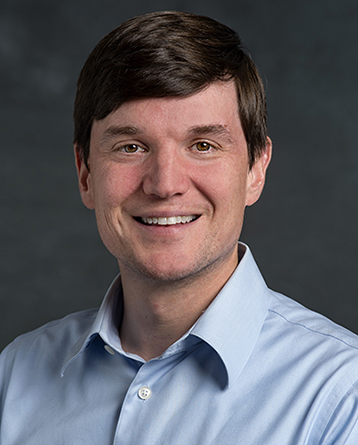
Brian J. Phelan serves as an Associate Professor and Driehaus Fellow in the Department of Economics at DePaul University, where he maintains an active research agenda focused on empirical analysis of labor market dynamics and public policy impacts. His position reflects significant scholarly contributions to the field of economics with particular emphasis on policy-relevant labor market research.
Phelan's research spans labor economics, public economics, health economics, and immigration economics, with concentrated investigation into how technological change, immigration flows, and policy interventions reshape labor market outcomes. His work consistently examines vulnerable worker populations including low-wage employees and displaced workers, utilizing rigorous econometric methods to analyze large-scale datasets and identify causal relationships between economic shocks and individual welfare outcomes. Key recurring themes include the interplay between automation and employment, wage policy effects across skill distributions, and healthcare access implications of labor market disruptions.
Analysis of his publication trajectory reveals a sustained focus on identifying ripple effects from policy changes and technological advancements, with increasing attention to healthcare labor markets and immigration dynamics in recent years. His research demonstrates methodological sophistication through quasi-experimental designs and administrative data analysis, contributing directly to contemporary debates about inequality, job security, and social safety net effectiveness.
Scientific recognition includes:
- Driehaus Fellow
While the available documentation confirms extensive publication activity, it does not specify details of academic advising relationships or research grant funding. His collaborative work with co-authors from multiple institutions suggests active engagement in research networks, though formal mentorship structures remain undocumented in the provided materials.
No information regarding specialized research laboratories, dedicated research teams, or institutional research centers affiliated with Professor Phelan appears in the source materials. His research appears to be conducted through standard academic collaboration channels without indication of dedicated physical research infrastructure.