معرفی
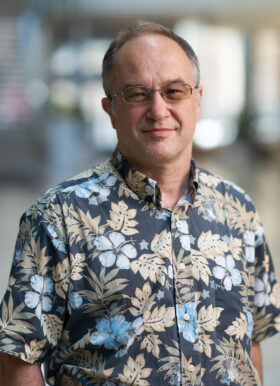
Brian D Ackley is a Professor in the Department of Molecular Biosciences at the University of Kansas, where he also serves as Co-Director of the Undergraduate Biology Program, Director of the NIH-funded Chemistry-Biology Interface Graduate Training Program (T32), and Campus Coordinator for the Kansas IDeA Network for Biomedical Research Excellence (K-INBRE). His research spans three primary areas:
- Synapse Dynamics: Investigating adhesion proteins (e.g., nidogen, LAR receptor) and calcium channels in synapse formation/elimination balance
- Neurodegenerative Disease Models: Developing early-onset C. elegans models for Alzheimer's and tauopathies, uncovering non-amyloid mechanisms in familial AD
- Host-Pathogen Evolution: Analyzing genetic adaptations in C. elegans isolates to understand immune response diversity
His work utilizes Caenorhabditis elegans as a model system with genetic mapping, fluorescent imaging, and collaborative biochemical approaches. Publications demonstrate interdisciplinary focus across Neuroscience, Molecular Genetics, and Developmental Biology. Teaching includes advanced neurobiology courses and research mentorship for trainees at all levels.
Education:
- PhD in Neuroscience, Northwestern University (2001)
- B.A. in Chemistry and Psychology, Virginia Tech (1994)
- Postdoctoral Training at University of Illinois Chicago and UC Santa Cruz
Research Highlights:
- Discovered calcium channel's role in suppressing synaptic overgrowth from adhesion protein loss
- Elucidated Flamingo receptor's non-autonomous regulation of inhibitory neuron synapses
- Developed first C. elegans models showing age-dependent synaptic degeneration
- Collaborated with Wolfe and Gamblin labs to challenge amyloid hypothesis in Alzheimer's
Technical Expertise: Genetic manipulation, fluorescent protein imaging, transcriptional profiling, and cross-species comparative analysis.