معرفی
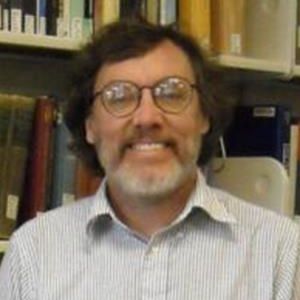
Brian Clark is an Assistant Professor at the University of Maryland, specializing in particle astrophysics with a focus on high-energy neutrino astronomy. His research involves the IceCube Neutrino Observatory, the Askaryan Radio Array (ARA), and the Radio Neutrino Observatory in Greenland (RNO-G). He holds affiliations with the Joint Space-Science Institute and collaborates on projects like IceCube Diffuse Neutrino Group and ARA analysis coordination.
Education: PhD from The Ohio State University (2019), NSF Graduate Research Fellow. Postdoctoral work at Michigan State University as an NSF Astronomy and Astrophysics Fellow. His experimental work spans data analysis, simulation, and detector development for neutrino detection techniques.
Research emphasizes radio detection of ultra-high-energy neutrinos (>10 PeV), cosmic ray studies, and next-generation observatory design. Key projects include IceCube-Gen2 and RNO-G, focusing on improving sensitivity to astrophysical neutrinos and understanding cosmic accelerators.
Recent work includes analyzing seasonal variations in atmospheric neutrino flux, optimizing RNO-G trigger algorithms, and exploring sterile neutrino parameters with IceCube data. His contributions advance radio and optical neutrino detection technologies in polar environments.
Labs/Teams: Co-convener of IceCube Diffuse Neutrino Group, analysis co-coordinator for ARA. Involved in interdisciplinary efforts like the IceTop Enhancement and firn ice characterization for RNO-G.