معرفی
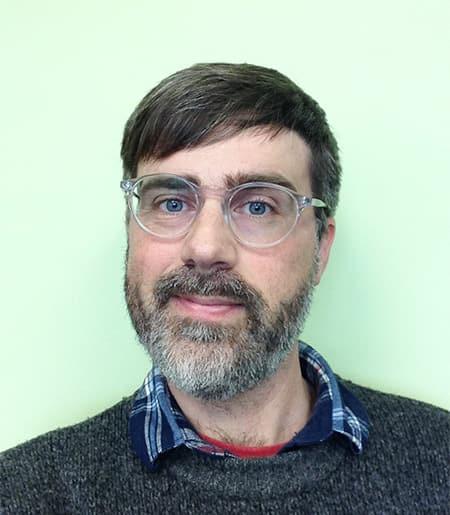
Brian A. Counterman is an Associate Professor in the Department of Biological Sciences at Auburn University, where he conducts research at the intersection of genomics, evolution, and developmental biology. His work focuses on understanding the genetic and developmental mechanisms underlying adaptation and speciation, particularly in butterfly wing patterns.
Education:
- Postdoctoral Researcher – Genetics, North Carolina State University (2007–2010)
- Ph.D. – Biology, Duke University (2007)
- B.S. – Ecology and Evolution, University of California, Santa Barbara (2000)
Dr. Counterman's research integrates genomics, developmental biology, and evolutionary ecology to study how novel traits and species arise. His lab primarily investigates Heliconius and Zerene cesonia butterflies, leveraging their diverse wing patterns and genomic tractability. His work explores topics such as mimicry, phenotypic plasticity, enhancer evolution, and the genomic architecture of adaptation. He teaches undergraduate and graduate courses in genetics and human genetics, emphasizing molecular and evolutionary principles.
His recent publications reveal a strong focus on the genetic basis of wing pattern evolution, with studies appearing in top journals like Science, Nature Ecology & Evolution, and PNAS. Themes across his work include the role of gene regulation, structural variation, introgression, and developmental constraints in shaping adaptive phenotypes. His development of the R package patternize highlights his contribution to open science and quantitative tools for morphological analysis.
Dr. Counterman has not been mentioned as receiving specific scientific awards in the provided text.
He advises students in evolutionary genetics and genomics, though specific names are not listed. His lab likely supports graduate and undergraduate researchers involved in genomic and developmental studies of butterflies. He has secured research funding through collaborative and independent grants that support genome sequencing, experimental evolution, and developmental analyses. His lab is located in Funchess Hall at Auburn University, equipped for molecular and genomic work.
His research team collaborates widely with international experts in butterfly genetics, including researchers from Duke, UC Santa Barbara, and institutions in South America and Europe. The lab combines wet-lab techniques with bioinformatics to address fundamental questions in evolutionary biology.