معرفی
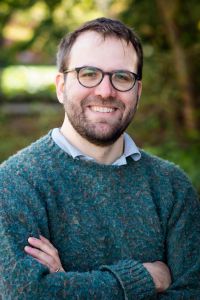
Brent Dawson is Assistant Professor of English at the University of Oregon, where he specializes in early modern literature and culture. His research explores the philosophical and political dimensions of embodiment, materialism, and human equality in the Renaissance period.
- University: University of Oregon
- School: College of Arts and Sciences
- Department: Department of English
- Academic Rank: Assistant Professor
His work focuses on how early modern conceptions of the body as shared, base matter created a radical discourse of equality that challenged emerging hierarchies of race, religion, and class. He examines literary and philosophical texts from the sixteenth and seventeenth centuries to trace a counter-history of equality rooted in bodily commonality—what he calls 'low equality'—that predates and complicates Enlightenment liberalism.
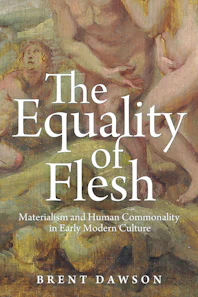
Dawson's scholarship appears in leading journals such as ELH, New Literary History, and Renaissance Drama. His recent book, The Equality of Flesh: Materialism and Human Commonality in Early Modern Culture (Cornell University Press, 2024), offers a compelling reinterpretation of canonical authors like Spenser, Shakespeare, Milton, and Cavendish, while also recovering radical voices such as Gerrard Winstanley and Margaret Cavendish. The book demonstrates how materialist understandings of human sameness were gradually displaced by racialized pseudoscience in the Enlightenment.
Dawson’s publications reveal a sustained engagement with themes of embodiment, political resistance, utopian thought, and the historical construction of race. His interdisciplinary approach bridges literary studies, intellectual history, and critical theory, contributing to ongoing debates about the origins of modern racism and the forgotten traditions of human commonality.
- Early Modern Literature
- Materialism
- Human Equality
- Race and Racism
- Political Theory
- Colonialism
Brent Dawson has not listed any formal advisees or scientific awards in the provided information. However, as an active assistant professor, he is likely involved in mentoring graduate students and securing research grants, though specific details are not available. He is affiliated with a vibrant scholarly community in Renaissance studies and contributes to major academic conversations through his publications and book.
His work is associated with critical projects such as The Pulter Project, indicating engagement with digital humanities and collaborative scholarship. While no lab or research team is explicitly mentioned, his research likely involves archival work, textual analysis, and theoretical inquiry into the intersections of literature and philosophy in the early modern period.