معرفی
Brenna Dee Argall is a Professor in both the Department of Physical Medicine and Rehabilitation at the Feinberg School of Medicine and the McCormick School of Engineering at Northwestern University. Her interdisciplinary work bridges engineering and medical rehabilitation, focusing on developing intelligent assistive technologies that enhance human autonomy for individuals with motor impairments.
Dr. Argall's research addresses the critical paradox that as human motor impairments become more severe, the machines created to provide assistance become less accessible to operate independently. Her lab develops frameworks for incorporating robotics autonomy into physically-assistive machines to advance human independence. Key research areas include:
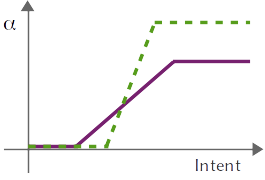
- Shared Control: Developing customizable shared control formalisms that enable users to tailor control sharing based on their abilities and preferences
- Informative Control Mode Switching: Creating systems that anticipate and perform automated mode switching to disambiguate user intent during teleoperation
- Dynamic Allocation of Autonomy: Developing frameworks for dynamic control allocation between human and robot teammates under limited communication bandwidth
- Trust- and Model-Based Control: Establishing metrics like Discrete N-Dimensional Entropy of Behavior (DNDEB) to monitor user performance deviations
Dr. Argall's research program receives significant funding from multiple prestigious sources:
- National Science Foundation (NSF/CPS-1544797)
- National Institutes of Health (NIH-R01EB019335)
- Office of Naval Research (ONR N00014-16-1-2247)
Her work includes developing open-source tools like the interface assessment package for assistive robotics, which evaluates differences in human-robot team performance across various control interfaces. Her research has produced significant contributions to understanding how rotational features of tasks contribute more to decreased performance and increased difficulty than translational features, particularly in relation to kinematic singularities.