معرفی
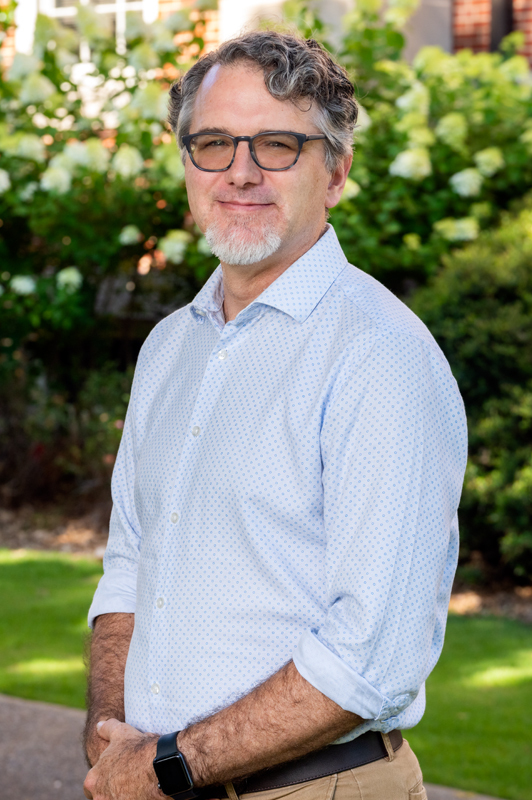
Brendan Higgins serves as an Associate Professor in the Department of Biosystems Engineering within Auburn University's Samuel Ginn College of Engineering. His research focuses on sustainable biological processes that incorporate algae and bacteria for waste remediation, water quality improvement, and production of high-value products. With funding from organizations including the USDA, NSF, and USGS, Higgins leads innovative projects addressing critical environmental challenges in agriculture and water management.
Dr. Higgins received his educational foundation from prestigious institutions, earning his B.S. in Civil Engineering from Northwestern University, followed by an M.S. in Transportation Technology & Policy and a Ph.D. in Biological Systems Engineering from the University of California-Davis. His academic journey in Davis, California, cultivated his appreciation for environmental protection and sustainability that drives his current research.
- Ph.D. Biological Systems Engineering, University of California-Davis
- M.S. Transportation Technology and Policy, University of California-Davis
- B.S. Civil Engineering, Northwestern University
Higgins' research spans multiple innovative areas including poultryponics (recycling poultry processing wastewater for crop irrigation), aquaponics (integrating fish farming with hydroponic crop production), algal cultivation on agricultural wastewaters for animal feed production, and upcycling solid wastes from poultry processing. His laboratory employs advanced analytical techniques including HPLC, LCMS, GCMS, quantitative PCR, and microbial community analysis to investigate organism interactions in biological treatment systems.
Analysis of Higgins' recent publications reveals a strong focus on sustainable waste-to-resource conversion, particularly in poultry and aquaculture industries. His work demonstrates expertise in nutrient cycling, pathogen dynamics in food production systems, and developing practical solutions for wastewater treatment that simultaneously create valuable products. The geographical focus on Southeastern US conditions reflects his commitment to regionally relevant solutions for agricultural waste management.
Higgins actively mentors graduate and undergraduate students in his laboratory, with documented success in guiding students through degree completion and research competitions. His REU (Research Experience for Undergraduates) program, funded by the National Science Foundation, provides valuable research opportunities for students interested in bioprocessing and waste valorization. Current grants support projects including poultry waste conversion, aquaponics optimization, and drinking water quality research funded by USDA, NSF, USGS, and municipal water utilities.
The Bioprocess Engineering Laboratory led by Higgins features capabilities in algae and bacteria cell culture, sterile handling (BSL2 certified), multiple chromatography techniques for metabolite analysis, ion chromatography for nutrient analysis, quantitative PCR, and microbial community analysis. The lab operates pilot-scale systems including the "poultryponics" system for growing lettuce with treated poultry wastewater and one of the largest university-based aquaponics facilities in the country, which supplies produce to campus dining services and local markets.