معرفی
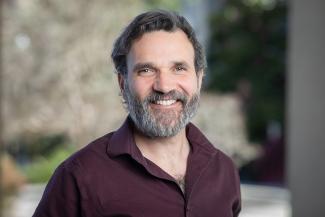
Brandon Wiggins is an Assistant Professor of Physics at Southern Utah University (SUU) within the College of Science and Engineering. He holds a Ph.D. in Physics and Astronomy from Brigham Young University and has returned to SUU to pursue his lifelong goal of teaching and research. Known for his innovative teaching style, Wiggins has earned a 4.9/5.0 rating on RateMyProfessor.com and SUU’s Outstanding Educator Award. His research focuses on computational/theoretical astrophysics, including supernovae, neutron star mergers, black hole accretion, and astrochemistry. He collaborates with Los Alamos National Laboratory’s Center for Theoretical Astrophysics, simulating cosmic phenomena such as galaxy formation and early universe water creation.
Education: B.S. in Pure Mathematics (SUU, 2012), Ph.D. in Physics and Astronomy (BYU, 2016). Research affiliations include Los Alamos National Laboratory as a Guest Scientist.
Research Interests: Wiggins explores the universe’s most energetic events—supernovae, compact object mergers, and black hole dynamics—using supercomputers. His work bridges astrophysical theory with practical simulations, aiming to uncover cosmic mysteries like water’s origins and stellar explosions. Recent projects include studying first-generation supernovae’s role in molecular formation and developing tools like the SuperNovae Analysis aPplication (SNAP).
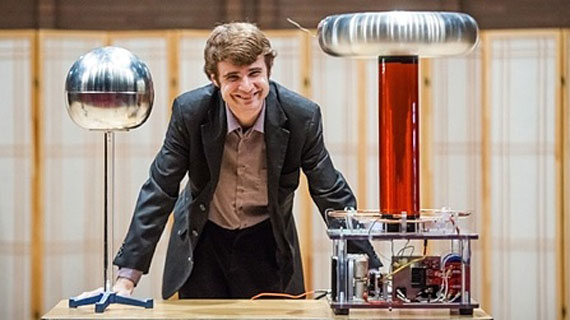
Teaching: Wiggins teaches physics courses ranging from foundational (PHYS 2010/2020) to advanced (PHYS 2210/2220), emphasizing hands-on demonstrations to engage students. Colleagues and students praise his ability to make complex topics accessible and captivating.
Awards: Beyond academic accolades, Wiggins values mentoring students, citing their success as his greatest reward. His outreach efforts include community science initiatives and authoring a science book during high school.
Labs/Teams: Active contributor to the Center for Theoretical Astrophysics at Los Alamos, collaborating with scientists like Chris Fryer on cutting-edge projects. His research often involves interdisciplinary approaches combining computational modeling with observational astrophysics.