معرفی
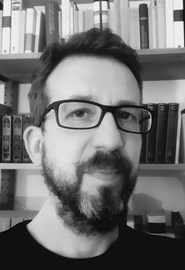
Bram Vaassen serves as Associate Professor in the Department of Historical, Philosophical and Religious Studies at Umeå University, specializing in metaphysics, philosophy of mind, and philosophy of science with concentrated expertise in causation and explanation. His research bridges theoretical metaphysics with practical applications in artificial intelligence ethics and cognitive science.
His academic foundation includes a 2019 PhD from Umeå University where his dissertation defended the compatibility of standard dualism with mental causation under physical causal closure. This early work established his trajectory in resolving metaphysical tensions through rigorous causal analysis.
Vaassen's research program systematically examines how scientifically robust conceptions of causation inform debates across disciplines. Recent work explores mental causation for dualists, absence in causal structures, and AI opacity's threat to autonomy—revealing consistent methodology: deploying metaphysical precision to solve concrete problems in philosophy of mind and technology ethics. His scholarship demonstrates particular strength in reconciling seemingly incompatible frameworks through causal sensitivity analysis.
Analysis of his 2016-2024 publications reveals progressive deepening of causal theory with increasing engagement with AI ethics. Early work focused on mental causation within dualist frameworks, evolving toward broader applications in explanation theory and technological accountability. The 2022-2024 publications show pronounced emphasis on AI-related causal transparency issues while maintaining metaphysical rigor.
His competitive research funding includes:
- Principal investigator for Swedish Research Council international postdoc grant (2021-2024) funding 'Causation, Correlation and Sensitivity' project
- Postdoctoral researcher on DFG-funded 'Determinism, Control, and the Consequence Argument' project at University of Cologne (2020-2021)
Vaassen's research leadership manifests through independent project direction and international collaboration, notably his two-year Rutgers University residency during the Swedish Research Council project. While current advising activities aren't explicitly documented, his associate professor role inherently involves graduate supervision within Umeå's philosophy program. His work connects with broader initiatives through HumLab (Umeå's digital humanities laboratory) where he previously held faculty position before transitioning to his current departmental affiliation in 2024.