معرفی
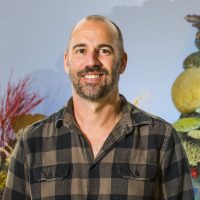
Bing Lin is a Research Fellow and conservation scientist at the University of Sydney's Faculty of Science, working within the Thriving Oceans Research Hub under Professor Josh Cinner. His interdisciplinary research integrates conservation ecology, behavioral science, and environmental policy with coral reef systems as central case studies.
Education:
- Ph.D. in Science, Technology, and Environmental Policy, Princeton University, 2024
- M.A. in Public Affairs, Princeton University
- A.B. in Ecology and Evolutionary Biology (cum laude), Princeton University, 2016
Research Interests: Lin investigates socio-ecological dimensions of conservation through behavioral drivers and policy levers. His work spans coral reef aquarium trade dynamics, marine policy compliance mechanisms, nature-based tourism impacts, and cultural-economic decision-making frameworks. He employs unconventional data types and transdisciplinary methods to develop equitable conservation solutions that address both ecological resilience and human dimensions in the Anthropocene.
Publications: Lin's 2024 Inside Climate News articles reveal consistent themes connecting biodiversity conservation with climate adaptation challenges. His work bridges scientific research and public discourse through analyses of marine protected areas, hiking trail ecosystems, invasive species dynamics, and wildfire management, consistently emphasizing policy relevance and human-nature interconnections.
Awards and Honors:
- Emerging League Fellow, International League of Conservation Photographers (2023-2025)
- Mass Media Fellow, American Association for the Advancement of Science (2024)
- Diversity Fellow, National Association of Science Writers (2024)
- Summer Fellow, Inside Climate News (2024)
- Semester Fellow, Inside Climate News (2024)
Lin actively bridges science and storytelling as an International League of Conservation Photographers Fellow, with visual work featured in National Geographic and Scientific American. He collaborates with Princeton University researchers on scuba diving tourism impacts and contributes to policy documents for the UN Food and Agriculture Organization and World Bank, demonstrating applied conservation science in global contexts.