معرفی
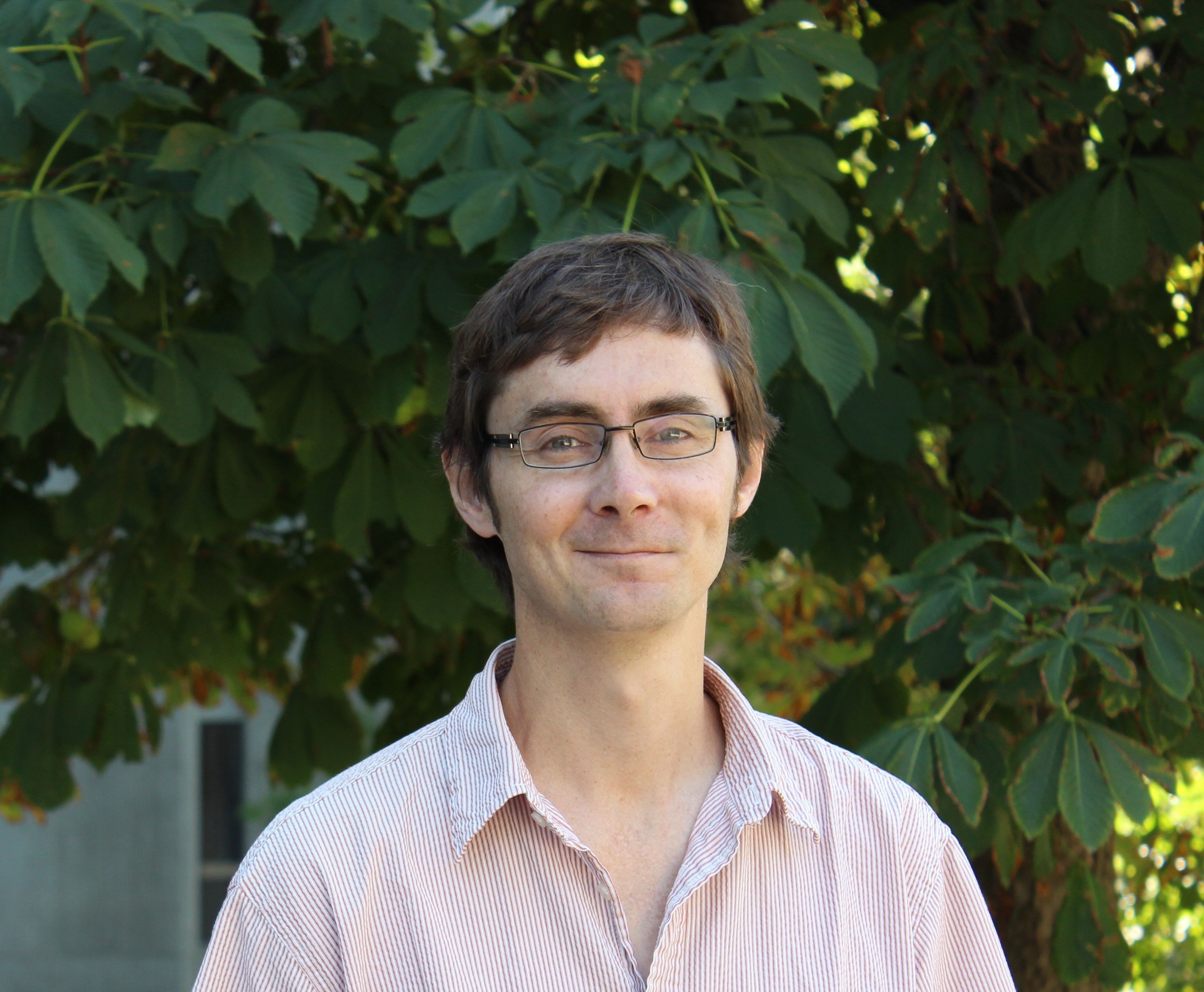
Bertrand Guenin is a Professor in the Department of Combinatorics and Optimization at the University of Waterloo's Faculty of Mathematics. He holds academic appointments as Associate Dean for Graduate Studies (2021–2024) and previously served as Associate Chair for Undergraduate Studies (2010–2016). His research focuses on combinatorial optimization, matroid theory, and graph theory, with notable contributions to dyadic programming, ideal clutters, and even-cycle/even-cut matroids.
Education:
- PhD in Algorithms, Combinatorics, and Optimization from Carnegie Mellon University (supervised by Gérard Cornuéjols).
- Postdoctoral positions at Georgia Tech (School of Mathematics) and the Fields Institute.
- Master's from École Polytechnique Fédérale de Lausanne (EPFL).
Research Interests: Guenin explores advanced topics like dyadic solutions in optimization, structural properties of matroids, and the Cycling Conjecture. His work bridges combinatorial optimization with foundational graph theory, addressing problems such as the Fulkerson Prize-winning contributions to weakly bipartite graphs and ideal clutters. Key areas include algorithm design for matroid lifts, parity conditions in signed graphs, and excluded minor characterizations.
Publications: His work emphasizes theoretical advancements in optimization and matroid theory, with recent focus on dyadic linear programming and recognition algorithms for matroids. Earlier contributions include foundational results on even-cut and even-cycle matroids.
Awards:
- Fulkerson Prize
- Tucker Prize
- SIAM Outstanding Paper Prize
- INFORMS Nicholson Prize
Advising & Grants: Active in mentoring over 20 graduate and undergraduate students. Current openings for master's and PhD students. Leads research projects on optimization theory, matroid structure, and algorithmic graph theory.
Labs/Teams: Collaborates widely, with co-authors including Gérard Cornuéjols, Levent Tunçel, and students like Ahmad Abdi and Cheolwon Heo. His work often intersects with computational and theoretical challenges in discrete mathematics.