معرفی
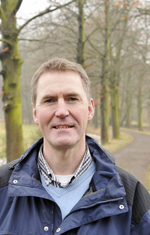
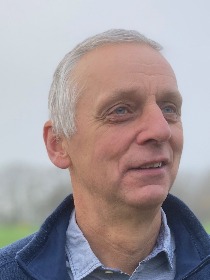
Prof. Bert Groenewoudt is a Professor of Ecological Landscape History at the Faculty of Arts, University of Groningen, and a senior landscape archaeologist at the Cultural Heritage Agency of the Netherlands (RCE). He specializes in long-term landscape dynamics, medieval deforestation, and the intersection of human activity with environmental change. His research addresses topics such as historical woodland distribution, ancient transport routes, and the application of archaeological data to modern environmental challenges like reforestation.
Education: Studied Prehistory at the University of Amsterdam. Professional roles include serving on the Advisory Board of the International Association of Landscape Archaeology (IALA) and the Nature Advisory Board of the Prins Bernhard Cultuurfonds. Guest lectures at institutions including the Universities of Groningen, Utrecht, and Charles University in Prague.
Research focuses on ecological landscape history, man-landscape interactions, and integrating historical data with modern sustainability goals. Key projects include modeling medieval woodland patterns using place names and analyzing ancient route networks. His work contributes to UN Sustainable Development Goals related to climate action and biodiversity.
Publications emphasize interdisciplinary methods, such as combining archaeological excavation data with palynological and spatial analysis. Recent articles explore early medieval cult sites, tree-trunk wells as deforestation proxies, and reforestation strategies informed by historical land use.
Advising and grants include supervising projects on archaeological heritage management and contributing to the National Archaeological Research Agenda (NOaA 2.0). Active in conferences like RURALIA and LAC, and collaborates internationally on landscape archaeology initiatives.
Labs/Teams: Leads research at the Research Centre Arts in Society (AiS) and collaborates with the RCE on heritage management tools. Engages in public outreach through publications in Rural Landscapes and Journal of Landscape Ecology.