معرفی
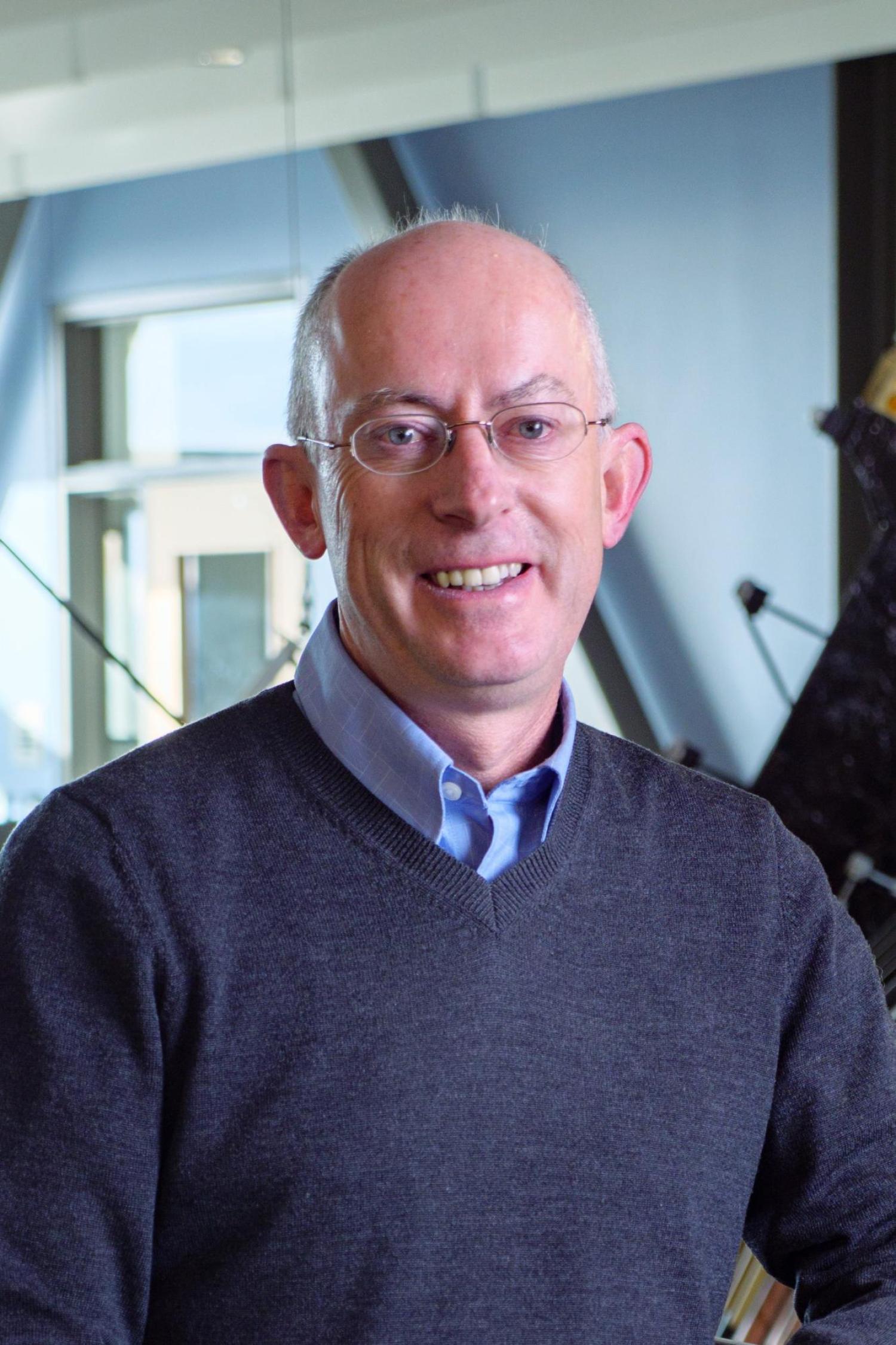
Bernard Parent is an Associate Professor in the Department of Aerospace and Mechanical Engineering at the University of Arizona, where he has been a faculty member since August 2019. He is a member of the Graduate Faculty and actively contributes to research in computational fluid dynamics, plasma dynamics, and hypersonic flows. Prior to joining the University of Arizona, he held research positions at Princeton University, Tokyo Institute of Technology, and Pusan National University.
- PhD in Aerospace Science and Engineering, University of Toronto, 2002
- MS in Aerospace Science and Engineering, University of Toronto, 1998
- BS in Mechanical Engineering, McGill University, 1996
Dr. Parent's research focuses on computational modeling of high-speed reacting flows, plasma-assisted combustion, and magnetohydrodynamics for aerospace applications. His work spans hypersonic flows, plasma flow control, reactive flows, and computational aerothermodynamics. He has developed advanced numerical schemes such as positivity-preserving methods and high-resolution flux-splitting algorithms for gas dynamics and plasma simulations.
His recent publications (2021–2025) reveal a strong trend toward MHD-based aerocapture, plasma sheath modeling, and electron/ion transport in hypersonic boundary layers. Key themes include electrodeless MHD actuators, plasma-assisted lift augmentation, and thermodynamically consistent electron energy modeling, positioning him at the forefront of next-generation entry, descent, and landing (EDL) technologies.
Scientific awards include:
- AIAA Associate Fellow (2023)
- Editor's Pick Award, Physics of Fluids (2022)
- Best Paper of the Year Award, AIAA (2021)
Dr. Parent has advised numerous researchers and contributed to major AIAA conferences and journals such as Journal of Computational Physics, Physics of Fluids, and AIAA Journal. His work is supported by ongoing computational research grants focused on plasma-enhanced aerospace systems. He leads a research group focused on developing high-fidelity CFD tools for plasma and hypersonic applications, with collaborations involving NASA and other institutions.
His laboratory specializes in numerical simulation of plasma discharges, turbulence, and combustion in scramjet engines, utilizing large-eddy simulation (LES) and detailed plasma chemistry models. The team develops and validates advanced algorithms for stability, positivity, and convergence in extreme flow conditions.