معرفی
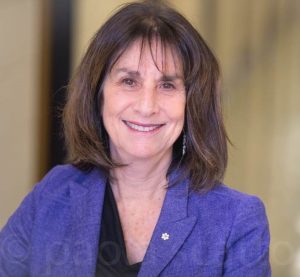
Dr. Ashley Chung-Fat-Yim serves as Assistant Professor in the Department of Psychology within the Faculty of Arts at the University of Manitoba, joining in January 2025 after a Research Assistant Professor role at Northwestern University. Her research investigates bilingualism's cognitive consequences through executive function, emotion perception, and narrative transportation studies using EEG, mouse tracking, and behavioral methodologies.
Education:
- PhD in Psychology, York University (2020)
- MA in Psychology, York University (2013)
- BSc in Psychology, York University (2010)
Her research program examines how multilingual experience reshapes cognitive processes across diverse populations including heritage bilinguals and bicultural individuals. Key investigations explore neural correlates of attention, cross-cultural emotion perception, and mentalizing abilities, employing interdisciplinary approaches spanning cognitive psychology, linguistics, and neuroscience. She emphasizes real-world implications of bilingual advantages in cognitive aging and social cognition.
Analysis of her 2022-2025 publications reveals consistent focus on bilingualism's impact on attentional control and emotion processing. Work demonstrates methodological diversity through EEG neural mapping and behavioral paradigms, with strong collaborative networks at Northwestern, York, and Iowa State Universities. Recurring themes include cultural immersion effects on multisensory integration and cognitive flexibility benefits in multilingual adults.
Dr. Chung-Fat-Yim actively mentors undergraduate researchers through the MIND Lab, supervising Honours thesis students and research assistants. She currently accepts Master's and PhD candidates, with recent projects examining bilingual children's social cognition and language inhibition effects on executive functioning. Collaborators include Dr. Viorica Marian (Northwestern), Dr. Ellen Bialystok (York), and Dr. John G. Grundy (Iowa State).
The Multilingualism, Innovation, & Neural Development (MIND) Lab provides experimental infrastructure for studying language-cognition interactions. Current projects involve undergraduate researchers in testing audio-visual emotion perception and narrative transportation paradigms, with emphasis on recruiting diverse bilingual populations across Winnipeg communities.