معرفی
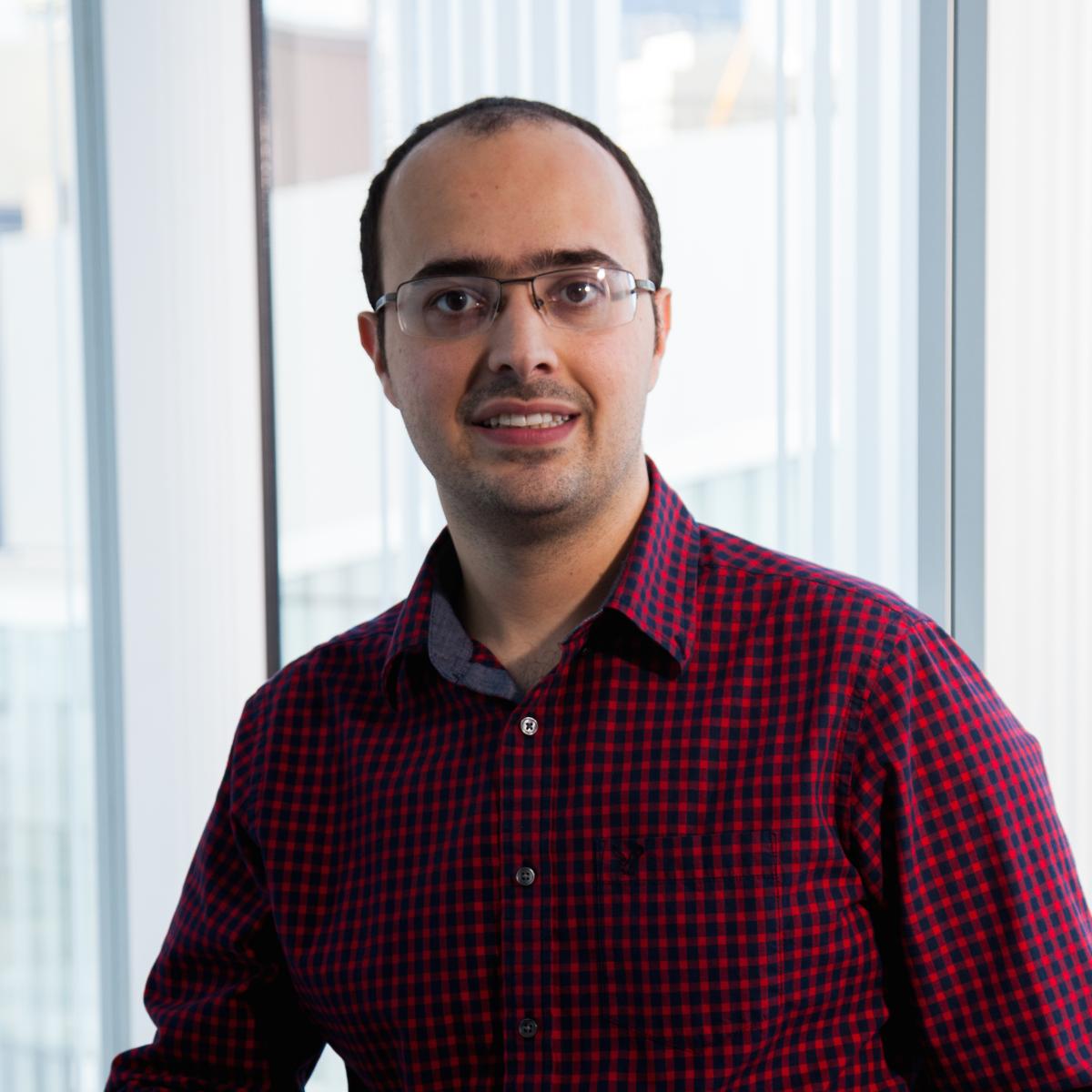
Aryan Mokhtari is an Associate Professor in the Department of Electrical and Computer Engineering at The University of Texas at Austin, holding the Jack Kilby/Texas Instruments Endowed Faculty Fellowship and William W. Hagerty Fellowship. He serves as a Core Member of two NSF AI Institutes: the Institute for Foundations of Machine Learning (IFML) and the Institute for Future Edge Networks & Distributed Intelligence (AI-EDGE).
His academic journey includes a B.Sc. in Electrical Engineering from Sharif University of Technology (2011), followed by advanced degrees from the University of Pennsylvania: M.Sc. (2014), Ph.D. in Electrical and Systems Engineering (2017), and A.M. in Statistics from the Wharton School (2017). Post-PhD, he was a Research Fellow at UC Berkeley's Simons Institute and a Postdoctoral Associate at MIT's Laboratory for Information and Decision Systems.
Professor Mokhtari's research pioneers optimization theory for machine learning, with dual focus on algorithmic innovation (convex/nonconvex, minimax, and bilevel methods) and AI foundations (multi-task learning, in-context learning, machine unlearning). His work provides theoretical guarantees for large-scale data science problems while addressing practical constraints in modern AI systems.
His scientific achievements are recognized through:
- Penn’s Joseph and Rosaline Wolf Award for Best Doctoral Dissertation
- Simons-Berkeley Fellowship
- NSF CAREER Award (CCF-2338846)
- Google Research Scholar Award
- ARO Early Career Program Award
Current research is supported by multiple high-impact grants including NSF CAREER, NSF Grants (CCF-2007668, ECCS-2127697), ARO ECP, Google Research, and leadership roles in NSF AI Institutes. This funding enables exploration of adaptive optimization frameworks and next-generation learning paradigms.
Students benefit from his affiliation with UT Austin's Machine Learning Laboratory and NSF AI Institutes, gaining access to collaborative networks spanning academia, industry, and government labs. His group emphasizes mathematical rigor while tackling deployment challenges in edge computing and distributed intelligence through the AI-EDGE Institute.