Ariel Sánchez
پژوهشگر · Observational Cosmology
Max Planck Institute for Extraterrestrial Physicsمعرفی
Dr. Ariel Sánchez is a cosmologist and science staff member at the Max Planck Institute for Extraterrestrial Physics (MPE) in Garching, Germany, where he works in the Optical and Interpretative Astronomy (OPINAS) group. He also teaches the course 'Formation and Evolution of Cosmic Structures' for the Masters in Physics and Astrophysics at Ludwig Maximilians University (LMU).
His educational background includes a PhD in Astronomy from the Faculty of Mathematics, Astronomy and Physics (FaMAF) at the National University of Cordoba (UNC), Argentina, where he worked at the Institute of Theoretical and Experimental Astronomy (IATE) with a doctoral fellowship from CONICET. He completed his Habilitation at Ludwig Maximilians University (LMU) in 2021.
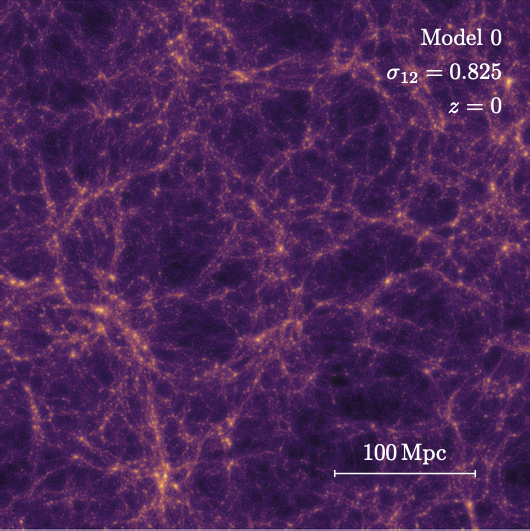
Dr. Sánchez's research focuses on observational cosmology and the analysis of the large-scale structure of the Universe. His work combines theoretical frameworks with precise observations, particularly in analyzing baryonic acoustic oscillations (BAO) and redshift-space distortions (RSD) to obtain robust cosmological constraints. His research has significant implications for understanding dark energy and testing potential deviations from Einstein's theory of General Relativity.
He has been involved in major cosmological projects including the Baryon Oscillation Spectroscopic Survey (BOSS), the extended Baryon Oscillation Spectroscopic Survey (eBOSS), and is currently working on the Hobby-Eberly Telescope Dark Energy Experiment (HETDEX), the Dark Energy Spectroscopic Instrument (DESI), and the Euclid mission. His work utilizes advanced statistical tools to extract cosmological information from galaxy clustering patterns, with recent emphasis on anisotropic clustering measurements and higher-order statistics to complement traditional two-point analyses.
Dr. Sánchez is actively engaged in the next generation of galaxy redshift surveys that will provide unprecedented measurements of large-scale galaxy clustering. His research contributes to addressing current tensions in cosmological parameters, particularly regarding the expansion rate of the Universe and the amplitude of density fluctuations, which could potentially signal limitations in the standard ΛCDM cosmological model.