معرفی
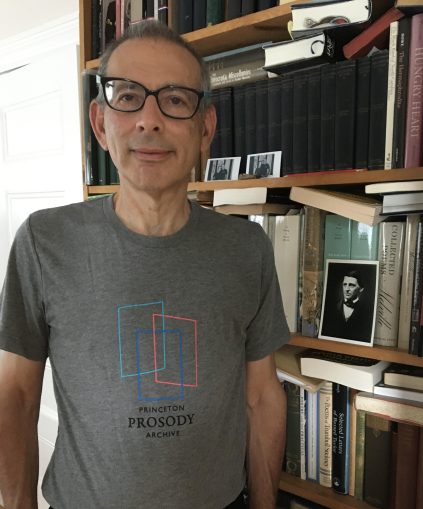
Ari Friedlander is an Associate Professor of English at the University of Mississippi, affiliated with the Department of English in the College of Liberal Arts. He holds a Ph.D. in English Literature from the University of Michigan-Ann Arbor (2011). His research focuses on Early Modern English Literature and Culture, with specializations in Histories of Gender/Sexuality/Social Status, Queer Theory, Queer Historiography, and Disability Studies. Friedlander is currently completing a book manuscript titled Rogue Sexuality: The Erotics of Social Status in Early Modern England and co-editing a special issue of JEMCS on 'Desiring History and Historicizing Desire.' He has taught courses on Shakespeare, Renaissance literature, critical theory, and gender/sexuality studies.
Education:
- Ph.D. in English Literature, University of Michigan-Ann Arbor, 2011
Research Interests: Friedlander’s work interrogates intersections of sexuality, social hierarchy, and embodiment in Early Modern texts. He employs queer and disability studies frameworks to analyze how marginalized identities were constructed and contested. His recent projects explore eroticism as a tool for subverting social norms and reimagining historical narratives.
Publications: Friedlander’s scholarship bridges literary analysis with interdisciplinary historiography, particularly in examining how desire shapes—and is shaped by—historical contexts. His work appears in SEL: Studies in English Literature and the forthcoming JEMCS special issue.
Awards:
- 2015-2016 Mellon-Volkswagen Fellowship at Freie Universität Berlin
Teaching: Friedlander has instructed courses ranging from undergraduate surveys (e.g., British Literature to the 18th Century) to advanced graduate seminars in Early Modern Literature and Critical Theory. His pedagogical approach emphasizes close reading and theoretical engagement with early modern texts.
Collaborations: He co-organized a conference at the Henry E. Huntington Library on 'Desiring History and Historicizing Desire,' reflecting his commitment to fostering interdisciplinary dialogue in early modern studies.