معرفی
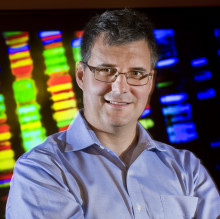
Anton Bankevich serves as an Assistant Professor in the Department of Computer Science and Engineering within the College of Engineering at The Pennsylvania State University, where he also holds an appointment with the Huck Institutes of the Life Sciences. His research bridges computational methods development with biological applications, focusing on algorithmic solutions for complex genomic challenges.
Dr. Bankevich's research specializes in developing advanced algorithms for genome assembly, particularly addressing challenges in immunoglobulin loci assembly, metagenomics, and complex repeat regions. His work on multiplex de Bruijn graphs, synthetic long-read assembly, and error correction has significantly advanced the field of computational genomics. Key contributions include the development of tools like CloseRead for immunoglobulin assembly validation, ORFograph for protein discovery in metagenomes, and mosaicFlye for resolving mosaic repeats.
His publication record shows consistent high-impact output with 19 research outputs since 2012, including recent Nature and Nature Biotechnology papers. His work demonstrates strong interdisciplinary collaboration, particularly evident in the 2025 ape genome sequencing project involving over 100 co-authors. The research exhibits clear trends toward increasingly sophisticated assembly methods for complex genomic regions and immunogenomics applications.
With an h-index of 10 and 21,167 total citations, his work has substantial academic impact. His publications have been widely disseminated through 41 news outlets, 474+ X posts, 2 Wikipedia references, and 254+ Bluesky mentions, indicating significant scientific and public engagement.
Dr. Bankevich's work contributes to UN Sustainable Development Goals through advances in genomic technologies that support biodiversity conservation and health research. His fingerprint analysis reveals core expertise in genome assembly (71%), metagenomics (61%), and next-generation sequencing (48%), with significant contributions to immunoglobulin locus analysis and synthetic long-read technologies.