معرفی
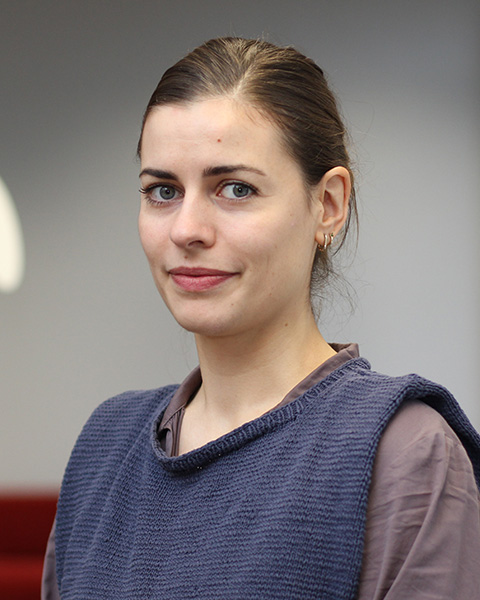
Dr. Anja Schade is a Research Associate at the University of Hildesheim's Institute of Social Sciences, Department of Political Science, specializing in political didactics, political education, and migration policy. Funded by the Female Professors Programme III, she serves as the Contact Person for Erasmus+ in the Department of Political Science and contributes to the Migration Policy Research Group through collaborative projects.
Her academic background includes a PhD in Political Science from the Free University of Berlin (awarded magna cum laude in 2021) with a dissertation on 'The more natural place to be? The exile of the ANC in the GDR – a transnational entanglement story of solidarity during the Cold War.' She previously earned her degree in Political Science with 'very good' honors from the same institution.
Dr. Schade's research spans multiple interconnected domains: historical-political education focusing on disenfranchisement during the Nazi era and German-German contemporary history; migration policy with emphasis on refugee integration and digital solutions; oral history methodologies applied to German and South African contemporary history; and political education concerning democracy and human rights. Her work often bridges historical analysis with contemporary policy challenges, particularly regarding migration and digitalization.
Her recent publications reveal a strong trend toward interdisciplinary migration research combining historical perspective with practical policy solutions. She has co-authored significant works on algorithm-based refugee distribution systems (Match'In project), municipal refugee accommodation challenges, and the intersection of digital tools with political education. Her scholarship consistently connects academic research with practical implementation in educational and policy contexts.
As an educator, Dr. Schade has developed digital learning modules for GDR history education (www.lernen-ddr.de), created seminar materials on environmental movements in East and West Germany, and conducted workshops on historical topics. She collaborates extensively with institutions including the Rosa Luxemburg Foundation, the Leipzig Citizens' Archive, and the Hanover Workshop School, demonstrating her commitment to knowledge transfer between academia and civil society.
Her international research activities include multiple stays in South Africa for archival work and interviews related to German-South African solidarity movements during the Cold War, reflecting her transnational approach to historical and contemporary political education.