معرفی
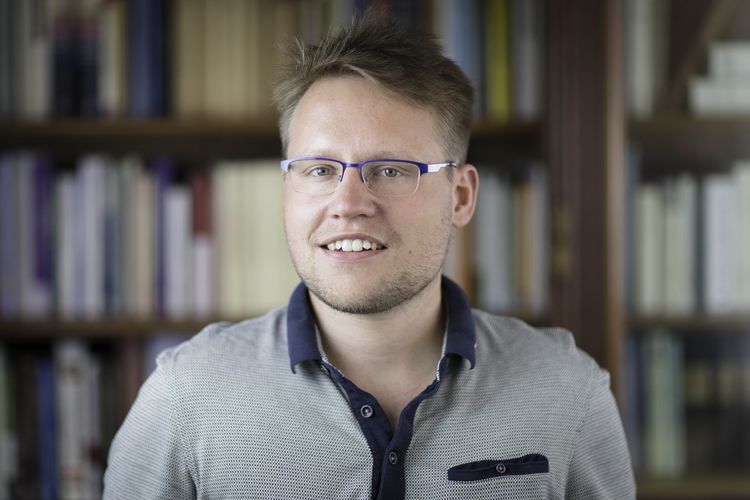
Angelika Berlejung is Professor of Old Testament Studies with a focus on the History and Religious History of Israel and its Environment at the Faculty of Theology of the University of Leipzig, Germany, a position she has held since November 2007. She also serves as Co-Director of multiple archaeological projects including the excavation at Tell el-Badawija/Hannathon (2023-2030), Ashdod-Yam, and Qubur al-Walaydah, and as Co-Director of the Minerva Center for Research on Israel and Aram in Biblical Times with Professor Aren Maeir of Bar Ilan University.
Dr. Berlejung received her education at the Universities of Heidelberg and Munich, studying Protestant Theology (1980-1984) followed by Assyriology and Semitic Studies (1985-1988). She completed her doctorate in Heidelberg in 1997 under the supervision of Prof. Dr. Manfred Weippert and Prof. Dr. Hans-Peter Mathys, with the Assyriological portion supervised by Prof. Dr. Karlheinz Deller. Her doctoral work was recognized with the Ruprecht-Karls-Prize of the University of Heidelberg for outstanding scientific achievements.
Professor Berlejung's research spans multiple interconnected fields within biblical and ancient Near Eastern studies. Her work focuses on the material culture of ancient Israel and its environment, with particular attention to votive offerings, amulets, and ritual objects as sources for social and religious history. She has pioneered research on West Semitic text amulets from the first millennium BCE to the rise of Islam, examining the intersection of materiality and scribal practices. Her archaeological work at various sites in Israel provides crucial context for understanding the historical and cultural settings of biblical texts. Berlejung also contributes significantly to gender studies in ancient contexts, particularly examining representations of women and foreignness in biblical literature.
Her recent publications reveal a consistent focus on the material dimensions of ancient religious practice, with increasing attention to the intersection of text and material culture. The trend in her work shows movement from textual analysis of biblical literature toward interdisciplinary approaches that integrate archaeological evidence, material culture studies, and textual analysis to reconstruct ancient religious practices and social dynamics.
- Ruprecht-Karls-Prize of the University of Heidelberg for outstanding scientific achievements in her dissertation (1998)
- Opus Magnum Project "Weihegaben" funded by the Volkswagen Foundation (2021)
Professor Berlejung has been principal investigator or co-investigator on numerous significant research grants, including the GIF project "Between Materiality and Scribal Magic" (2018-present), the DFG-funded SFB 586 project on "Space and Mobility in Syro-Palestine during the Neo-Assyrian and Neo-Babylonian Empires" (2009-2012), and the Volkswagen Foundation's Opus Magnum project on votive offerings from Palestine-Israel as sources for social and religious history. She has also served as co-applicant and co-supervisor for the Graduate College "Religious Nonconformism and Cultural Dynamics" in Leipzig. Her international collaborations include the Minerva Center RIAB (since 2015) and the excavation project at Tell el-Badawija/Hannathon with Ben Gurion University of Negev.
Berlejung leads the research unit "Geschichte und Religion Israels und seiner Umwelt" (History and Religion of Israel and its Environment) at the University of Leipzig, which conducts interdisciplinary research combining textual analysis, archaeology, and material culture studies. She co-directs multiple excavation projects in Israel including Qubur al-Walaydah, Ashdod-Yam, and Tell el-Badawija/Hannathon. Her team also manages the "Encyclopedia of Material Culture in the Biblical World (EBW)" project, which has been ongoing since 2010, creating a comprehensive reference work on material culture related to biblical studies.