معرفی
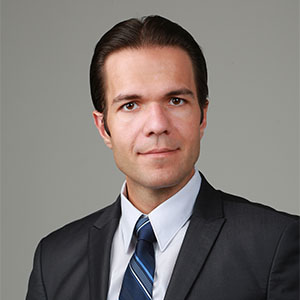
Andrey A. Popov is an Assistant Professor in the Department of Information and Computer Sciences at the University of Hawaiʻi at Mānoa, part of the College of Natural Sciences. His research lies at the intersection of computational science, data assimilation, uncertainty quantification, and machine learning, with applications to dynamical systems and aerospace navigation.
His research interests include computational science, Bayesian inverse problems, data assimilation, uncertainty quantification, theory-guided machine learning, reduced order modeling, and ensemble filtering. He develops methods that bridge theoretical rigor with practical applicability, aiming for solutions no more than one step away from real-world implementation. His work often integrates machine learning with physical models to improve state estimation and prediction in complex systems.
The recent publications (2023–2024) reflect a strong trend in advancing ensemble-based filtering techniques—particularly ensemble Kalman and particle filters—with innovations in covariance adaptation, weight optimization, and non-Gaussian modeling. There is also a growing emphasis on multifidelity and reduced-order modeling, especially using autoencoders and neural networks to handle small data regimes in chaotic systems. Applications span geophysics, aerospace (e.g., Mars entry navigation), and cislunar tracking, demonstrating interdisciplinary impact.
Scientific Awards:
- Jean-Pierre Le Cadre Best Paper Award at FUSION 2024
Dr. Popov actively mentors students and welcomes prospective graduate students to contact him via email or during office hours. While specific grant details are not provided, his publication output and conference presence suggest active external funding. He teaches courses such as ICS 141 and emphasizes algorithmic and mathematical foundations in computing.
He is involved in collaborative research with institutions like the Oden Institute and researchers including Adrian Sandu and Renato Zanetti, focusing on advanced filtering and data assimilation techniques. His group likely engages in methodological development for state estimation in high-dimensional, nonlinear systems.