معرفی
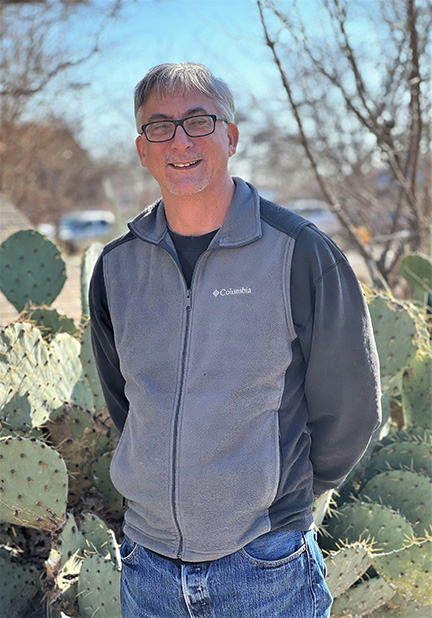
Andrew G. Hope is an Associate Professor in the Division of Biology at Kansas State University, affiliated with the College of Arts and Sciences. His research focuses on mammalian biogeography, molecular ecology, and conservation genomics, with an emphasis on understanding biodiversity responses to environmental change. He leads the Hope Lab, which integrates traditional fieldwork with genomic and stable isotope techniques to study host-parasite interactions, speciation, and conservation challenges in Arctic and Great Plains ecosystems.
Education:
- Ph.D. 2011, University of New Mexico, Biology
Research Interests:
Dr. Hope investigates mammalian host interactions across ecotones, integrating ecology and evolution to address conservation under climate change. His lab emphasizes holistic collections of mammals and parasites, leveraging museum archives for biodiversity insights. Current projects include studying Arctic biodiversity dynamics, southern flying squirrel landscape ecology, and Nepal bat biogeography. Recent work highlights conservation genomics of northern bog-lemmings and phylogeography of Great Plains species.
Grants & Awards:
- NSF DBI-ICBR Grant ($276,954) for digitizing mammal collections
- Kansas Department of Wildlife and Parks Grant ($353,760) for southern flying squirrel research
- American Society of Mammalogists Grants-In-Aid for Nepal bat studies
Labs & Collaborations:
The Hope Lab collaborates with institutions like the Museum of Southwestern Biology and University of New Mexico. They maintain the Kansas State Biorepository for mammals and parasites, digitizing specimens via ARCTOS. Active projects include fieldwork in Alaska, Nepal, and Kansas, with a focus on ethical specimen collection and anti-racism initiatives.