معرفی
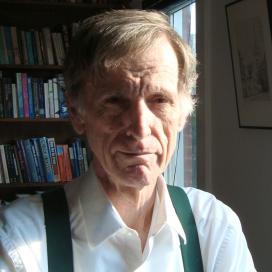
Andrew Abbott is a Professor in the Department of Sociology at the University of Chicago, within the Division of the Social Sciences. He is a leading figure in sociological theory and methodology, known for his foundational contributions to social sequence analysis and ecological models of occupational systems. Abbott served as editor of the American Journal of Sociology from 2000 to 2016 and has held leadership roles as former department chair and dean.
- University: University of Chicago
- School: Division of the Social Sciences
- Department: Department of Sociology
- Academic Rank: Professor
Abbott's research centers on the theoretical and methodological foundations of social science. He explores how diffuse, widespread social elements—such as language, etiquette, bodily habits, and temporal concepts—persist through non-institutional, stochastic mechanisms he terms "pervasions." His work draws on Markov chains and reflecting barriers to model how large-scale stability emerges from small-scale variability, challenging conventional social theories reliant on structural feedback systems.
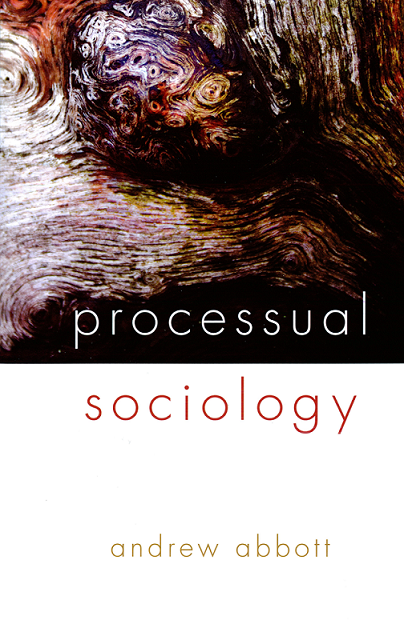
His recent intellectual focus includes the fact/value problem in social inquiry, addressed in a book published by the Collège de France, and a forthcoming general theoretical work on the social process. Though no recent publications are listed, his scholarly trajectory emphasizes theoretical innovation, computational methods, and the historical evolution of the social sciences, research libraries, and academic institutions.
Scientific Awards:
- Member, American Academy of Arts and Sciences
Abbott has played a major role in graduate education, having served on or chaired 120 dissertation committees, reflecting his extensive mentorship and influence in the field. While no specific grants are mentioned, his editorial leadership and sustained theoretical output suggest sustained institutional and intellectual support. His work bridges sociology, history, philosophy of science, and computational modeling, positioning him as a central figure in advancing methodological rigor and theoretical depth in the discipline.
He is affiliated with core academic structures at the University of Chicago and remains actively engaged in research. There is no indication of part-time status, retirement, or emeritus designation. Abbott does not appear to be associated with a named laboratory or research team in the provided text, but his influence extends through his publications, editorial work, and graduate mentorship.