
معرفی
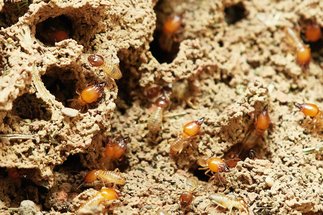
Prof. Dr. Andreas Brune is a Professor and Research Group Leader at Philipps-Universität Marburg, Germany, where he leads a Department-Independent Research Group focused on insect gut microbiology and symbiosis. His research investigates how termite guts function as highly efficient bioreactors converting lignocellulose to microbial fermentation products that fuel the host's metabolism, with significant implications for understanding global carbon cycling and symbiotic relationships.
Dr. Brune's research spans multiple dimensions of symbiotic digestion:
- Structure and functional organization of gut microbiomes across different insect taxa
- Biology of prokaryotic and eukaryotic symbionts and their intricate interactions
- Evolutionary trajectories of intestinal microbial communities across geological time scales
- Microbial processes in humivorous soil macrofauna including soil-feeding termites, scarab beetle larvae, and millipedes
- Nitrogen cycling mechanisms and methane production in arthropod digestive systems
Analysis of Dr. Brune's publication record reveals a consistent methodological approach combining comparative genomics, metagenomics, and detailed morphological studies to unravel host-microbe coevolution. His work demonstrates how microbial communities have adapted to the unique physicochemical conditions of insect digestive tracts, with particular emphasis on genome reduction in endosymbionts while maintaining essential metabolic functions. Recent publications highlight discoveries of novel bacterial and archaeal lineages, evidence of long-term cospeciation between termites and gut microbes, and functional convergence in distantly related gut microbiomes.
Dr. Brune supervises a multidisciplinary research team comprising postdoctoral researchers (Drs. Joana Kästle, Undine Mies, and Sebastian Treitli), a technical assistant (Katja Platt), and a Master's student (Panagiota Folla). His group has pioneered germ-free cockroach models for gnotobiotic studies, demonstrating that germ-free larvae develop poorly but can be rescued by conventional or foreign gut microbiota. Current work focuses on constructing synthetic gut microbial communities to test ecological principles of community assembly and host-microbe interactions.
His laboratory, affiliated with the Center for Synthetic Microbiology at Philipps-Universität Marburg, maintains several active research directions including bacterial symbionts of termite gut flagellates, high-throughput sequencing of gut microbial communities, and characterization of novel methanogenic archaea from soil-feeding termites. The group's work on nitrogen mineralization using 15N tracers has provided crucial insights into global nutrient cycling mediated by soil invertebrates, with collaborative extensions to earthworm digestive systems.
Andreas Brune در سایتهای دیگر
جستوجوهای مرتبط
شاید اینها هم برایتان مناسب باشند
- UUndine MiesMax Planck Institute for Terrestrial Microbiology · پژوهشگر ارشد
- TTamás PlaszkóUniversity of Copenhagen · پژوهشگر
- SSebastian TreitliMax Planck Institute for Terrestrial Microbiology · پژوهشگر
 Renate RadekFree University of Berlin · دانشیار
 Michael PoulsenUniversity of Copenhagen · استاد
 Paul AyayeeUniversity of Nebraska at Omaha · استادیار