Allison Lopatkin
استادیار · Antibiotic Resistance
Max Planck Florida Institute for Neuroscienceمعرفی
Allison Lopatkin is an Assistant Professor in the Department of Chemical Engineering at the University of Rochester's Hajim School of Engineering and Applied Sciences, with additional affiliation in Microbiology and Immunology. She leads the Lopatkin Lab, which focuses on systems and synthetic biology approaches to understand antibiotic resistance, horizontal gene transfer, and microbial community dynamics. Her research integrates microbiology, biochemistry, computational biology, and biomolecular engineering to address critical challenges in microbial evolution and resistance mechanisms.
Dr. Lopatkin's research interests center on how bacterial metabolism contributes to antibiotic resistance development, with particular focus on the role of metabolic mutations in resistance evolution. Her lab employs systems biology, computational modeling, and biomolecular engineering approaches to understand, predict, and control genetic communication in bacterial communities. Key research areas include antibiotic resistance mechanisms, horizontal gene transfer kinetics, microbial community engineering, and environmental applications of microbial systems.
Analysis of her publication record reveals a strong focus on the intersection of metabolism and antibiotic resistance, with increasing emphasis on computational and single-cell approaches in recent years. Her work demonstrates how metabolic pathways contribute to resistance development beyond traditional target-binding mechanisms, with implications for diagnostic tools and therapeutic interventions. The research spans fundamental mechanisms to clinical applications, particularly in understanding resistance in vancomycin-treated patients.
- Pew Biomedical Scholar (2024)
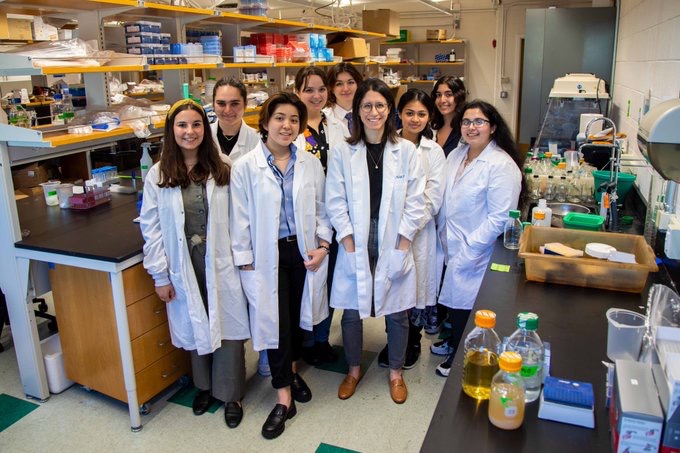
Dr. Lopatkin actively mentors graduate and undergraduate students in her lab, with recent news highlighting students Habib and Zirui passing their qualifying exams. Her lab receives funding through the Pew Biomedical Scholars program and likely other NIH and NSF grants focused on antibiotic resistance research. The lab has developed sophisticated microfluidic platforms and quantitative approaches to study bacterial population dynamics under antibiotic pressure.
The Lopatkin Lab maintains strong connections with clinical and environmental microbiology through its research on real-world antibiotic resistance scenarios. The lab is actively involved in outreach activities, including participation in the Rochester Museum & Science Center events, demonstrating commitment to public engagement with science.