معرفی
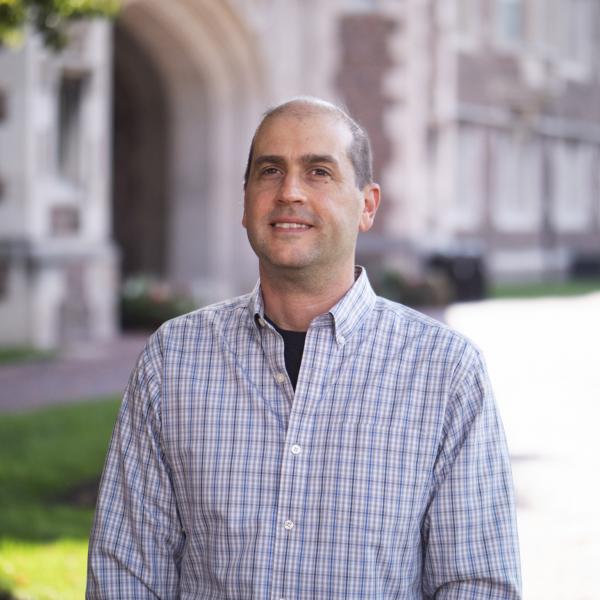
Alexander S. Bradley is an Associate Professor of Earth, Environmental, and Planetary Sciences at Washington University in St. Louis, serving as Director of Graduate Studies. He leads the Bradley Laboratory, which focuses on the coevolution of life and Earth through organic and isotope geochemistry, geobiology, and microbiology. His research integrates field studies, laboratory experiments, and molecular analysis to understand biogeochemical cycles and ancient ecosystems.
Bradley earned his PhD from the Massachusetts Institute of Technology. His work emphasizes molecular fossils (biomarkers) preserved in geological records, exploring how these molecules reflect past environmental conditions and microbial activity. He actively collaborates with the McDonnell Center for the Space Sciences to apply Earth-based techniques to astrobiological studies, such as detecting life on other planets.
Key research themes include sulfur isotope fractionation during microbial processes, organic carbon burial mechanisms in anoxic events, and the genetic determinism of lipid biomarkers. Bradley teaches Biogeochemistry (EEPS 323), an introductory course on Earth's biogeochemical cycles and human impacts.
His laboratory conducts interdisciplinary investigations into extremophile microbiology, hydrothermal systems, and paleoenvironmental reconstruction. Ongoing projects include studying microbialite formation, sulfur cycling in ancient oceans, and developing life-detection strategies for extraterrestrial missions.
Bradley's work bridges geology and biology, offering novel insights into Earth's history and the potential for life beyond Earth. His research has been featured in high-impact journals and is supported by grants from NASA and the National Science Foundation.