معرفی
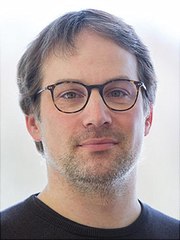
Prof. Dr. Alexander Lichtenstein is a full Professor at the University of Hamburg, where he leads the Theory of Magnetism and Electronic Correlations research group at the I. Institute for Theoretical Physics, Faculty of Mathematics, Informatics and Natural Sciences. Since 2004 he has held a permanent W3 professorship (Universitätsprofessor) and is an active principal investigator in several major collaborative grants.
Education & Career
- Leading research group on theory of magnetism and electronic correlations, University of Hamburg (2004–present)
- Principal investigator of ERC Synergy Grant “FASTCORR” (2020–2026)
- Co-spokesperson of SFB 925 “Light-induced dynamics and control of correlated quantum systems” (2011–2023)
Research Interests
Prof. Lichtenstein’s research integrates ab-initio electronic-structure methods with advanced many-body techniques to study strongly correlated d- and f-electron systems. His group develops and applies continuous-time quantum Monte-Carlo algorithms, DFT+DMFT and LDA+U schemes, and dual-fermion perturbation theory to investigate exchange interactions, magnetism, superconductivity, and non-local correlation effects in low-dimensional quantum materials.
Scientific Awards
- Ernst Mach Medal (2015)
- Max-Born Prize (2014)
- Intel/Rusnano High-Performance Computing Prize (2008)
- State Prize of Russia in Science and Technology (1995)
- State Prize for Young Scientists (1988)
Grants & Projects
- “FASTCORR – Ultrafast dynamics of correlated electrons in solids” (ERC Synergy Grant, 2020–2026)
- “Correlation effects in adiabatic spin dynamics” (DFG, 2022–2025)
- “Graphene-based disruptive technologies – GrapheneCore1” (EU Graphene Flagship, 2016–2018)
- SFB 925: Light-induced dynamics and control of correlated quantum systems (Collaborative Research Center, 2011–2023)
Research Group & Facilities
Prof. Lichtenstein heads the Theory of Magnetism and Electronic Correlations group located at Notkestraße 9–11, 22607 Hamburg. The team comprises post-doctoral researchers, doctoral students, and visiting scientists working on high-performance computing clusters to solve multiorbital quantum impurity problems and large-scale DFT+DMFT simulations.