معرفی
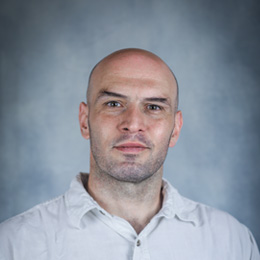
Alex Dececchi is an Assistant Professor in the Department of Biology within the College of Arts & Sciences at Dakota State University. He holds a Ph.D. in Biology from McGill University (2012) and a B.Sc.H. in Biology from Queen’s University (2005). His academic career spans research and teaching in evolutionary biology, paleontology, and biomechanics.
Education:
- Ph.D. in Biology, McGill University, 2012
- B.Sc.H. in Biology, Queen’s University, 2005
Dr. Dececchi's research focuses on the evolutionary origins of flight in theropod dinosaurs and early birds, integrating biomechanical modeling, phylogenetic analysis, and morphological data. His work explores how anatomical changes enabled the transition from gliding to powered flight, with particular attention to limb proportions, wing structure, and aerodynamic performance. He also investigates Ediacaran biota and early animal evolution, contributing to our understanding of life before the Cambrian explosion.
His recent publications span topics including aerodynamic modeling of Yi qi, phylogenetic relationships among Ediacaran fronds, and the computational annotation of phenotypic data using ontologies. These works reflect a strong interdisciplinary approach combining paleontology, computational biology, and functional morphology.
Scientific Awards and Honors:
- The Mentorship Fund to Support Faculty-Student Scholarship, Research and Creative Activities (University of Pittsburgh at Johnstown, 2018)
- William E. White Postdoctoral Fellowship in Geological Sciences (Queen’s University, 2015–2017)
- Doctoral Research Funding, Fonds de Recherche et Technologies (Province of Quebec, 2008–2010)
- Delise Allison Graduate Travel Award (McGill University, 2010)
- Northern Scientific Training Program (Canadian Government, 2006, 2007, 2009)
- John B. Sampson Award (Queen’s University, 2001)
Dr. Dececchi has been actively involved in mentoring students and securing research funding. He has co-organized major scientific symposia such as the International Pennaraptoran Dinosaur Symposium and presented at numerous conferences including the Society of Vertebrate Paleontology and the Canadian Society of Vertebrate Paleontology. His research has been supported by grants focused on faculty-student collaboration and innovative paleontological modeling.
He is also engaged in collaborative research on morphological databases and computable anatomy, working with teams to standardize and extract phenotypic data from scientific literature. His lab integrates computational tools with traditional paleontological methods to advance synthetic knowledge of evolutionary patterns.