معرفی
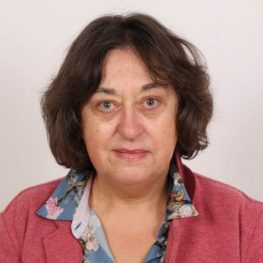
Aleksandra Perčin serves as Associate Professor at the Department of General Agronomy, Division for Agroecology, Faculty of Agriculture, University of Zagreb, where she has held academic positions since 2006 progressing from teaching assistant to senior teaching assistant and ultimately to her current role since 2015.
Her academic credentials include:
- Doctoral studies in Agricultural Sciences (2006-2012) at University of Zagreb, Faculty of Agriculture
- Chemical Engineering and Technology degree (1998-2005) from University of Zagreb, Faculty of Chemical Engineering and Technology
Dr. Perčin's research centers on agroecological systems with specialized focus on soil-water contamination pathways, ecosystem preservation strategies, and advanced environmental chemical analysis. Her work integrates instrumental analytical techniques to address agricultural pollution challenges, sustainable soil management practices, and climate-resilient farming systems across Croatia's diverse agroecological zones.
Analysis of her 2014-2017 publications reveals consistent investigation of nitrogen cycling in agricultural landscapes, soil contamination monitoring, and innovative remediation approaches. Her work frequently employs field lysimeter studies, hyperspectral imaging, and radiochemical analysis to quantify environmental impacts of farming practices while developing sustainable fertilization protocols.
She has secured significant research funding including Croatian Science Foundation projects Erozija i degradacija tla Hrvatske (2018-2023) and Utjecaj otvorenih požara na kvalitetu tla i voda (2018-2022) as principal investigator, alongside numerous industry collaborations with CPS Molve, PIK Vinkovci, and Belje focusing on soil-water monitoring systems and climate adaptation strategies.
Dr. Perčin actively contributes to professional development through the Croatian Society of Soil Science (HTD) since 2006 and teaches specialized courses including Sanacija i obnova oštećenih tala (Soil Remediation), Gnojiva i gnojidba (Fertilization), and Agroklimatologija (Agroclimatology), while maintaining technical expertise through international training in environmental analytical chemistry and lysimeter methodologies.