معرفی
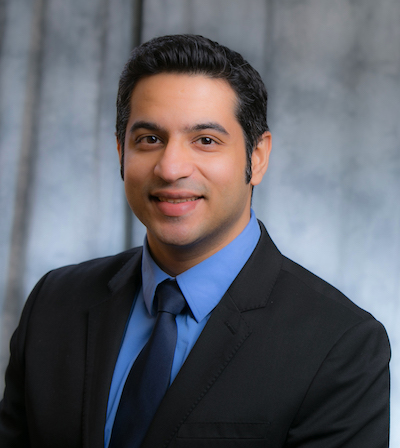
Aladdin Al-Ardah is an Associate Professor in the Department of Restorative Dentistry at the School of Dentistry, Loma Linda University. He holds an MS and BDS from Loma Linda University, with academic qualifications completed in 1998, 2004, and 2009. His primary academic and clinical focus lies in implant and restorative dentistry, with extensive research contributions in prosthetic outcomes, surgical techniques, and digital applications in oral rehabilitation.
- MS, Loma Linda University (2009)
- FP CERT, Loma Linda University (2004)
- BDS (1998)
Dr. Al-Ardah’s research interests center on implant dentistry, prosthetic rehabilitation, bone grafting techniques, and digital workflow integration. His work emphasizes clinical precision, long-term functional outcomes, and esthetic integration. He has published extensively on topics such as sinus augmentation, titanium mesh use, implant positioning, and angled screw channel systems. His methodological approaches include in vitro studies, case series, systematic reviews, and technical innovations leveraging 3D printing and virtual planning.
The trend in his recent publications (2018–2025) shows a strong emphasis on digital dentistry and guided surgical techniques, including dynamic navigation and 3D-printed guides. His research spans biomechanical testing, clinical decision-making based on scientific evidence, and innovative solutions to surgical complications such as membrane perforation and mesh exposure. The interdisciplinary nature of his work connects oral surgery, prosthodontics, and radiology, particularly through the use of cone beam computed tomography.
Although no formal scientific awards are listed in the provided texts, his consistent publication record in peer-reviewed, high-impact dental journals reflects scholarly recognition and active academic engagement.
Dr. Al-Ardah teaches Advanced Implant Dentistry and has presented at academic symposia on topics such as maxillary lateral incisor restoration, implant design evolution, and sinus grafting techniques for allied staff. While specific grant funding is not mentioned, his collaborative research with senior faculty suggests involvement in institutionally supported projects. He has co-authored multiple studies with leading figures in implant dentistry, indicating a well-integrated research network.
His work involves collaboration with multidisciplinary teams, particularly in surgical-prosthetic planning and digital fabrication. While no dedicated lab is explicitly named, his use of virtual modeling and 3D printing indicates engagement with advanced dental technology units or research labs focused on digital innovation in implantology.