معرفی
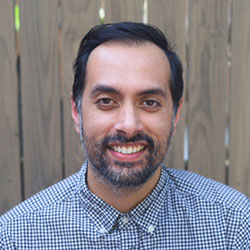
Dr. Aditya Devarakonda is an Assistant Professor in the Department of Computer Science at Wake Forest University, where he teaches courses in algorithms, data structures, and parallel numerical optimization. Prior to joining Wake Forest, he was an Assistant Research Scientist in the Department of Physics and Astronomy at Johns Hopkins University.
His educational background includes:
- Ph.D. in Computer Science from the University of California, Berkeley (2018)
- B.S. in Electrical & Computer Engineering from Rutgers University, New Brunswick (2012)
Dr. Devarakonda's research focuses on high performance computing and machine learning, with particular emphasis on communication-avoiding algorithms for parallel systems. His work spans several key areas:
- Redesigning machine learning algorithms to reduce communication bottlenecks in distributed systems
- Developing communication-avoiding variants of optimization methods like block coordinate descent
- Exploring novel training techniques for deep learning models that improve performance on multi-GPU systems
- Implementing matrix factorization techniques that scale efficiently across distributed architectures
His publication record shows a consistent focus on communication efficiency in parallel computing, with numerous papers on avoiding communication in various optimization methods. His research has evolved from foundational work on communication-avoiding Krylov methods to applications in machine learning and deep learning. Recent publications indicate expanding interests in graph neural networks and distributed Shapley values.
Dr. Devarakonda has received notable recognition for his work:
- NSF Graduate Research Fellowship
- EECS Department Fellowship
While specific advising information isn't detailed in the available materials, Dr. Devarakonda teaches graduate courses including CSC 721 (Theory of Algorithms) and CSC 790 (Parallel Numerical Optimization), suggesting he likely mentors graduate students in high performance computing and machine learning. His research appears to be supported by grants related to high-performance computing and machine learning optimization.
His work leverages parallel computing infrastructure, including Cray supercomputers and NVIDIA GPU clusters, to develop and test communication-avoiding algorithms. His research group likely focuses on implementing and benchmarking these algorithms across various distributed computing platforms.