معرفی
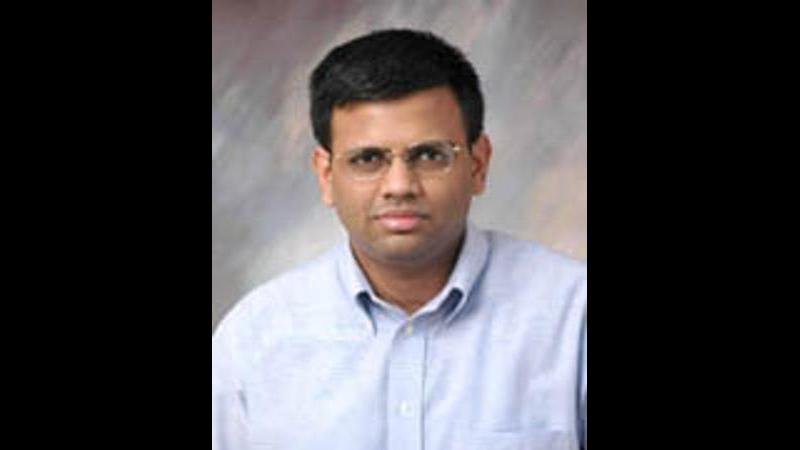
Adam Wierman is a Professor in the Department of Computing and Mathematical Sciences (CMS) at the California Institute of Technology, where he has served as faculty since 2007. His research focuses on developing sustainable and resilient networked systems through interdisciplinary approaches.
Education:
- Ph.D. in Computer Science, Carnegie Mellon University, 2007
- M.Sc. in Computer Science, Carnegie Mellon University, 2004
- B.Sc. in Computer Science, Carnegie Mellon University, 2001
Wierman's work integrates machine learning, optimization, control theory, and algorithmic economics to design provably robust algorithms for critical infrastructure. His research targets sustainability challenges in data centers, electricity grids, and transportation systems, with pioneering contributions to energy-efficient computing. He emphasizes creating practical solutions with theoretical guarantees for real-world deployment.
His 2025 publications reveal strong trends toward learning-augmented control systems for sustainability, with significant focus on carbon-aware scheduling, robust reinforcement learning, and competitive algorithms for spatiotemporal resource allocation. Key themes include integrating renewable energy into computing infrastructure, decarbonizing water systems, and developing privacy-preserving learning frameworks.
Scientific Awards:
- ACM Sigmetrics Rising Star award
- ACM Sigmetrics Test of Time award
- IEEE Communications Society William R. Bennett Prize
- Multiple Best Paper Awards across computer science and operations research conferences
- Multiple Teaching Awards at Caltech
Professor Wierman actively mentors graduate students, postdocs, and undergraduates through Caltech's SURF and WAVE programs. His research is supported by grants from federal agencies and industry partners focused on sustainability and resilient systems. He maintains regular office hours and participates in multiple research seminars.
He leads the Resnick Sustainability Research Group (RSRG) and collaborates with Caltech centers including DOLCIT, CSIS, CMI, IST, RSI, and CAST. His lab develops practical tools like SustainGym and RobustGym for testing sustainability-focused AI algorithms in simulated environments.