معرفی
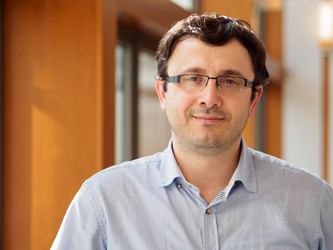
Adam Hendricks is an Assistant Professor in the Department of Bioengineering at McGill University. He also holds affiliations as an Affiliate Member of the Quantitative Biology Initiative and a Member of the Integrated Program in Neuroscience. His research focuses on understanding how motor proteins function collectively in the complex cellular environment, with particular emphasis on kinesin and cytoplasmic dynein.
Dr. Hendricks' research spans cellular biophysics and bioengineering, investigating how motor proteins convert chemical energy into mechanical work to drive essential cellular functions such as cell division, motility, protein synthesis, and intracellular transport. His lab employs a multi-disciplinary approach combining in vitro experiments, high-resolution tracking in living cells, mathematical modeling, and single-molecule techniques including optical trapping and FRET microscopy. A key focus is understanding how the cellular environment regulates motor protein behavior, particularly in long, polarized cells like neurons where transport defects can lead to neurodegenerative diseases.
Analysis of Dr. Hendricks' recent publications reveals a strong focus on the regulation of motor proteins by the microtubule cytoskeleton and associated proteins. His work examines how tubulin post-translational modifications, microtubule bundling, and microtubule-associated proteins (MAPs) like tau and MAP7 influence motor protein motility and cargo transport. A recurring theme is how defects in intracellular transport contribute to neurodegenerative diseases including Alzheimer's, Huntington's, and ALS. His lab has made significant discoveries regarding how tau differentially regulates transport of various organelles and how MAP7 enhances kinesin binding to microtubules.
Dr. Hendricks' laboratory actively develops advanced techniques to extend single-molecule methods to living cells. Their research aims to understand how motor proteins function in teams, how they are differentially regulated to achieve targeted trafficking, and how the cytoskeleton tunes its mechanical properties to perform structural and transport roles in the cell. The lab maintains facilities at both McGill University's Macdonald Engineering Building and UQAM's Pavillon des Sciences Biologiques, reflecting its interdisciplinary nature and collaborative approach to neuroscience and bioengineering research.