معرفی
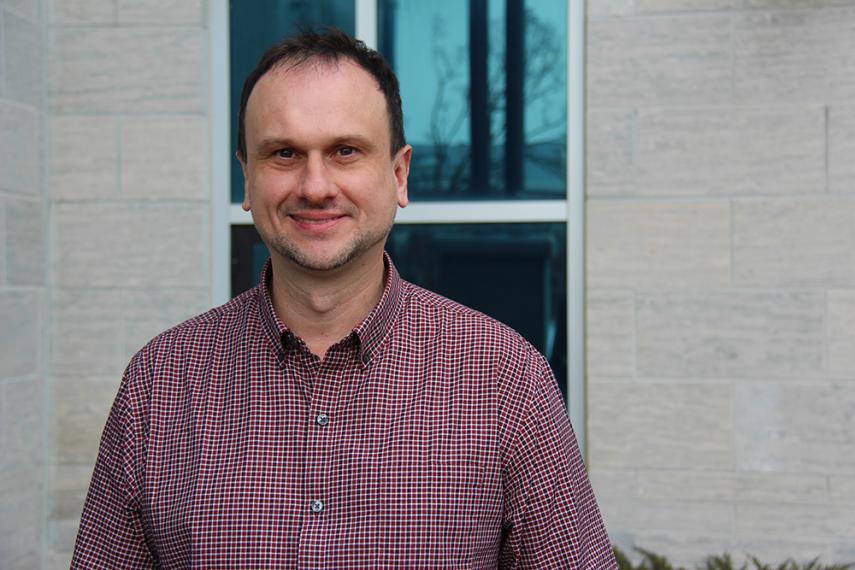
Dr. Adam Gillespie is an Assistant Professor at the University of Guelph, affiliated with the Ontario Agricultural College and the School of Environmental Sciences. He holds a B.Sc. from the University of Guelph, and M.Sc. and Ph.D. degrees from the University of Saskatchewan. His research focuses on soil organic matter dynamics, particularly its role in sustainable agriculture, soil health, and ecosystem resilience. Gillespie employs advanced techniques such as synchrotron-based spectroscopy, nuclear magnetic resonance (NMR), and programmed pyrolysis to investigate soil chemistry and carbon cycling. His work integrates field and laboratory studies to bridge innovative research with practical applications, including digital soil mapping and the development of models for carbon sequestration. Key areas include microplastic impacts in biosolids, soil health management, and the use of infrared spectroscopy for rapid soil property analysis. Gillespie collaborates on projects addressing nitrogen dynamics, land-use impacts on soil carbon, and the National Inventory Report carbon modeling framework. He actively mentors graduate students and leads initiatives to enhance soil science education and industry partnerships.
Education:
- B.Sc., University of Guelph
- M.Sc., University of Saskatchewan
- Ph.D., University of Saskatchewan
Research Interests:
- Soil organic matter characterization and stability
- Environmental spectroscopy (XANES, NMR, FTIR)
- Carbon modeling and digital soil mapping
- Microplastics in composts and biosolids
- Soil health and agricultural management practices
Publications: Gillespie's research spans over 30 peer-reviewed articles, with recent work emphasizing soil carbon dynamics, microplastic degradation, and innovative analytical methods. His articles frequently appear in journals like Soil Biology and Biochemistry, Geoderma, and Nutrient Cycling in Agroecosystems.
Labs and Teams: Gillespie directs the Soil Organic Matter Dynamics and Analysis Lab, which focuses on cutting-edge soil chemistry and environmental applications. Collaborative projects include the NSERC-funded microplastics initiative and the CANN2ONET network for nitrous oxide mitigation.