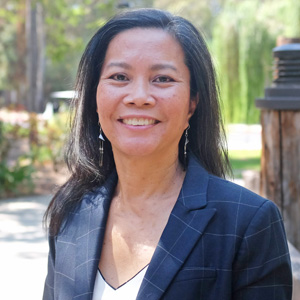
معرفی
Dr. Abigail O. Akande serves as an Associate Professor in the Department of Rehabilitation and Human Services at Pennsylvania State University's Abington campus, where she advances disability scholarship through culturally responsive frameworks. Her work addresses critical gaps in service provision for immigrant and marginalized populations with disabilities across clinical, policy, and educational domains.
Her academic foundation includes:
- Ph.D. in Rehabilitation from The University of Arizona
- M.S. in Rehabilitation Counseling from Boston University
- B.A. in Child Development from Tufts University
Dr. Akande's research employs qualitative methodologies—narrative interviewing, case study, and grounded theory—to investigate opioid use disorder among immigrants, vocational rehabilitation for immigrant women with disabilities, disability policy, and reproductive justice. She pioneers curriculum development through compassion cultivation, cultural humility training, and virtual international exchanges that bridge interdisciplinary divides in human services education.
Analysis of her 2017-2023 publications reveals consistent focus on intersectional disability experiences, particularly how immigration status compounds healthcare access barriers. Her scholarship connects opioid epidemic responses to cultural contexts, examines grief through pandemic lenses, and redefines international disability frameworks—all emphasizing structural inequities affecting immigrant women.
Her teaching excellence is recognized through:
- Teaching Fellow Award from Academy for Teaching and Learning Excellence (University of Arkansas at Little Rock)
- Distinguished Teaching Fellow Medallion from same institution
- Phi Kappa Phi Honor Society membership (The University of Arizona)
Dr. Akande mentors students in rehabilitation practice and policy advocacy, guiding research on cross-cultural counseling while integrating experiential learning. Her institutional affiliations support sustained scholarly output addressing systemic barriers in disability services, though specific grant mechanisms remain unreported in available materials.