معرفی
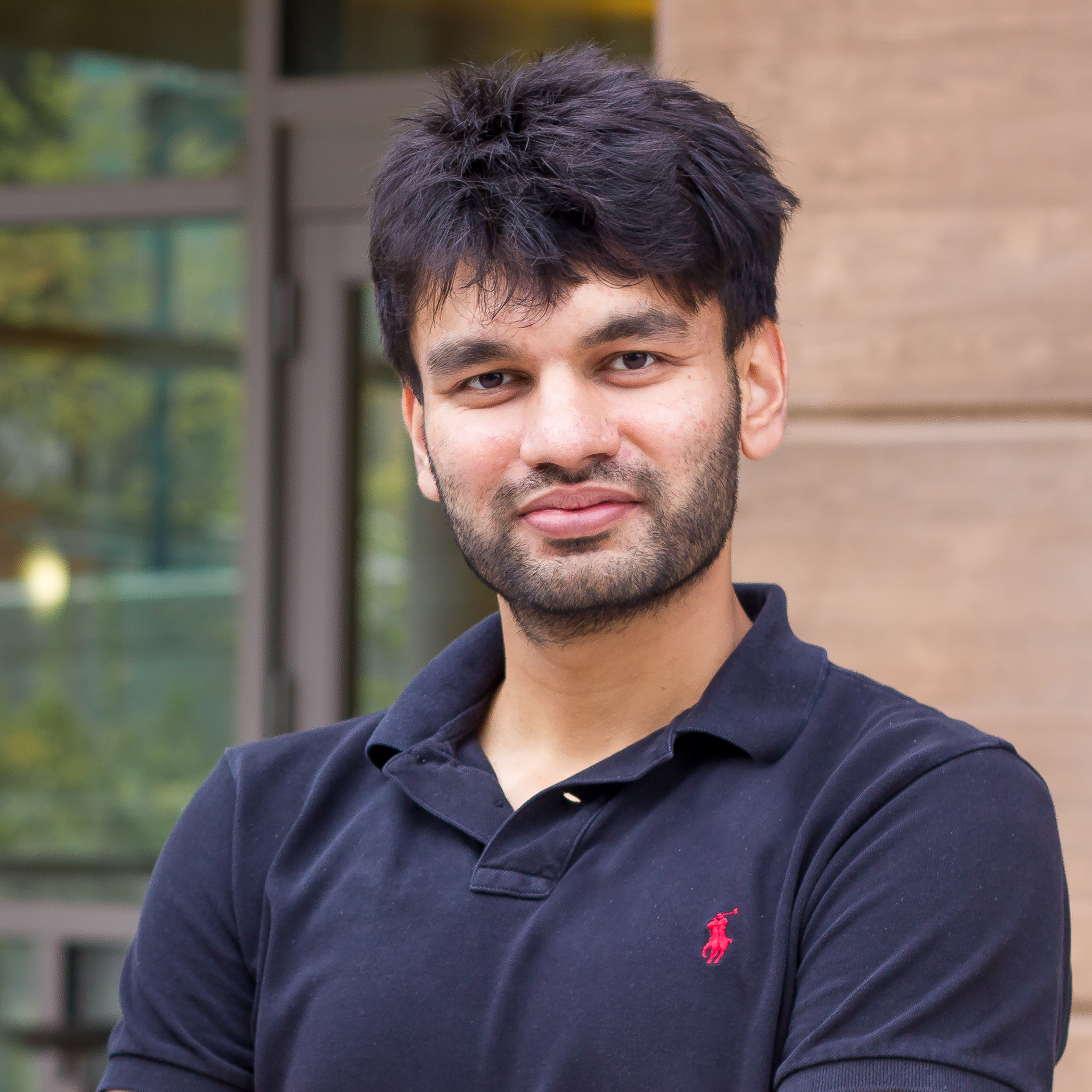
Abhishek Gupta is an Assistant Professor in the Department of Computer Science and Engineering at the Paul G. Allen School of Computer Science & Engineering, University of Washington, where he leads the Washington Embodied Intelligence and Robotics Development (WEIRD) Lab. His research focuses on developing algorithms that enable robotic systems to learn complex tasks in unstructured environments like offices and homes.
Dr. Gupta completed his Ph.D. in Machine Learning and Robotics at Berkeley Artificial Intelligence Research (BAIR) at UC Berkeley, advised by Professors Sergey Levine and Pieter Abbeel. Prior to his faculty position, he was a post-doctoral scholar at MIT, collaborating with Russ Tedrake and Pulkit Agarwal. He also earned his bachelor's degree from UC Berkeley.
His research interests span computer vision, machine learning, and robotics with particular focus on deep reinforcement learning algorithms that can learn in real-world environments with and around humans. His recent work explores deployment time reinforcement learning, foundation models from off-domain data, fast real-world adaptation, human-in-the-loop interaction, and real-to-sim-to-real policy learning methods. His publications reveal a strong emphasis on practical robotic applications, especially in dexterous manipulation, assistive robotics, and embodied intelligence.
Dr. Gupta has received several prestigious recognitions including a Best Paper award at LLARLA workshop at ICML 2018, a RSS 2023 Best Systems Paper Finalist, and multiple spotlight/oral presentations at top conferences including NeurIPS, ICLR, and CoRL.
As a principal investigator, Dr. Gupta leads the WEIRD Lab which focuses on developing embodied intelligence for robotics. He actively collaborates with major institutions including MIT, UC Berkeley, and industry partners. His research is funded by grants supporting fundamental advances in robotics and AI, with applications ranging from assistive technologies to industrial automation. Dr. Gupta is currently recruiting highly motivated Ph.D. students and postdoctoral researchers to join his lab.