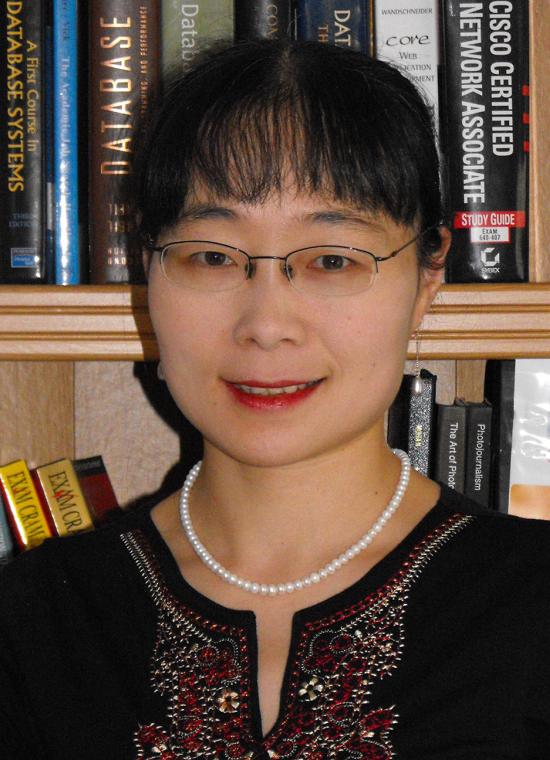
Songhui Yue is an Assistant Professor in the Department of Computer Science at California State University Northridge. With a PhD in Computer Science from the University of Alabama (2019) and a BE in Software Engineering from East China Normal University (2009), he bridges extensive industry experience with academic rigor. His work focuses on software engineering, automation, and artificial intelligence, particularly in context-aware systems and IoT. PhD in Computer Science, University of Alabama (2019) BE in Software Engineering, East China Normal University (2009) Research spans context-aware software , IoT , smart cities , data modeling , context reasoning automation , and software privacy & security . Publications reveal expertise in system design and real-time data analysis , with recent work on smart elevators and social media mining for disaster response. Scientific Awards : First place presentation at ACM Mid-Southeast Conference, 2016 His industry background in web application development and agile team leadership informs mentorship, where he actively guides students in academic preparation and career challenges. He emphasizes integrating technical excellence with personal development and ethical values.
Anthony C. Robinson is Professor of Geography and the E. Willard and Ruby S. Miller Professor at The Pennsylvania State University. He serves as Director of Online Geospatial Education Programs through the John A. Dutton e-Education Institute and Director of the GeoGraphics Lab within the Department of Geography in the College of Earth and Mineral Sciences. Robinson also holds leadership positions as Vice Chair of the International Cartographic Association Commission on Geovisualization and Chair of the AAG Cartography & Mapping Specialty Group. Dr. Robinson earned his B.S. in Applied Geography from East Carolina University (2002), followed by his M.S. (2005) and Ph.D. (2008) in Geography from Penn State. His academic career at Penn State has progressed from Research Assistant (2003-2008) to his current position as full Professor (2024-present), with previous appointments as Assistant Professor (2015-2019) and Associate Professor (2019-2024). Robinson's research focuses on designing and evaluating geovisualization tools to improve geographic information utility and usability across multiple domains including epidemiology, crisis management, national security, and higher education. His key contributions include characterizing how users assemble analytical results, studying visualization tools through eye-tracking methodologies, and exploring map symbol standardization for emergency management. Recent innovative work examines viral cartography in social media, techniques for visualizing the 'presence of absence' in big spatial data, and geographic dimensions of learner engagement in educational analytics. His publication record demonstrates a consistent trajectory toward increasingly complex geospatial challenges, with early work focused on foundational geovisual analytics methods evolving into current research addressing big data cartography, social media geovisualization, and educational applications of geographic information science. Robinson's scholarly output bridges theoretical cartographic principles with practical applications across diverse domains, particularly emphasizing user-centered design approaches. E. Willard and Ruby S. Miller Professor in Geography Past President of the North American Cartographic Information Society (NACIS) Co-Chair of the International Cartographic Association Commission on Visual Analytics Co-Director of GeoGraphics Lab Director of Online Geospatial Education Programs since 2014 As an advisor, Robinson has mentored doctoral students including Tim Prestby (recent PhD graduate) and currently supervises PhD candidate Lily Houtman. He actively seeks graduate students interested in cartography and geovisualization, user-centered design and evaluation, and health and ecological informatics. His research has been supported through institutional positions at Penn State including leadership of online geospatial education programs serving thousands of students globally. Robinson directs the GeoGraphics Lab, which serves as an incubator for innovative geospatial projects including community mapping initiatives and geospatial storytelling devices focused on community resilience and climate action. The lab recently hosted its inaugural Community Mapping Day at Penn State, engaging students, faculty, and community members in mapping pollinator pathways. Through the John A. Dutton e-Education Institute, he leads Penn State's GIS Certificate, Master of GIS, and Master of Spatial Data Science programs, which have educated thousands of professionals worldwide.
Alexander Bondarenko is an Assistant Professor in the Department of Computer Science at Martin-Luther-Universität Halle-Wittenberg, Germany, specializing in information retrieval, argument mining, and comparative question answering. His research focuses on developing systems that can retrieve argumentative content and answer comparative questions, with particular applications in health misinformation detection and biomedical question answering. His primary research interests include Argument retrieval and mining Comparative question understanding and answering Health misinformation detection Neural ranking models Causal question answering Biomedical information retrieval His work bridges theoretical information retrieval with practical applications in domains where accurate information is critical, such as healthcare. His recent publications (2023-2025) demonstrate a clear trajectory from foundational work on comparative questions to more specialized applications in biomedical domains. The Touché evaluation lab series represents his most significant contribution to the field, providing standardized benchmarks for argument retrieval research. His 2024-2025 work shows increasing focus on large language model applications and robustness against misinformation in specialized domains. Bondarenko has received recognition through numerous publications at top-tier venues including SIGIR, WSDM, ECIR, and AAAI. While specific awards aren't documented in the provided data, his consistent publication record at major conferences indicates recognition within the information retrieval community. As a relatively early-career researcher (completing his PhD in 2023), Bondarenko has established himself as a key contributor to argument retrieval research through the Touché lab series and related publications. His work often involves interdisciplinary collaboration, particularly with researchers from biomedical informatics domains. His laboratory work centers around the development and evaluation of argument retrieval systems, with significant contributions to dataset creation (Touché series) and evaluation methodologies for argumentative content. His recent work with biomedical applications suggests expanding research into domain-specific information retrieval challenges.
Fatih GulTekin is a full-time Lecturer at Karabük University's Yenice Vocational School, Department of Computer Technologies. He holds two PhD degrees from Karabük University: one in Electrical and Electronics Engineering (2021) and another in the same field through the Graduate School of Education (2020). His academic career spans since 2018, with teaching responsibilities including courses like Programming Fundamentals and Web Programming. Education: PhD in Electrical and Electronics Engineering, Karabük University (2021) PhD in Electrical and Electronics Engineering (Dr), Karabük University Graduate School (2020) Master's in Educational Administration and Supervision, Marmara University (2013) BSc in Computer Engineering, Namık Kemal University (2015) BSc in Electronics and Computer Education, Marmara University (2008) His research focuses on Computer Software , with specific interests in Algorithms and Computational Theory , Data Mining , Artificial Intelligence , and Software Engineering . Recent work explores Digital Twin simulations for energy management systems. Publications: 1 international conference paper (2022) on Digital Twin applications in energy management.
Tuğba Süzek is an Associate Professor in the Department of Computer Engineering at Muğla Sıtkı Koçman University, Turkey. She holds a PhD in Bioinformatics from George Mason University (2012), an MSc from Johns Hopkins University (2000), and a BSc from Middle East Technical University (1997). Academic Background: BSc: Computer Engineering, Middle East Technical University (1993-1997) MSc: Bioinformatics, Johns Hopkins University (1998-2000) PhD: Bioinformatics, George Mason University (2003-2012) Research Interests center on bioinformatics , machine learning in healthcare , cancer genomics , transcriptomics , and molecular data analysis . She develops tools like TCGAnalyzeR for pan-cancer cohort discovery and CompCorona for coronavirus transcriptome analysis. Recent Articles span lung cancer pathogenesis, orthodontic malocclusion prediction, microbiome-host disease associations, and AI-driven diagnostic tools. Her work bridges cheminformatics and bioinformatics for drug repurposing. Scientific Awards ORISE Fellowship (2000) Patent Holder: System for Early Diagnosis of Skeleton Syndromes (2024) Advising and Grants include supervising student theses on AI in orthodontics and molecular cancer research . She leads EU-funded projects like Intraperitoneal immune modulation and TÜBİTAK grants for drug repurposing and neurodegenerative disease analysis .
Carlos José Villagrá Arnedo is a full-time Professor in the Department of Computer Science and Artificial Intelligence at the University of Alicante, where he has been employed since 1999. He holds a PhD in Computer Engineering (2016) and a Bachelor's in Computer Science from the Polytechnic University of Valencia (1994). He coordinates the Digital Creation and Entertainment program and previously served as Head of Studies for Multimedia Engineering. His research integrates Artificial Intelligence , Educational Technology , and Game-Based Learning , with specific focus areas including learning analytics, adaptive educational systems, programming pedagogy, and accessibility in gaming. Recent work explores mental model analysis using AI and low-level programming approaches to enhance learning outcomes. His publications demonstrate a consistent emphasis on predictive learning models, educational gamification, and inclusive technology design. Key trends include AI-driven analytics (2020-2024), programming error analysis (2018-2023), and accessible game development (2017-2019). Research Projects: Integrating Adaptive Flipped Learning in Physical Education Students (2024-2025) Smart Learning Research Group (2024) Semantic Web for Cultural Heritage (2019-2021) European Collaborative Learning for Robot Skill Acquisition (2016-2018) He has directed or co-directed 75+ undergraduate/master's theses in the last five years and leads the Smart Learning Research Group focused on intelligent educational technologies.
Daniel P. Miranker is a Professor at the University of Texas at Austin , affiliated with the Department of Computer Science , Institute for Cell and Molecular Biology , and Center for Computational Biology and Bioinformatics . His work bridges Semantic Web technologies and Bioinformatics , focusing on data integration, ontology mapping, and computational methods for genomics. Research Interests Semantic Web and Ontology Interoperability Automated Data Integration via Machine Learning RNA Sequence Analysis and Comparative Genomics Big Data Methods in Genome Sequencing Health Informatics and Data Virtualization Recent Publications Trends : His work emphasizes cross-domain integration, particularly between relational databases and semantic ontologies (e.g., OBO ↔ OWL ), and applies computational biology to proteomics and genomics. Papers from 2007–2011 highlight algorithmic innovations for sequence alignment, protein identification, and LSID schema implementation. Scientific Awards : 1998 Best Paper, ACM 1998 Best Newcomer Paper Award, ACM Student Mentoring : Mentors graduate students in both Bioinformatics and Computer Science , including Donghyuk Shin, Yanan Jiang, Juan Sequeda, and others. Collaborators include Professors Oscar Corcho (Spain), Robin Gutell (UT Austin), Edward Marcotte (UT Austin), and Gregory Riccardi (FSU). Laboratory & Projects : Leads the Miranker Laboratory , with active projects such as Morphster (image-driven ontology editing), Ontobrowser , Ultrawrap (legacy RDBMS integration), MoBIoS (molecular data systems), and RNA analysis tools.
Karthika Subramani is a Lecturer of Computer Science at the University of Georgia. She earned her Ph.D. in Computer Science from the same institution in 2021, conducting research in the Network and Security Intelligence Lab under Dr. Roberto Perdisci. Postdoctoral, she worked as a Research Engineer at the Georgia Institute of Technology in the Astrolavos Lab led by Dr. Manos Antonakakis. Education: Ph.D. in Computer Science (University of Georgia, 2021) Her research focuses on enhancing the security postures of web and network technologies, particularly in detecting and measuring large-scale abuse through systems integrating security, data mining, browser instrumentation, and advanced machine learning techniques. She is also dedicated to innovative teaching methods, emphasizing active learning, AI-assisted instruction, and student-centered approaches. Contact: ksubramani@uga.edu
Giulio Barabino serves as a Contract Professor (Adjunct Professor) at the Department of Naval, Electrical, Electronic and Telecommunications Engineering (DITEN) of the University of Genoa, teaching Electrotechnics for the Naval Engineering undergraduate program across multiple academic years including 2024-2025 and 2025-2026. His research integrates Software Engineering with Serious Games applications, focusing on Web Development methodologies, Agile practices, and Learning Analytics. Key contributions include effort estimation frameworks for web applications and game-based solutions for smart mobility challenges, demonstrating interdisciplinary innovation between software engineering and transportation/education domains. Publication analysis (2012-2016) reveals consistent exploration of web development optimization techniques, particularly through content management frameworks, while progressively incorporating serious games for urban mobility and educational analytics. This trajectory highlights evolving expertise from technical software metrics toward human-centered game applications. No information is available regarding student advising, research grants, or laboratory affiliations.
Nadine Cullot is a Professor in Data Science at the Université de Bourgogne, affiliated with the College of Science and Technology and the Department of Computer Science, Electronics, and Mechanics. Her work spans Semantic Web technologies, data analysis, and ontology-driven applications. Research Themes: Knowledge modeling using ontologies, logical reasoning, semantic contextualization of data analysis results, and AI techniques for fraud detection. Projects: Co-leads the i-site Cocktail project (2019-2023) focused on Twitter discourse analysis in the food domain, developing ontologies for semantic enrichment. Publications focus on data lakes, fraud detection in interbank systems, and social network polarization. She co-supervises theses on AI-driven anomaly detection and data lake automation. Teaching: Courses in Java programming, advanced algorithms, NoSQL databases, and Semantic Web technologies (OWL, SPARQL, SWRL) at undergraduate and Master's levels. Administrative Roles: Deputy Director of the Department of Computer Science, Electronics, and Mechanics; responsible for the Master in Computer Science program.
Associate Professor Uroš Krčadinac is affiliated with the Faculty of Media and Communications at Singidunum University. He combines expertise from digital art, computer science, and interactive design in his research and teaching. Doctor of Science (PhD) in Software Engineering, Affective Computing, and Generative Design (University of Belgrade) Expert Associate at Design Seminar, Petnica Research Station His research spans interactive design , new media art , data visualization , and human-computer interaction . Recent publications focus on generative design , multi-agent systems , and textual affect recognition . He has contributed to software engineering encyclopedias and developed open-source emotion recognition tools. Scientific Awards include: IDMAA best group project award (2011) Belgrade Chamber of Commerce graduation thesis award (2009) ASIFA diploma for animated film (2007) Pančevo cultural contribution award (2004) Krčadinac teaches Design for New Media , Interactive Design , and Programming for Visual Artists , with over 100 workshops conducted globally since 2007. His work bridges computational methods with artistic expression.
Yuqing Melanie Wu is a Professor of Computer Science at Pomona College and is on leave for the 2025–2026 academic year. Her research spans database theory, query languages, and graph data management, with a focus on semi-structured and temporal data. Ph.D., University of Michigan, Ann Arbor MS, Indiana University, Bloomington MS/BA, Peking University, Beijing, China Her work explores query optimization for tree and graph structures, data representation, security in data repositories, and social media analytics. She has contributed to relation algebra formalisms, temporal clique enumeration, and semantic web applications in healthcare. Recent research trends include relation algebra on trees , graph query optimization , temporal data processing , and cross-platform social media analysis . American Council of Education Fellowship (2021–22) Pomona College Wig Distinguished Professorship (2021) Best Paper Award at 26th British National Conference on Databases (2009) Multiple teaching awards including Trustee’s Teaching Award and WIC Inspirational Teacher Award She has secured grants from the NSF ( $297,592 ), NIH ( $731,750 ), and Indiana University ( FRSP ), focusing on query processing, semantic web health technologies, and XML security.
Leon Bein is a doctoral candidate at the Information Systems chair of the School of Computation Information and Technology , Technical University of Munich , joining the research group in April 2023. Research Focus : Integration of semantic technologies (e.g., Knowledge Graphs) into Business Process Technology for explainable process execution support, with additional interests in Intelligent Process Automation, Business Process Simulation, and Software Engineering. Teaching : Involved in teaching Business Process Management (INHN0019) and Building Digital Workflows with ServiceNow (INHN0021, INHN4050) since Summer Term 2023. Publications : Co-authored works in Business Process Management (2024), Business Informatics (2024), Process Mining (2024), and prior conferences. Service : Served as a (sub)reviewer for CAiSE, ECIS, EDOC, ER, and TICEC conferences. Article Trends : His research spans process automation, sustainability in BPM, semantic technologies, and agile methodologies, with a focus on tools like SimuBridge and SOPA framework.
Dr. Wenchao GU is a Postdoctoral Researcher at the Chair of Software Engineering & AI at the Technical University of Munich (TUM) , working under the supervision of Prof. Chunyang Chen. His academic journey includes a PhD in Computer Science and Engineering from The Chinese University of Hong Kong (CUHK) (2024), an MSc in Information Science from Tohoku University (2017), and a B.Eng in Mechanical and Aerospace Engineering from Tohoku University (2015). Research Interests: Dr. GU's work focuses on Artificial Intelligence for Software Engineering (AI4SE) , leveraging Large Language Models (LLMs) to advance source code understanding, analysis, and generation. Key areas include code optimization , vulnerability detection , and UI code generation . His research bridges theoretical innovations with practical tools for automated code efficiency improvement, semantic code retrieval, and natural language generation in software development workflows. Publication Trends : His recent work emphasizes iterative LLM refinement via evolutionary search (2025), segmented deep hashing for scalable code retrieval (2025), and contrastive learning in code search (2023). Earlier studies explored AST-guided transformers for code summarization (2022) and semantic dependency learning in code retrieval (2021). Scientific Awards: Distinguished Paper Award, ICSE 2025 The Aoba Foundation Scholarship (2015) JASSO Scholarship (2012) Tohoku University President Fellowship (2012) Mentorship: Dr. GU supervises 11 current students (including 1 PhD) and has advised 5 graduated Master's students. He actively seeks candidates with web/Android development expertise for UI code generation projects.
Sharma Chakravarthy is a Professor in the Department of Computer Science and Engineering at The University of Texas at Arlington (UTA) since January 2000. He is an ACM Distinguished Scientist, IEEE Senior Member, and Fulbright Specialist, recognized for his contributions to stream data processing, active databases, and graph mining. He established the Information Technology Laboratory (IT Lab) and an NSF-funded Distributed and Parallel Computing Cluster at UTA, and has supervised 15 PhD theses and 85 MS theses. His research spans semantic query optimization, scalability in graph mining, social network analysis, and multimedia databases. Education: B.E. in Electrical Engineering (Indian Institute of Science), M.Tech (IIT Bombay), M.S. and Ph.D. (University of Maryland, College Park) Prior affiliations: University of Florida (10 years), Computer Corporation of America (CCA, 3 years), Xerox Advanced Information Technology (1 year) Research Interests : His work focuses on adapting map/reduce paradigms for scaling graph mining algorithms to large networks, machine learning applications in Q-A social networks, and InfoSift—a classification system for text, email, and web data. He also explores stream data processing across domains like video analysis. Scientific Awards : 2003 Creative Outstanding Researcher (UTA) 2002 Department-Level Senior Outstanding Researcher ACM Distinguished Scientist IEEE Senior Member Fulbright Specialist Inclusion in Who's Who Among South Asian Americans and Who's Who Among America's Teachers He co-organized the 13th ACM International Conference on Distributed Event-Based Systems (DEBS 2013) and has authored over 200 refereed papers/book chapters. He has given tutorials on graph mining, active/real-time databases, and heterogeneous databases globally.