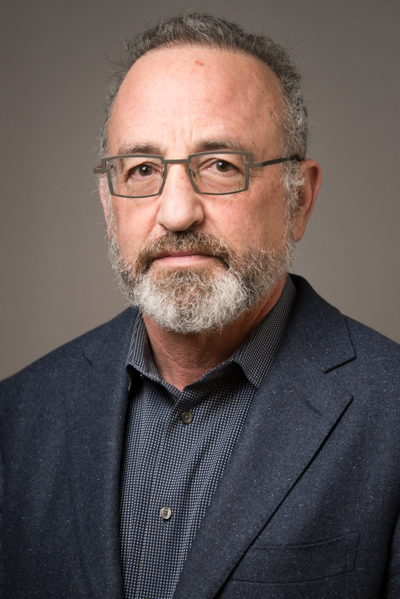
Bram van Es is an Assistant Professor at the University Medical Center Utrecht (UMC Utrecht), where he combines expertise in Medical Informatics and Economic History . His work bridges computational methods with historical analysis, focusing on applications such as machine learning in cardiology , epidemic financial impact , and conflict-induced socioeconomic dynamics . He collaborates across disciplines, contributing to journals like Open Heart and Journal of Cerebral Blood Flow and Metabolism . University : University Medical Center Utrecht Rank : Assistant Professor Email : bes3@umcutrecht.nl His research spans two distinct yet interconnected domains: Medical Informatics : Developing large language models for healthcare, automated text classification in cardiac risk management, and diagnostic data extraction from unstructured clinical reports. Economic History : Analyzing epidemic-induced wealth redistribution , warfare consequences , and institutional dynamics in early modern Europe. He explores themes like resource allocation , state formation , and socioeconomic adaptation during crises. Publications reflect this duality: recent works include machine learning applications in coronary imaging and haematology, alongside historical studies on epidemic impacts and warfare economics. He emphasizes methodological rigor, applying dimensionality reduction to clinical datasets and reproducibility frameworks in historical research.
Nicholas Evangelopoulos is an Associate Professor in the Information Technology and Decision Sciences department at the University of North Texas. His academic career spans over a decade with consistent research contributions in information systems and text mining methodologies. Dr. Evangelopoulos's research focuses on Latent Semantic Analysis (LSA) and its applications across various domains. His work bridges theoretical methodological developments with practical applications in areas including: Text mining and analysis of unstructured data Quality management and customer feedback analysis E-democracy and citizen engagement Information systems research methodology Sentiment analysis and public agenda setting His publication record from 2007-2014 demonstrates consistent scholarly output with a focus on methodological innovations in text analysis and their practical applications. Dr. Evangelopoulos has contributed to understanding how textual data can be leveraged for quality control, government decision support, and analyzing public discourse on social issues like human trafficking. Notable contributions include: Methodological improvements to Latent Semantic Analysis including orthogonal rotations Applications of text mining to e-democracy and citizen feedback analysis Integration of LSA with quality control methodologies Studies on research diversity within the information systems discipline Dr. Evangelopoulos frequently collaborates with researchers like Anna Sidorova, suggesting a collaborative research approach. His work demonstrates both theoretical contributions to methodology and practical applications across multiple domains, positioning him as a researcher who effectively bridges academic theory with real-world problems.
Claris Chung is a Senior Lecturer at the University of Canterbury's UC Business School, Department of Accounting and Information Systems. She concurrently holds an Honorary Research Fellowship in Epidemiology and Biostatistics at the University of Auckland. Her prior role as a Data Manager at the University of Auckland (2019-2021) complements her expertise in health informatics. Educational credentials include a Ph.D. and dual Bachelor's degrees in Information Systems from the University of Auckland. Her research integrates digital health, business analytics, and sustainable systems, targeting cardiovascular/diabetes management, health equity, and human-centered design. Key themes include persuasive technologies for behavior change, AI-driven clinical decision support, and analytics for social good. Recent work emphasizes culturally responsive health tools and ethical AI governance. Publications (2020-2025) reveal strong trends in: AI/analytics applications for healthcare optimization and education Patient self-management systems for chronic diseases Data-driven personal/organizational transformation frameworks Methodologies span design science, cohort studies, and phenomenological analysis. She leads significant grants including: MedTech Research Translator for Pacific heart failure care (2025-2026) Health Research Council projects on symptom assessment and vascular risk equity (2021-2026) University-funded initiatives on pre-eclampsia systems and sustainable food transitions She advises 8+ graduate students on health informatics, analytics, and sustainability topics.
Theresa Madreiter is a Lecturer & Doctoral Student at the Institute of Management Sciences within the Faculty of Mechanical Engineering and Industrial Management at Vienna University of Technology (Technische Universität Wien). Her research focuses on Production and Maintenance Management, where she combines engineering expertise with data science approaches to advance industrial maintenance practices. Her educational background includes: Dipl.-Ing. in Industrial Engineering and Mechanical Engineering from the Faculty of Mechanical Engineering and Industrial Management, Vienna University of Technology BSc. in Industrial Engineering and Mechanical Engineering from the Faculty of Mechanical Engineering and Industrial Management, Vienna University of Technology Madreiter's research interests center on knowledge-intensive approaches to industrial maintenance. She explores how knowledge-based maintenance , predictive and prescriptive maintenance systems , and knowledge discovery from text can transform traditional maintenance practices. Her work leverages semantic technology and Natural Language Processing to extract valuable insights from maintenance documentation, and applies predictive data analysis and machine learning techniques to anticipate equipment failures before they occur. This interdisciplinary approach bridges the gap between industrial engineering and data science, positioning her at the forefront of Maintenance 4.0 research. Her publications demonstrate a strong focus on applying text mining and AI techniques to industrial maintenance challenges. The trend in her work shows increasing sophistication in combining multiple data sources (both structured sensor data and unstructured text documentation) to create comprehensive maintenance solutions. Her research spans both theoretical development of algorithms and practical implementation in manufacturing environments, with a particular emphasis on discrete manufacturing systems. Madreiter's scientific achievements have been recognized with several prestigious awards: Schnieder Prize YOUNG MAKER 2021 from acatech Industrial Management - Thesis Award 2020 from Austrian Association for the Promotion of Business Research and Education Best Paper Award for "Combining process monitoring with text mining for anomaly detection in discrete manufacturing" at the Conference on Learning Factories 2022 As a doctoral student and lecturer, Madreiter is actively involved in academic mentoring and education. Her master's thesis on "Design and Development of a Prototype of a Text Understanding Tool for Maintenance 4.0" has served as the foundation for her current doctoral research and multiple research projects including TU-MARS, True_Usage, DigiMain 4.0, and DigiTS-ME. Beyond her formal academic role, she demonstrates significant commitment to social causes through her work with the Computerclubhouse Vienna (CCV), where she leads technology workshops for children from disadvantaged backgrounds. Madreiter is part of research teams working on the intersection of industrial engineering and data science, particularly focused on how AI and text analytics can transform maintenance practices in manufacturing. Her work connects closely with Industry 4.0 initiatives and represents an important bridge between traditional engineering disciplines and emerging data-driven approaches.
Andrea Molinari is a Contract Professor at the University of Trento since 1990 and at the Free University of Bozen since 2002. He also serves as a Visiting Professor at Lappeenranta University of Technology (2021-2025) and holds a Docent position in Decision Making at the same institution (2024-2029). Previously, he was an Adjunct Professor at Turku University/Abo Akademi in Finland (2007-2019). Education: 2022: Doctoral Degree - Doctor of Science (Technology), Engineering Science, Software Engineering research field from LUT - Lappeenranta University of Technology. Dissertation: "Integration Between eLearning platforms and Information Systems: a New Generation of Tools for Virtual Communities" 1988: Master Degree in Economics from Università degli Studi di Trento with grade 110/110. Thesis: "P.I.R.S. Personal Information Retrieval Systems" Professor Molinari's research focuses on the intersection of education technology and information systems. His primary areas include e-learning/m-learning systems, virtual communities and social media, semantic technologies and ontologies, data management with AI applications, and Enterprise Project Management. His work bridges theoretical computer science with practical applications in educational and organizational contexts, particularly examining how technology can enhance learning experiences and organizational efficiency. His recent publications reveal a strong emphasis on the evolution of Learning Management Systems in the AI era, integration of semantic technologies with educational platforms, and applications of serious games for professional training. There's a clear trajectory toward more sophisticated, AI-enhanced educational technologies that incorporate data analytics, personalized learning, and advanced user modeling. Scientific Awards: Winner of the "S. Ciancio" scholarship (1980, 1982, 1983) Outstanding Paper Award at the Ed-Media World Conference on Educational Technology (1995) Since 1994, Professor Molinari has supervised approximately 10 thesis projects annually across multiple institutions including the University of Trento (Economics, Engineering), University of Bolzano (Computer Science, Education), and Abo Akademy in Finland. His teaching spans numerous courses related to information systems, project management, and technology applications across various academic disciplines. He has coordinated numerous research projects, particularly in the areas of e-learning platforms, virtual communities, and semantic technologies for educational applications. Professor Molinari is actively involved with several research communities and has served on program committees for numerous international conferences including IEEE-STAR, SMARTGREENS, and the International Conference on Web-based Education. His work often involves interdisciplinary collaboration between computer scientists, educators, and domain specialists to develop innovative technology-enhanced learning solutions.
Dr. Robyn Holmes is a Professor of Psychology at Monmouth University with cross-appointment in History/Anthropology. Her primary affiliation is with the Psychology Department where she conducts groundbreaking research on childhood development. Ph.D. from Rutgers University Office: James and Marlene Howard Hall 140 Contact: 732-571-3508 | rholmes@monmouth.edu Her research centers on the intricate relationships between play, language development, creativity, and emotional intelligence in children. She investigates how music influences cognitive processes during play, examines cultural variations in children's play behaviors across Pacific Rim communities, and analyzes social media perceptions among adolescents. Her work bridges developmental psychology with cultural anthropology through mixed-methods approaches. Dr. Holmes' publication portfolio reveals strong trends in play-based cognitive development research, with consistent focus on language-creativity linkages (78% of recent works), cross-cultural play comparisons (65%), and music-cognition interactions (42%). Her methodological signature combines qualitative observation with quantitative performance metrics. Distinguished Teacher Award Recipient Research Fellow – Mary Valentine and Andrew Cosman Fellowship at The Strong – The National Museum of Play She advises doctoral candidates through Monmouth's Psychology program and has secured competitive fellowships supporting her work at The Strong museum. Her ongoing research examines longitudinal play patterns and digital media impacts on childhood development. Dr. Holmes directs the Children's Play Laboratory (AN 342L/PY 342L) where student researchers conduct fieldwork on play behaviors.
Professor Eyad Elyan is a leading academic and researcher at Robert Gordon University's School of Computing, Engineering and Technology, where he serves as a Professor in Machine Learning and Computer Vision. He is the founder and head of the Machine Vision Research Group, driving innovative research in applied computer vision and deep learning with significant industry impact. Professor Elyan's research focuses on converting complex and unstructured data into knowledge and actionable insights, with particular emphasis on learning from images, videos, and other forms of unstructured data. His work spans engineering diagrams processing, remote inspection for oil and gas installations, intelligent condition monitoring of offshore assets, predictive maintenance, biometric applications, and medical datasets analysis. His expertise in ensemble-based learning and learning from unstructured and imbalanced datasets has been successfully implemented in various real-world applications. Professor Elyan was awarded the UK Knowledge Transfer Partnership Academic of the Year Award in 2023 for his transformative work in developing pioneering AI solutions for the oil and gas sector, and was a finalist for the Scottish Knowledge Exchange Award in 2024. These recognitions highlight his exceptional ability to bridge academic research with practical industry applications. His research has been supported by various public funding bodies including Innovate UK, the Data Lab Innovation Centre, Oil and Gas Innovation Centre (OGIC), NetZero Technology Centre (NTZ), and Historic Environment Scotland. Professor Elyan has supervised twelve PhD students to completion and examined more than fifteen others. He plays an active role in the academic community as a Fellow of the British Higher Education Academy and The International Neural Network Society, and serves as the Scotland Data Lab Innovation Centre Ambassador. Under Professor Elyan's leadership, the Machine Vision Research Group has developed innovative solutions including an end-to-end system for processing Piping and Instrumentation Diagrams (P&ID), AI-driven inspection systems for oil and gas assets, and defect recognition technologies. His work demonstrates a consistent commitment to translating cutting-edge research into practical tools that address real-world challenges, particularly in the energy sector.
Robert Benke serves as an Assistant Lecturer at the Department of Computer Systems Architecture within the Faculty of Electronics, Telecommunications and Informatics at Gdańsk University of Technology. His research focuses on graph-based machine learning methodologies and their practical implementations. His core research domains include: Graph Neural Networks Machine Learning Natural Language Processing Graph Analytics Deep Learning Hardware Acceleration Recent publications reveal concentrated efforts in optimizing Graph Convolutional Networks for specialized hardware architectures (Intel PIUMA), addressing critical challenges in memory efficiency and computational scalability. His work bridges theoretical graph analytics with real-world applications in text classification, demonstrating how graph structures capture complex dependencies in unstructured data through neural network approaches.
Robert Davis serves as Professor of Pediatrics and UT-ORNL Governor's Chair for Biomedical Informatics at the University of Tennessee Health Science Center (UTHSC), appointed in 2013. He is the founding director of UTHSC's Center for Biomedical Informatics and leads the innovative 100K Genomes Project, which aims to collect genetic data from 100,000 Tennessee residents with special focus on African American populations. Dr. Davis earned his BA in Natural Science from Bennington College (1979), MD from University of California San Diego (1983), and MPH in Epidemiology from University of Washington (1993). His medical training includes internship at Emanuel Hospital, residency at Oregon Health Sciences University, and fellowship in General Academic Pediatrics at University of Washington. His research focuses on biomedical informatics, health disparities, genomic medicine, and pediatric health outcomes. Davis has spent over 30 years collecting medical data to improve drug and vaccine safety while investigating genetic links to disease. His groundbreaking work includes discovering a genetic link between APOL1 variants and preeclampsia in African-American women, which earned Gates Foundation funding for follow-up research in Ghana. Analysis of his recent publications reveals consistent themes across biomedical informatics, with particular emphasis on health disparities in minority populations, application of machine learning to medical data, genomic medicine, and pediatric health outcomes. His work consistently bridges technology, computation, and clinical research to address critical healthcare gaps. Among his notable honors are his prestigious appointment as a UT-ORNL Governor's Chair and Gates Foundation funding for international preeclampsia research. These awards recognize his leadership in addressing health disparities through innovative research approaches. As Governor's Chair, Davis mentors UT's emerging STEM leaders and serves as principal investigator for the 100K Genomes Project, a DNA biorepository created with Le Bonheur Children's Hospital. His research has secured significant funding, including support from the Gates Foundation for international preeclampsia research in Ghana. Dr. Davis directs the Center for Biomedical Informatics, which bridges technology, computation, and health research at UTHSC. The center supports his 100K Genomes Project and other initiatives focused on applying data science to improve health outcomes, particularly for underserved populations.
Charles Condevaux is a Researcher at Université de Nîmes (U-Nîmes), France, actively engaged in Engineering Science with a focus on artificial intelligence and computational methodologies. His work bridges technical innovation and interdisciplinary applications, particularly within legal analytics frameworks. His research centers on Deep Learning architectures, notably Transformers and Attention Mechanisms , with specialized applications in Jurimetrics (quantitative legal analysis) and Data Compression . This portfolio reflects a commitment to advancing efficient neural network design for complex real-world problems, especially in unstructured data processing. Dr. Condevaux operates within U-Nîmes' Analytical Techniques Platform, utilizing infrastructure for physico-chemical analysis, molecular biology, and microbiology. He collaborates with permanent researchers, contractual staff, and doctoral candidates ( Doctorants ) across institutional projects, partnerships, and valorization initiatives. While advising doctoral students is implied through departmental structure, specific supervisees and grant details remain undisclosed in available records.
Dr. Narasimha Rao Vajjhala is Associate Professor and Dean of the Faculty of Engineering and Architecture at the University of New York Tirana. His academic appointments include positions at the American University of Nigeria and the University of Roehampton. He holds a Ph.D. in Information Systems and Technology from the University of Phoenix, an MBA from Institut Universitaire Kurt Bösch, and an M.Sc. in Computer Science from Osmania University. His research explores Information Technology Risk Management , Agricultural Information Systems , and Machine Learning applications across domains including healthcare, education, and cybersecurity. Recent work emphasizes predictive analytics for project management, blockchain solutions for healthcare records, and machine learning optimization for SMEs. His interdisciplinary approach connects technical innovation with organizational decision-making frameworks. Analysis of his 15 most recent publications (2021-2023) reveals strong focus on: Machine learning implementations in healthcare diagnostics and biological data processing Risk assessment methodologies for project management and cybersecurity Educational technology effectiveness and curriculum design Data-driven solutions for agricultural and SME challenges Notable scientific awards include: Best Researcher Award, UNYT (2023) Three Best Paper awards at international conferences (2023) Emerald Literati Outstanding Paper Award (2021) Doctoral Research Scholarship, University of Phoenix (2013) As Dean, he oversees academic programs in engineering and computer science while maintaining industry consulting engagements focused on ICT strategy. His editorial leadership includes serving as Editor-in-Chief for the International Journal of Risk and Contingency Management.
Dr. Hayden Wimmer is an Associate Professor in the Department of Information Technology at Georgia Southern University, with affiliate status at the Institute for Health Logistics & Analytics. He holds a PhD in Information Systems from the University of Maryland Baltimore County, an MS from UMBC, an MBA from Penn State, and a BS from York College of Pennsylvania. His research focuses on: Artificial Intelligence : Generative models, ethical safeguards, and neural network applications Data Science : Mining techniques for fraud detection and big data analytics Digital Forensics : Mobile device analysis and IoT security frameworks Publication analysis shows consistent output since 2012 (176+ works), with recent emphasis on AI ethics (2025), counterfeit detection systems (2025), and healthcare data interoperability (2017-2018). He leads multiple funded projects including: NSA grants for cybersecurity education ($200k+) Microsoft Azure research grants for cloud-based AI NSF-funded workforce development initiatives ($300k total funding) Dr. Wimmer directs the DAC Lab and holds key editorial positions in major information systems journals.
Dr. Ramya Tekumalla serves as Assistant Professor in the Department of Informatics and Mathematics within Mercer University's College of Professional Advancement. Her research centers on mining massive unstructured datasets and curating domain-specific data through advanced machine learning, natural language processing, and statistical inference methodologies. Her educational foundation includes: PhD in Computer Science, Georgia State University (2022) MS in Computer Science, Georgia State University (2015) BS in Computer Science, Gitam University (2013) Dr. Tekumalla's research spans Data Mining, Natural Language Processing, and Biomedical Informatics , with demonstrated impact in pharmacovigilance and pandemic characterization. Having processed over 16 billion Tweets for NLP applications, she develops open-source data pipelines using Python, SQL, and NLP tools while adhering to FAIR data principles to maximize research reproducibility and community benefit. Her scholarly contributions show strong alignment with health informatics applications, particularly in automated phenotype extraction using large language models as evidenced by her 2024 Genomics and Informatics publication and OHDSI Symposium presentation. Recognition includes: Best Community Contribution Award, OHDSI (October 24, 2024) As an educator with seven years of engineering experience, she teaches INFD 602, INFD 615, and INFD 645, integrating practical data engineering skills with cutting-edge research applications. Her commitment to open science drives community-oriented research development and collaborative problem-solving in health data sciences.
Prof. Dr. Wolfgang Kratsch serves as Research Professor for Applied AI at Augsburg University of Applied Sciences, Director of the FIM Research Institute for Information Management, and holds a leading position in Fraunhofer FIT's Business Information Systems division. He co-founded and manages the Center for Process Intelligence, driving industry-academia collaboration in digital transformation. His educational background includes B.Sc. and M.Sc. in Business Informatics from the University of Augsburg (2017), followed by a summa cum laude doctorate in data-driven management of process networks from the University of Bayreuth (2020). University of Augsburg: B.Sc./M.Sc. Business Informatics (2017) University of Bayreuth: PhD in Data-Driven Process Network Management (2020) Dr. Kratsch's research centers on data-driven process management , focusing on data extraction, quality assurance, and AI-driven context-sensitive process optimization. His methodology emphasizes design science research yielding prototype implementations for immediate practical use. Key domains include process mining, robotic process automation, and generative AI integration in business workflows, with strong industry applicability. Core Methodology: Design Science Research Technical Focus: Event Log Generation, Object-Centric Process Mining Application Areas: Manufacturing, Healthcare, Transportation His publication trajectory (2021–2025) reveals accelerating integration of generative AI with process mining , particularly in unstructured data extraction (text/video) and automated process improvement. Recent works emphasize practical industry solutions in manufacturing error analysis, airport operations, and medical monitoring, demonstrating consistent collaboration with industrial partners like Munich Airport. No scientific awards were explicitly mentioned in the source material. Dr. Kratsch actively contributes to academia through teaching at Augsburg and Bayreuth Universities, industry project leadership, and startup mentorship. His spin-off credium GmbH (founded 2020) built a 15-person AI/data science team, reflecting his entrepreneurial approach to translating research into market solutions. Current projects prioritize practical AI deployment in serial production and process intelligence systems. Teaching: Lectures/seminars at Augsburg & Bayreuth Universities Startup Experience: credium GmbH (Data Science/AI focus) Industry Projects: Manufacturing optimization, airport operations He leads the FIM Research Institute and Center for Process Intelligence, directing multidisciplinary teams in developing process mining prototypes. His labs focus on bridging academic research with industrial deployment, particularly in video-based process monitoring and generative AI for business process design.
Alicia Iriberri serves as a Professor within the Department of Information Systems and Decision Sciences at the Craig School of Business, California State University, Fresno. Her research expertise spans critical domains in computational and analytical fields: Text Mining for unstructured data extraction Natural Language Processing methodologies Organizational Performance Management systems Advanced Data Visualization techniques Professional contact details include email: airiberri@csufresno.edu , telephone: 559.278.4852, and office location: PB221.