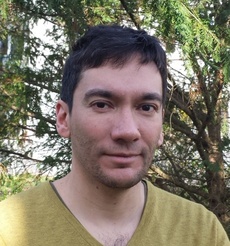
Prof. Dr. Michael Grünberger is the President of Bucerius Law School since October 1, 2023, and holds the Claussen-Simon Foundation Professorship for Private Law and Responsive Jurisprudence. His academic career spans multiple institutions, including the University of Cologne and the University of Bayreuth, with a focus on modernizing legal frameworks for digital society. Education: LL.M. from New York University School of Law (2004-2005), Doctorate at University of Cologne (2005) Expertise: Responsive jurisprudence, digitalization's legal implications, contract law reform, non-discrimination law, and intellectual property. Grünberger's research emphasizes responsive legal dogmatics and contractual fairness in digital contexts , particularly in data access, consumer rights, and EU regulatory frameworks. He advocates for academically sustainable law and diversity in legal education to enhance justice and innovation. His publications (2013-2021) span copyright harmonization , digital goods contracts , and non-discrimination analysis , reflecting interdisciplinary trends in legal sociology , technology law , and comparative jurisprudence . Notable awards include the CBH Promotionspreis (2006) and DAAD Scholarship for NYU studies. Grünberger champions student engagement, maintaining close contact at Bucerius Law School. He previously served as Dean (2022-2023) and Pro-Dean (2020-2022) at the University of Bayreuth. Professional memberships include the European Law Institute and German Society for Comparative Law .
Dr. Peter Kissmann is a researcher in the Computer Science Department at Universität des Saarlandes, Germany, affiliated with the Foundations of Artificial Intelligence (FAI) Group. His work focuses on automated planning systems, particularly in optimal and net-benefit planning domains. Research Interests: His primary research areas include Artificial Intelligence, Automated Planning, Symbolic Reasoning, Heuristic Search, and Knowledge Representation. He specializes in BDD-based planning, variable ordering, and symbolic search algorithms for optimal planning. The 15 most recent publications reflect his sustained contributions to the International Planning Competitions (IPC) from 2008 to 2014, showcasing evolution in planner design, including support for conditional effects, bidirectional search, improved variable ordering, and integration of modern BDD libraries like CUDD. These works demonstrate deep technical innovation in planner efficiency, robustness, and scalability. Scientific Awards: No awards mentioned in the provided text. Advising and Grants: There is no explicit information about students or grant funding in the provided material. However, his leadership in developing and releasing competitive planning systems suggests involvement in research projects, possibly with student contributors or collaboration within the FAI group. Labs and Teams: He is a member of the Foundations of Artificial Intelligence (FAI) Group at Universität des Saarlandes, which develops advanced planning systems and participates in international competitions like the IPC.
Rocco Oliveto is a Professor in the Department of Computer Science at the University of Salerno, Italy, with a distinguished research career spanning over two decades in empirical software engineering. His work bridges theoretical software engineering principles with practical applications, with recent expansion into healthcare informatics and machine learning applications. His research interests focus on code quality assessment, software maintenance practices, developer behavior analysis, and empirical studies of software engineering phenomena. He has made significant contributions to understanding code smells, bug prediction, API compatibility issues, and more recently, container technologies and smart contract analysis. His recent work demonstrates a strategic expansion into healthcare applications, leveraging software engineering techniques for medical diagnostics and rehabilitation systems. Oliveto's publication pattern shows consistent productivity with multiple high-impact publications each year across top venues including IEEE Transactions on Software Engineering, ACM Transactions on Software Engineering and Methodology, and Empirical Software Engineering journal. His recent articles (2023-2025) reveal a growing interest in applying software engineering techniques to healthcare domains while maintaining strong contributions to core software engineering topics. The research demonstrates sophisticated methodological approaches combining empirical studies with machine learning techniques. His collaborative network includes prominent researchers such as Simone Scalabrino, Gabriele Bavota, and Andrea De Lucia, with whom he has co-authored numerous high-impact publications. This collaboration spans both traditional software engineering topics and emerging interdisciplinary applications in healthcare.
Ivan Fernandez-Corbaton is a Project Leader and Staff Scientist at the Institute of Nanotechnology, Karlsruhe Institute of Technology (KIT), where he leads research in the Theoretical Nanooptics unit. His position focuses on fundamental electromagnetic theory with applications in nanophotonics and metamaterials. His research centers on the systematic use of electromagnetic duality symmetry and its conserved quantity, electromagnetic helicity, to treat electromagnetic polarization degrees of freedom. This approach provides insights and design guidelines across diverse areas including zero backscattering, optical activity, metamaterials for transformation optics, and nanophotonic phenomena involving electromagnetic angular momentum. His work bridges theoretical physics with practical applications in chiral sensing, thermal radiation control, and light structuring technologies. Analysis of his recent publications reveals a strong focus on computational methods for electromagnetic problems, particularly the T-matrix formalism extended to polychromatic fields and complex geometries. His research increasingly integrates multi-scale approaches connecting quantum chemical simulations with classical electromagnetic modeling, especially for molecular nanomaterials and chiral structures. The work shows consistent theoretical depth with practical applications in sensing, light manipulation, and thermal radiation control. As a Staff Scientist, Fernandez-Corbaton collaborates extensively within KIT's Carsten Rockstuhl's Lab and with international partners. His research has significant implications for chiral molecule detection, photonic device design, and fundamental electromagnetic theory. He maintains active publication output with numerous preprints available on arXiv and ResearchGate, reflecting his commitment to open scientific communication.
Frank Förster is a computational biologist affiliated with the Department for Bioinformatics at the Justus-Liebig-University Gießen since 2019. He previously held positions at the Fraunhofer IME-BR (2017-2019) and served as a Lecturer at the University of Würzburg (2010-2017), where he also completed his PhD (summa cum laude) in 2007-2010. His research spans bioinformatics, genomics, and molecular biology with a focus on tardigrades, carnivorous plants, and microbiota analysis. Education Diploma in Biochemistry and Molecular Biology, University of Hamburg (1999-2007) PhD (summa cum laude) in Bioinformatics, University of Würzburg (2007-2010) Research Interests Phylogenetics and RNA secondary structure analysis Genome and transcriptome assembly Stress adaptation mechanisms in extremophiles Computational tools for metagenomic and microbiota studies Venom system evolution and characterization Plant carnivory genomic basis Scientific Contributions Developed bioinformatic tools like AliTV, chloroExtractor, and microPIECE for genome/transcriptome analysis Published extensively on tardigrade stress response, plant genomics, and microbiome defense systems Debated horizontal gene transfer in tardigrades and ITS2 database expansions Explored venom composition trade-offs in wasp spiders and chloroplast genome tools
Frank Böhr is a PostDoc researcher in the graduate school “Embedded Microsystems” at the Albert-Ludwig-University of Freiburg/Breisgau. He previously studied and conducted research at the Technical University of Kaiserslautern and worked at the Fraunhofer Institute for Experimental Software Engineering (IESE). His work bridges academic research and industrial application, particularly in embedded and automotive software systems. Education: Dipl.-Inf. and Dr.-Ing. from Technical University of Kaiserslautern Professional Affiliation: Fraunhofer IESE, University of Freiburg Teaching: Delivered a lecture on Introduction to Computer Science (Summer 2012) Invited Talks: Presented at the University of Tennessee (2009, 2010) Frank Böhr's primary research interest lies in model-based software testing , with a strong emphasis on model-based statistical testing (MBST) . His work focuses on enhancing the reliability and quality of embedded and real-time systems through rigorous, usage-driven testing methodologies. He investigates how to model software usage effectively using techniques such as stochastic Petri-Nets and Markov chains, and how to apply these models to generate realistic and statistically valid test cases. His research spans both theoretical foundations and practical tool development, aiming to automate the testing process and improve test coverage in industrial settings. The recent publications reflect a consistent focus on applying model-based statistical testing to complex embedded systems, particularly those involving real-time and hybrid behaviors. Key themes include the integration of testing across development phases (MiL, HiL), the modeling of concurrent and timed usage scenarios, and the automation of test case generation from requirements. Many of his works are applied in automotive contexts, demonstrating strong industry relevance. The evolution of his work shows a progression from foundational modeling (e.g., time, duration, concurrency) to integrated solutions combining requirements, models, and automated testing tools like SIMOTEST. Model-Based Statistical Testing (MBST) Usage modeling and operational profiles Reliability estimation for embedded systems Automated test generation from models Simulink-based testing Industrial application in automotive systems Frank Böhr has advised or collaborated on several research projects, particularly during his tenure at Fraunhofer IESE, where he worked with colleagues such as Robert Eschbach, Thomas Bauer, and Taras Beletski on industrial case studies involving mirror control units and embedded automotive systems. While no formal PhD students are listed, his collaborative publications suggest a mentoring and team leadership role in applied research. He has contributed to teaching as a lecturer, indicating involvement in academic training. There is no mention of external research grants in the provided text. His research is closely tied to practical application and industrial collaboration, particularly through his work at Fraunhofer IESE. While no specific lab or team name is given, his involvement in the “Embedded Microsystems” graduate school at Freiburg and prior work within IESE’s research teams indicates participation in structured research groups focused on software engineering for embedded systems. These environments emphasize interdisciplinary collaboration between academia and industry, particularly in automotive and safety-critical domains.
Prof. Dr. Thomas Müller is a Professor of Inorganic Chemistry at Carl von Ossietzky University Oldenburg, leading the Müller Research Group. His work focuses on Lewis pairs, frustrated Lewis systems, and catalysis using main-group elements like silicon and phosphorus. He has pioneered research on environmentally friendly catalysts for industrial applications, such as hydrogen splitting and CO₂ reduction. His group collaborates internationally with institutions like Tohoku University and the University of Western Ontario. Research Highlights: Frustrierte Lewis-Paare (FLPs), silicium-based catalysts, and sustainable chemistry. Notable Achievements: Co-developed FLPs for hydrogen activation, earned awards for student research, and published in Angewandte Chemie . Key research interests include synthetic inorganic chemistry, materials science, and applications of main-group elements in green chemistry. His team's work on silicium-based Lewis acids has advanced hydrodefluorination and other catalytic processes. Students: Supervised numerous PhD and master’s students, including Marie Würdemann (prize winner), Saskia Rathjen, and Zhaowen Dong (Best PhD Thesis, 2018). Labs/Teams: Active in experimental and theoretical studies of main-group element chemistry, with facilities for advanced spectroscopy and synthesis.
Liss C. Werner is a computational design researcher at Dessau International Graduate School of Architecture , focusing on the intersection of cybernetics, architecture, and digital systems. Her work explores bio-computational reactors, digital twins for buildings, and slime mold-based architectural models. She contributes to urban planning through GIS-based tools and investigates historical cybernetic principles in design. Key Research Areas: Cybernetics, computational architecture, bio-digital integration, digital twins, and urban systems. Collaborations: Projects with scholars in Germany, Austria, and Sweden, including studies on microbial fuel cells and particle physics applications. Theoretical Contributions: Extended Gordon Pask's Conversation Theory into architectural design, proposed 'sixth ecology' frameworks, and critiqued bio-digital fantasies in design. Tools & Methods: Uses Python OpenCV, Grasshopper/Rhinoceros, Arduino-Uno, and parametric CAD environments for bio-reactor monitoring and urban optimization. Publications: 15 recent works cover topics from digital infrastructure in the Anthropocene to cybernetic feedback mechanisms in architecture, with a focus on adaptive geometries and human-machine co-evolution.
Andreas Hepp is a Professor of Media and Communications at the ZeMKI, University of Bremen, Germany, and Head of ZeMKI. He leads the Research Unit 5656 on 'Communicative AI: The Automation of Societal Communication,' funded by DFG and FWF. Previously, he held positions at the University of Münster, Technical University of Ilmenau, and others. His research focuses on deep mediatization, datafication, and the societal impact of digital technologies. He has authored 14 monographs, including Deep Mediatization and Cultures of Mediatization . His work explores how media transformations reshape culture and society, emphasizing concepts like algorithmic automation, pioneer communities, and communicative AI. Education & Positions: Professor at ZeMKI, University of Bremen Past roles at University of Münster, TU Ilmenau, TU Karlsruhe (KIT), University of Trier Visiting roles at LSE, Goldsmiths, Stanford, and others Research Interests: Mediatization theory and its evolution into 'deep mediatization' Datafication of communication and societal infrastructures Role of AI in societal communication (ComAI project) Pioneer communities (e.g., Maker Movement, Quantified Self) Local journalism and platform alternatives (e.g., molo.news) Awards & Recognition: 2020 Theory Award from DGPuK Fellow of the International Communication Association (ICA) Current Projects: Co-spokesperson for ComAI Research Unit Co-founder of molo (local news platform) and OpenQDA (qualitative research software) Research on digital pioneers and the emergence of digital societies Future Work: A book on 'digital pioneers' and their role in shaping societal mediatization, based on six years of empirical research.
Rainer Höckmann is a Researcher at the Laboratory for Digital and Microprocessor Technology , part of the Faculty of Engineering and Computer Science at Osnabrück University of Applied Sciences . Since 2008, he has focused on digital systems, FPGA accelerators, and wireless network concepts. Education: Diplom-Ingenieur (FH) in Computer Science (2006) Research interests include: Digital and microprocessor technology FPGA-based hardware acceleration Embedded microcomputing systems Compiler construction and sensor technology Wireless network relaying strategies Quality-of-service mechanisms in telecom networks His publication trends show expertise in: Cooperative relaying topologies Multimedia broadcasting enhancements Portable FPGA design frameworks Next-gen network concepts Teaching activities include: Bildgebende Sensortechnik Compilerbau Digitaltechnik Embedded Systems Hardware/Software Co-Design Rechnerarchitektur Professional projects : HPVis visual data project (2012-2014) C-MOBILE (mobile multicast/broadcast) C-CAST (context-dependent data transport)
Katrin Amunts is a University Professor at the Cécile and Oskar Vogt Institute for Brain Research of Heinrich-Heine-University Düsseldorf and heads the Institute for Neuroscience and Medicine (INM-1) at Forschungszentrum Jülich. Her research focuses on creating multi-level brain atlases through cytoarchitectonic, molecular, and fiber architecture analysis. Director of the Cécile and Oskar Vogt Institute for Brain Research Head of INM-1 at Forschungszentrum Jülich Pioneered the BigBrain ultra-high-resolution 3D human brain model Research Interests: Combining image analysis, high-performance computing, and big data analytics to map brain structure-function relationships, intersubject variability, and interspecies differences. Her work underpins the Human Brain Project. Key Publications: Her research output includes probabilistic cytoarchitectonic atlases, comparative studies of avian and human brain circuits, and ultra-high-resolution models. These focus on cortical organization, receptor mapping, and neuroethical frameworks.
César Canas is a researcher affiliated with McGill University , focusing on distributed systems and event-based architectures. His work bridges theoretical advancements with practical applications in multiplayer gaming and cyber-physical systems , often involving collaborations with institutions like Technische Universität Münich and University of Toronto. Research interests center on publish/subscribe (pub/sub) systems , network designs for real-time applications, and graph-based middleware. Key contributions include frameworks like GraPS (Graph Publish/Subscribe Middleware) and tools for monitoring pub/sub activity in cyber-physical systems. His publications from 2011–2016 highlight trends in event-driven architectures , with applications in interest management, parametric subscriptions, and scalable game networking. Notable collaborations include work on testbeds for pub/sub network engines and dynamic subscription evolution.
Jocelyn Simmonds is a faculty member in the Department of Computer Science at the University of Chile, Faculty of Physical and Mathematical Sciences. Her research spans software engineering, computing education, and gender diversity in STEM. She has published extensively in top-tier venues and collaborates with leading researchers in the field. PhD in Computer Science, University of Toronto, 2011 Extensive publication record from 2003 to 2025 Key collaborator: María Cecilia Bastarrica, Nancy Hitschfeld-Kahler, Francisco J. Gutierrez Her primary research interests include software engineering education , computational thinking for K-12 and vocational schools, and gender diversity and inclusion in computer science and software engineering. She has led initiatives to integrate computational thinking into teacher training and has studied the impact of affirmative action on female enrollment in CS/SE programs. Her recent publications reflect a strong trend toward computing education and social aspects of software engineering, particularly focusing on diversity, inclusion, and pedagogical methods. Earlier work was more technical, covering model-driven engineering, software process lines, and runtime monitoring of web services. Scientific Awards: No awards explicitly mentioned in the provided text. Jocelyn Simmonds has advised and collaborated with several students and researchers, including Constanza Diaz, Carlos Estay, Maíra Marques, and others, particularly in projects related to computational thinking and educational interventions. She has been involved in national training programs and initiatives to promote women in computing. Her work often involves empirical studies and systematic literature reviews, contributing both to technical software engineering knowledge and to the understanding of social dynamics in computing education. Laboratories and Research Teams: Collaborates with the research group at the Department of Computer Science, University of Chile. Active participant in international research collaborations, particularly in software engineering and computing education communities.
Dr. Sebastian Schmelzle is a researcher at the Department of Biology, Technische Universität Darmstadt , where he works on functional morphology and biomechanics of arthropods. Since 2022, he has also served as CEO of Small World Vision GmbH . His academic career includes a magna cum laude PhD in Biology (2015) and research roles in DFG- and BMBF-funded projects like LIS, Waldklimafonds, NOVA, and ASTOR. He specializes in 3D imaging techniques, particularly synchrotron microtomography , and has contributed to open-source platforms like Biomedisa . Education : PhD in Biology (2015, TU Darmstadt), Diploma in Biology (2008, Eberhard Karls University Tübingen) Research interests focus on arthropod defensive mechanisms , notably the ptychoid defense in oribatid mites. His work explores how evolutionary lineages independently develop exoskeletal and muscular adaptations for survival. He bridges entomology , materials science , and computational imaging to study biomechanics, surface chemistry, and structural efficiency. Publications highlight his expertise in 3D microtomography (e.g., analyzing ant mandibles, insect cuticular hydrocarbons, and primate retinal structures). Collaborative projects span biomedical image segmentation , insect biomechanics , and synchrotron radiation applications . His recent work integrates machine learning and real-time data filtering for enhanced visualization. Additional contributions include public engagement initiatives like the AR Museum Station and Insect Excursions , aiming to democratize scientific knowledge through interactive exhibits and field studies.
Abhishek Roy is a researcher at Samsung Electronics, Suwon, South Korea , with a PhD in Software Department, Sungkyunkwan University (2010) . His work focuses on 5G/6G wireless networks , Internet of Things (IoT) , and machine learning-based network optimization . His research interests span beamforming , discontinuous reception (DRX) , device-to-device (D2D) communication , and network slicing , often integrating AI/ML for predictive analytics. Key contributions include optimizing NR-Unlicensed spectrum , enhancing V2X communication efficiency, and developing O-RAN frameworks for future networks. Recent publications analyze cross-frequency beam prediction (2024), GPS-based beam selection (2023), and predictive service automation in O-RAN (2022). His work intersects network resource management with smart grid integration and disaster connectivity .