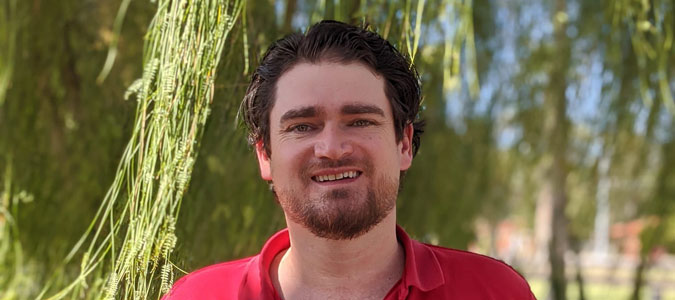
Ghassan Hamarneh is a Professor in the School of Computing Science at Simon Fraser University (SFU). His research focuses on medical image analysis, with expertise in super-resolution microscopy, explainable AI, and biomedical computing. He teaches courses in biomedical computing and scientific computing, emphasizing practical applications like signal processing and health informatics. Education: Ph.D. in Signal and Systems (Chalmers University, 2001), M.Sc. in Digital Communications (Chalmers, 1997), B.Sc. in Electrical Engineering (Jordan University, 1995). Research Interests include developing AI-driven tools for medical imaging, analyzing cellular structures using super-resolution techniques, and addressing ethical challenges in AI deployment. His work bridges computational methods with clinical applications, such as lesion segmentation, PET image analysis, and bias mitigation in medical algorithms. Recent publications highlight advancements in network analysis of molecular structures, debiasing AI models, and improving diagnostic accuracy through deep learning. His lab contributes to open-source software like SuperResNET and MCS-DETECT for super-resolution microscopy analysis. No scientific awards explicitly listed, but his extensive publication record reflects recognition in the field. Advising and grants information is not detailed in the provided texts. Active in teaching, including CMPT 340 (Biomedical Computing) and special research projects.
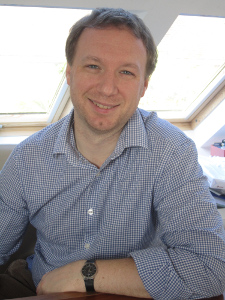
David Hästbacka is an Associate Professor (tenure track) at the Department of Computing Sciences, Faculty of Information Technology and Communication Sciences at Tampere University. His research focuses on software engineering, industrial automation, and energy systems, emphasizing system architecture, interoperability frameworks, and dependable IoT solutions. He leads a research group exploring edge and cloud computing, semantic integration, and smart energy systems. Education & Professional Background : While specific educational details are not provided, his academic career includes roles such as Postdoctoral Researcher in the SEMIS project (2017-2020) and extensive involvement in EU-funded initiatives like COCOP (EU H2020) and Horizon Europe projects. Research Projects : Active in high-impact projects like Hedge-IoT (Horizon Europe, 2024-2027), TwinfFlow (Business Finland), and TRINEFLEX (Horizon Europe), with a focus on industrial automation, distributed systems, and energy grids. Past projects include FEMMa (Business Finland), DisMa (Academy of Finland), and Arrowhead (ECSEL). Teaching & Supervision : Specializes in Web/Cloud architectures, IoT systems, and dependable automation technologies. Supervises students in topics like edge computing frameworks and MLOps pipelines. Technical Contributions : Develops frameworks for industrial interoperability (e.g., OPC UA PubSub integration), edge-cloud toolchains, and MLOps methodologies. His work addresses challenges in microservices, Kubernetes distributions, and semantic data integration. Labs & Teams : Leads a research group advancing automation technologies through interdisciplinary collaboration, with partnerships in industry and academia to bridge theory and practice in smart systems.
Jedidiah Crandall is an Associate Professor at Arizona State University's School of Computing and Augmented Intelligence, with an affiliation to the Biodesign Center for Biocomputing, Security and Society. His research focuses on Internet censorship, network security, and privacy-preserving technologies. Crandall collaborates with journalists and activists to expose surveillance mechanisms, particularly in politically sensitive regions like Russia and China. His work includes analyzing VPN vulnerabilities , decentralized censorship systems , and cross-border data flows . He teaches advanced courses in computer network security and advises graduate students on thesis/dissertation research. Research trends in his publications emphasize measuring state-level information control , attack vectors in modern networks , and secure communication technologies . Notable work includes TSPU: Russia's censorship infrastructure and Hidden Links: Analyzing Secret Families of VPN Apps . Crandall's teaching spans courses like Advanced Computer Network Security and Applied Cryptography , reflecting his commitment to preparing the next generation of security professionals. His Censored Planet project tracks global Internet censorship patterns through large-scale measurements.
Julia Chamot-Rooke is a Principal Investigator and Researcher at the Institut Pasteur in Paris, France, affiliated with the Department of Structural Biology and Chemistry and the Mass Spectrometry for Biology unit (UTechS MSBio), a joint CNRS service and research unit (USR2000). She leads multiple projects in advanced proteomics and is the PI for the Institut Pasteur in the European Proteomics Infrastructure Consortium providing access (EPIC-XS). Her research focuses on developing innovative methods in top-down proteomics , cross-linking mass spectrometry , and structural proteomics to study intact proteins, post-translational modifications, and protein complexes. Her work has applications in microbiology, infectious diseases, and host-pathogen interactions. She has developed the ProteoCombiner software to integrate proteomics data for improved proteoform characterization. The recent publications reflect a strong emphasis on structural and functional proteomics , particularly in microbial systems and immune interactions. Trends include the use of advanced mass spectrometry techniques (HDX-MS, cross-linking MS, top-down MS) to investigate protein structure, dynamics, and interactions in pathogens and host systems. There is also a growing focus on software and tool development to enhance data analysis and reproducibility in proteomics. Principal Investigator, EPIC-XS at Institut Pasteur Coordinator, Joint Research Activity on Future and Emerging Proteomics Technologies Lead Developer, ProteoCombiner software She supervises PhD students and research engineers and collaborates widely on projects involving bacterial pathogenesis, immune evasion, and structural biology. Her lab is equipped with state-of-the-art Orbitrap mass spectrometers and participates in transnational access programs, providing cutting-edge proteomics services to the European research community.
Seongkyoon Jeong is an Assistant Professor of Supply Chain Management at the Haslam College of Business , University of Tennessee, Knoxville. His research addresses contemporary challenges in digital supply chains, cybersecurity risks, and sustainable operations. PhD (2022) - Supply Chain Management, Arizona State University MSc (2016) - Management, Georgia Institute of Technology MSc (2009) - Technology Management, Economics and Policy, Seoul National University BSc (2007) - Naval Architecture and Ocean Engineering, Seoul National University Jeong's work bridges supply chain security and sustainability , with recent publications examining cyberattack dynamics , epidemic-driven demand , and technology convergence . His 2018-2025 publications reveal a trajectory from R&D collaboration to digital transformation in supply chains. Scientific Awards Jack Meredith Best Paper Honorable Mention (JOM 2023) Arizona State University Outstanding Research Award (2022) Korea Management Association Consulting Excellence Award (2018) KIPO Director's Research Award (2016) Korea Institute for Industrial Economics and Trade Best Project (2013) Korea Inno-Skill Grand Prize (2010) Previously at Korea Institute of Machinery and Materials, Jeong contributed to interorganizational R&D before focusing on supply chain dynamics. His media contributions to Supply Chain Management Review and Supply Chain Dive highlight global cybersecurity risks and semiconductor production challenges .
Andreas Ekelhart is a Researcher at TU Wien's Department of Information and Software Engineering. His work focuses on cybersecurity, cyber-physical systems, and industrial control systems. He specializes in developing frameworks like SLOGERT for automated log analysis and Kyrstal for attack discovery using knowledge graphs. His research also explores digital twin technology for threat detection and semantic web applications in machine learning systems. Key contributions include the VloGraph framework for distributed security log analysis and the QualSec approach for automated security risk identification in production systems. He collaborates on standards like AutomationML and emphasizes privacy-preserving data analysis through semantic architectures.
Nickolai Zeldovich is the Joan and Irwin M. Jacobs Professor of Electrical Engineering and Computer Science at MIT, and a member of the Computer Science and Artificial Intelligence Laboratory (CSAIL). He received his PhD from Stanford University in 2008 and focuses on building practical secure systems, including encrypted databases, undefined behavior detection tools, formally verified file systems, and cryptocurrency protocols. His work spans both theoretical and applied aspects of computer security and distributed systems. Research interests include: Secure system design Distributed consensus mechanisms Formal verification of software/hardware Cryptographic protocols Privacy-preserving web technologies Publications & Verification Tools Recent work focuses on modular verification of complex systems, including: Shipwright (2025): Byzantine-fault-tolerant distributed system verification PoWER (2025): Crash consistency verification framework K2 Architecture (2023): Trustworthy hardware security modules Grove (2023): Separation-logic-based verification library Tiptoe (2023): Private web search protocols Major Awards Best paper award, ACM SOSP (2011, 2015, 2017) Sloan Research Fellowship (2010) NSF CAREER award (2011) MIT Jamieson Award for Teaching (2024) Active in multiple startup ventures including Algorand (cryptocurrency), MokaFive (virtualization), and PreVeil (end-to-end encryption).
Maarten De Vos is a Professor at the Department of Electrical Engineering (ESAT) , KU Leuven , with dual appointments in the Faculty of Medicine and Faculty of Engineering Science . He leads interdisciplinary research at the intersection of artificial intelligence and biomedical signal processing.
Karthik Dantu is an Associate Professor in the Department of Computer Science and Engineering at the University at Buffalo, State University of New York, within the School of Engineering and Applied Sciences. His research focuses on mobile sensor networks, robot networks, networked embedded systems, mobile computing, wireless networks, and embedded operating systems. He leads the Distributed Robotics and Networked Embedded Sensing (DRONES) Lab and has received significant funding including an NSF CAREER Award. Dr. Dantu's educational background includes: PhD in Computer Science from University of Southern California (2009) BE in Computer Science from Sri Jayachamarajendra College of Engineering (1999) His research interests center on algorithmic and systems challenges in Edge Computing Systems, with particular focus on enabling seamless vision sensing in cloud-edge environments. Dantu's work bridges mobile systems and robotics, developing novel approaches for UAV software, visual SLAM, and distributed sensing. His research addresses critical challenges in resource-constrained environments, security, and real-time performance for mobile and robotic systems, with emphasis on practical implementations that solve real-world problems in autonomous systems. Dr. Dantu's publication record shows a strong trajectory in mobile systems and robotics research, with increasing focus on edge computing applications for visual sensing. His recent work demonstrates expertise in adapting visual SLAM to edge environments, securing mobile systems through technologies like Rushmore, and developing novel approaches for UAV software reliability and depth sensing. The research spans theoretical algorithms and practical system implementations, with particular strength in bringing academic research to practical applications in robotics and mobile computing. Dr. Dantu has received several scientific honors: NSF CAREER Award on Enabling Seamless Vision Sensing in Cloud-Edge Systems Outstanding service award from the Office of International Services NSF Travel Grant for SenSys 2005 Conference Travel Grant for SIGCOMM 2002 As an advisor, Dr. Dantu has mentored numerous PhD students to completion, with graduates now working at companies like Samsung Research and Zoox Inc., or continuing academic careers as Assistant Professors. His research is supported by substantial grants including a DARPA OFFSET Sprint 4 award ($470k), an NSF CAREER award ($550k), and multiple NSF collaborative grants totaling over $1.5 million. He serves on numerous conference committees including Mobicom, MobiSys, and ICRA, demonstrating leadership in the mobile systems and robotics research communities. Dr. Dantu leads the Distributed Robotics and Networked Embedded Sensing (DRONES) Lab at UB, which focuses on developing algorithms and systems for mobile sensor networks, robot networks, and embedded sensing applications. The lab's work spans theoretical foundations to practical implementations, with particular expertise in UAV systems, visual SLAM, and edge computing for robotics, maintaining strong collaborations with industry partners and other academic institutions to advance the state of the art in mobile and robotic systems.
Nicola Marzari is a Professor of Theory and Simulation of Materials at EPFL, where he also serves as Director of the National Centre for Computational Design and Discovery of Novel Materials (NCCD). He is Chairman of Psi-k, an international network for advanced materials' computational design. Previously, he held the Toyota Chair of Materials Engineering at MIT and leadership roles at the University of Oxford, including Director of the Materials Modeling Laboratory and a Statutory Chair in Materials Modeling. His education includes a Laurea in Physics (summa cum laude) from the University of Trieste, a PhD in Physics from the University of Cambridge under Prof. Michael C. Payne, and postdoctoral work at Rutgers University with Prof. David Vanderbilt. Marzari's research focuses on computational materials science, electronic structure theory, and high-throughput simulations. He develops methods for predicting material properties using first-principles approaches, machine learning, and quantum espresso software. Key areas include energy materials (batteries, thermoelectrics), magnetic materials, and optoelectronic systems. His work bridges fundamental physics and practical material design, emphasizing reproducible workflows and open-source tools like koopmans and AiiDA . His recent articles highlight advancements in machine learning for materials interfaces, dynamical Hubbard functionals, and thermal conductivity modeling. He actively contributes to EuroHPC initiatives for exascale materials design and OPTIMADE standards for materials data exchange. Marzari leads interdisciplinary teams at EPFL and collaborates globally on projects ranging from defect engineering in semiconductors to AI-driven materials discovery. His research aims to accelerate the development of sustainable energy and electronic technologies through computational innovation.
Timothy M. Jones is a Professor of Computer Architecture and Compilation at the University of Cambridge's Computer Laboratory, serving as Director of the Computer Architecture and Semiconductor Design Centre (CASCADE) and Fellow/Director of Studies at Gonville and Caius College. His research focuses on parallelism extraction in applications to enhance performance and address energy efficiency/reliability challenges in compilers, binary translators, and microarchitectures. Current work includes novel cache prefetching techniques, thread-level parallelism schemes, and advanced core prediction methods. He has an Erdős number of 4 and a Dijkstra number of 4 via collaborative networks. Research interests span computer architecture fundamentals, compiler optimizations, hardware security mechanisms, and fault tolerance strategies. Notable contributions include speculative vectorization, heterogeneous parallel error detection (MEEK/FireGuard), and security tools like MarkUs and MineSweeper. CASCADE oversees interdisciplinary projects addressing future microprocessor/system challenges. Jones supervises PhD students through CASCADE's 2025 intake program. Publications emphasize architectural innovations in memory systems, security, and energy efficiency. Key works include MASCOT (memory dependence prediction), Scalar Vector Runahead (2024), and Decoupled Vector Runahead (2023). His work integrates hardware-software co-design principles to tackle real-world processor bottlenecks.
Ahmed Elbeltagi is an Assistant Professor in the Agricultural Engineering Department at Mansoura University's Faculty of Agriculture. His work focuses on hydrology, agricultural water management, and climate change adaptation. Specializes in data-driven modeling for water resource optimization Integrates machine learning with traditional hydrological models Active in climate change impact assessments on agricultural systems Recent research trends include: Developing open-source tools like Aqua-MC for irrigation simulation Applying hybrid deep learning models for evaporation prediction Advancing water quality assessment through multivariate analysis Exploring economic applications of wetlands in arid regions He collaborates with institutions across Egypt, India, China, and Saudi Arabia, with a focus on sustainable water management solutions.
Thomas K. Uchida is an Associate Professor in the Department of Mechanical Engineering at the University of Ottawa, a position he has held since May 2024. Prior to this promotion, he served as an Assistant Professor at the same institution from October 2018 to May 2024. Before joining the University of Ottawa, Dr. Uchida was an Engineering Research Associate (April 2015-August 2018) and Simbios Distinguished Postdoctoral Fellow (July 2012-April 2015) in the Department of Bioengineering at Stanford University. Dr. Uchida's research focuses on the modeling and simulation of dynamic systems, with particular emphasis on human movement biomechanics. His work spans multiple areas including: Simulation-guided design of assistive devices for improving mobility Modelling musculotendon dynamics and energy expenditure Parameter identification and model reduction methods Impact and contact dynamics Development of computational tools for biomechanical analysis He is a co-author of the book "Biomechanics of Movement: The Science of Sports, Robotics, and Rehabilitation" published by MIT Press, and actively contributes to the development of OpenSim, an open-source software platform for modeling musculoskeletal systems and generating simulations of human and animal movement. His work on OpenSim was featured on the cover of PLoS Computational Biology. Dr. Uchida's recent publications demonstrate strong activity in biomechanics, robotics, and computational modeling. His work bridges engineering principles with biological applications, particularly in understanding human movement mechanics. Key trends include applying machine learning to gait analysis, developing enhanced spine models, analyzing human balance stability with time delays, and advancing musculoskeletal simulation techniques. As an academic advisor, Dr. Uchida currently supervises seven graduate students: Firas Baklouti (expected completion August 2025) Shahin Sharafi Kazem Alambeigi Jiawei Gao Yuzhen Yan Manuel Lucas De Oliveira Blake Scott Miller Dr. Uchida collaborates with research teams focused on biomechanics and movement science. His work with OpenSim places him within an international community of researchers developing computational tools for biomechanical analysis, connecting mechanical engineering with biomedical applications in sports, robotics, and rehabilitation.
Deyu Lu is a Physicist with continuing appointment at the Center for Functional Nanomaterials (CFN), Brookhaven National Laboratory, a position held since 2018, and concurrently serves as an Adjunct Professor in the Department of Materials Science and Engineering at Stony Brook University since 2012. His work bridges theoretical physics and materials engineering through advanced computational methodologies. Dr. Lu's educational background includes: B.S. in Physics, Tsinghua University, China, 1997 M.S. in Physics, Chinese Academy of Sciences, 2000 Ph.D. in Physics, University of Illinois at Urbana-Champaign, 2000 His research centers on developing first-principles computational methods including density functional theory and many-body perturbation theory to investigate materials properties. Current focus areas encompass catalytic behavior of 2D zeolites, computational modeling of X-ray spectroscopy (XPS/XAS/XES) for catalysis and battery systems, and machine learning applications for structure-property relationship analysis. This work positions him at the intersection of computational physics, materials characterization, and data science. Analysis of his 2017-2024 publications reveals a progressive integration of machine learning with spectroscopic techniques, particularly in X-ray absorption analysis. Key contributions include the Lightshow Python package for computational spectroscopy inputs and methods for decoding structure-spectrum relationships using physically constrained latent spaces, demonstrating significant advancement in data-driven materials characterization. Within Brookhaven's CFN, Dr. Lu actively contributes to the Theory/Computation group and has organized multiple workshops at NSLS-II and CFN User Meetings, including the 2023 Workshop on X-ray Absorption Spectroscopy Curation, the 2022 Symposium on Electronic Structure of Nanomaterials honoring Dr. Mark Hybertsen, and 2021-2022 workshops on machine learning for battery development and X-ray scattering.
Farinaz Koushanfar is a Professor in the Department of Electrical and Computer Engineering at the Jacobs School of Engineering, University of California San Diego (UCSD) . She holds the Siavouche Nemat-Nasser Endowed Chair and serves as Founding Co-Director of the Center for Machine-Intelligence, Computing and Security . Her affiliations include NSF Trust-Hub (Co-PI) and NSF TILOS AI Institute . She also serves on the Editorial Board of The Proceedings of the IEEE . Research Focus: Prof. Koushanfar leads research in secure and efficient computing , including robust/safe AI , hardware/system security , AI-based optimization , and cryptographically secure privacy-preserving computing . Her work pioneered logic obfuscation/locking for chip security, automated co-design of AI systems , watermarking/tracing of deep learning models , and physical proofs of provenance . She explores co-design with cryptographic constructs for privacy preservation and manages nonlinearities in ciphertext domains. Article Trends: Recent publications show expertise in neural watermarking (deepfakes, media authentication), zero-knowledge proof frameworks , Trojan attack defenses in ML models, secure federated learning , and hardware acceleration of cryptographic protocols . Her work combines machine learning , cryptography , and physical design security across 2022-2025 publications. Scientific Awards: Fellow of ACM Fellow of IEEE Fellow of National Academy of Inventors (NAI) Fellow of Kavli Foundation of NAS Inducted to NAI 2024 Fellows Advising & Leadership: She has advised multiple PhD students who became faculty at top universities (e.g., Stanford, Purdue). She chairs conferences like ACM WiSec 2024 and co-led the NSF SaTC decadal review. Her lab ( ACES Lab ) produces award-winning graduates like Bita Rouhani (DAC Under-40 Innovators) and Shehzeen Hussain (UCSD Best Dissertation Award).