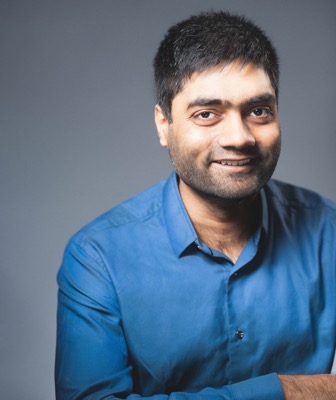
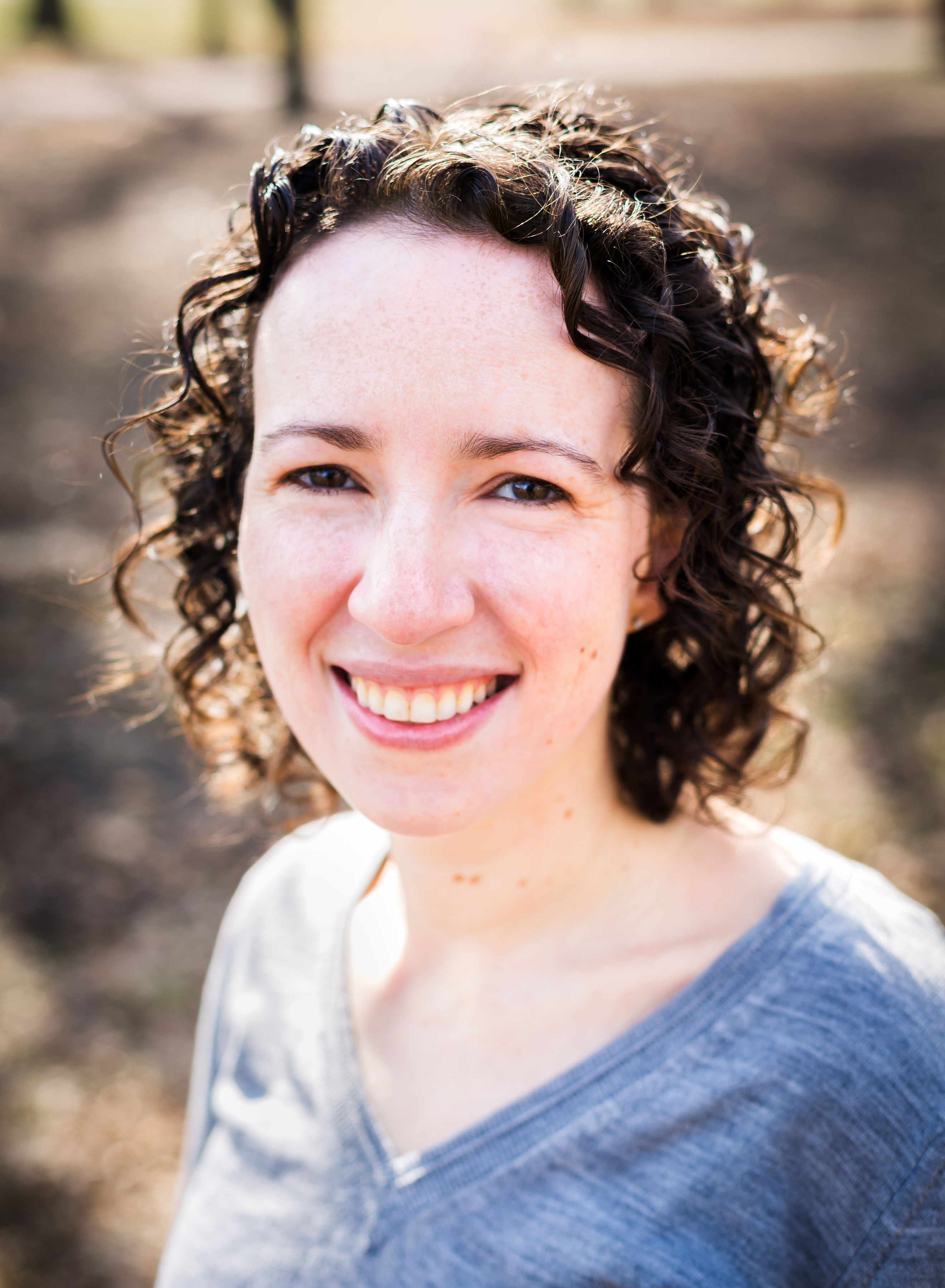
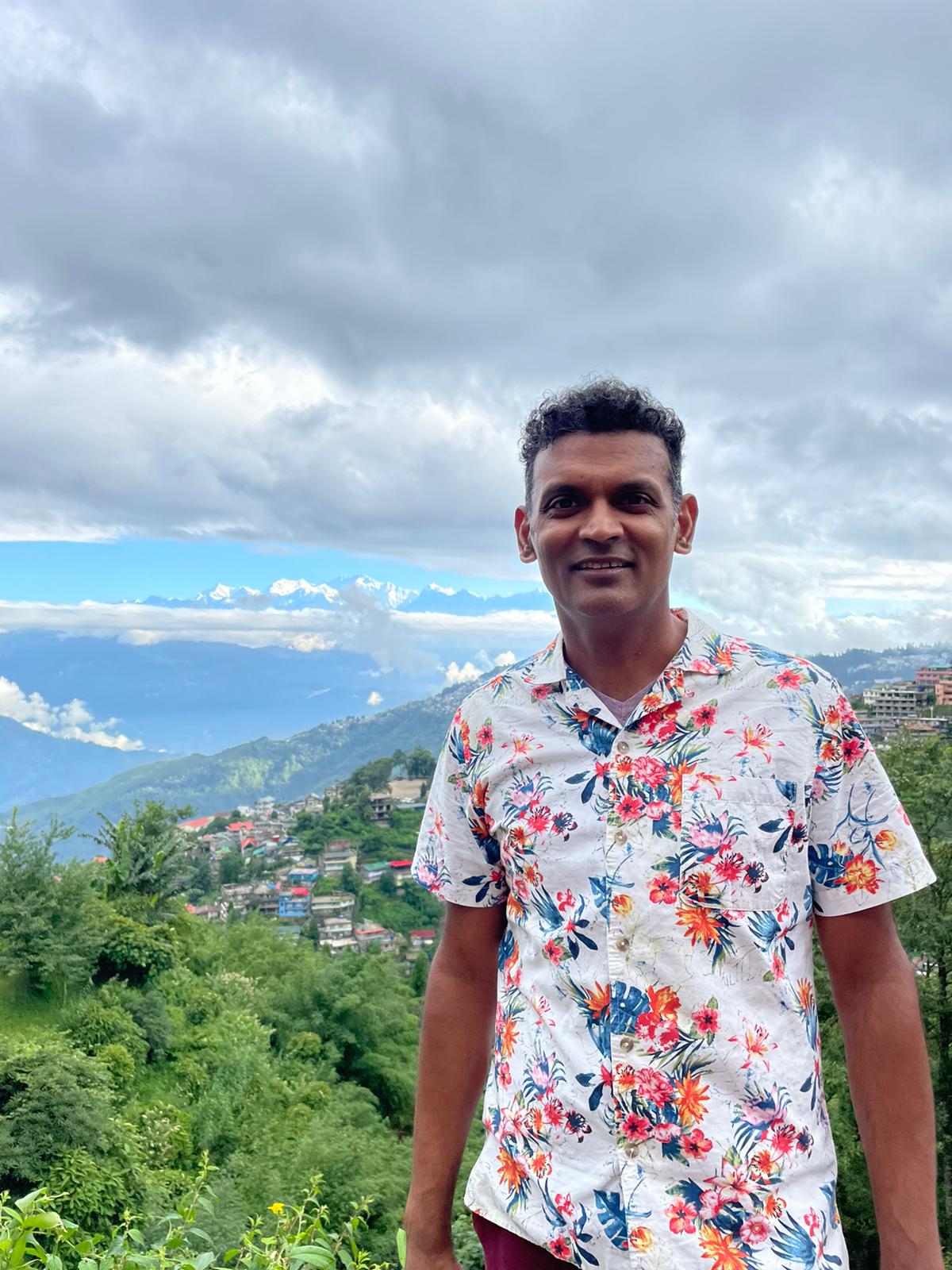
Luca Carlone is the Boeing Career Development Associate Professor in the Department of Aeronautics and Astronautics at MIT and a Principal Investigator at the Laboratory for Information & Decision Systems (LIDS) . He leads the SPARK Lab , focusing on developing certifiable perception algorithms for autonomous systems. PhD in Mechatronics (Polytechnic University of Turin, 2012) Research spans robotics, computer vision, and optimization Research Interests : Certifiable Perception algorithms for high-integrity systems High-level Perception (geometric, semantic, physical understanding) Efficient Perception methods for resource-constrained robots Scientific Contributions include: 2024 Outstanding Systems Paper Award (RSS) 2023 IEEE Transactions on Robotics King-Sun Fu Award 2021 NSF CAREER Award 2020 AIAA Advising Award 2019 Amazon Research Award Advising : Teaches graduate courses like Visual Navigation for Autonomous Vehicles and Robotics: Science and Systems . Collaborates with institutions including JPL, Caltech, and KAIST through the DARPA SubT Challenge.
Chris Atkeson is a Professor at the Robotics Institute of Carnegie Mellon University. His research focuses on achieving human-level competence in machines through humanoid robotics and human-aware environments. He explores machine learning techniques such as reinforcement learning, nonparametric methods, and memory-based learning to develop robots capable of complex tasks like manipulation, locomotion, and perception. His work emphasizes bridging the gap between simulation and real-world applications (sim2real transfer), with contributions to tactile sensing (e.g., FingerVision), dynamic walking control, and human-robot collaboration. Notable projects include participation in the DARPA Robotics Challenge with Team WPI-CMU, where his team developed reliable humanoid behavior for disaster response scenarios. Atkeson’s research spans robotics, computer vision, and control systems, with a focus on enabling robots to perceive, learn, and act in unstructured environments. His recent work includes advancements in 3D scene capture, soft robotics, and energy-based planning for compositional tasks.
Aditya Guntuboyina is an Associate Professor in the Department of Statistics at the University of California, Berkeley. He has held this position since January 2012, following a postdoctoral stint at the Wharton Statistics Department and a PhD in Statistics from Yale University (2011) under Professor David Pollard. He earned his B.Stat and M.Stat degrees from the Indian Statistical Institute, Kolkata. PhD: Statistics, Yale University (2011) B.Stat/M.Stat: Indian Statistical Institute, Kolkata His research focuses on nonparametric and high-dimensional statistics , particularly shape-constrained estimation and Bayesian/Empirical Bayes methods . Key themes include convex regression, isotonic regression, mixture models, and total variation denoising. Recent publications analyze multivariate scale mixtures, convergence rates, and suboptimality of least squares in constrained settings. Aditya has supervised multiple PhD students in the Berkeley Statistics and EECS programs. He teaches courses such as Time Series Analysis (Stat 153/248), Data, Inference, and Decisions (Data 102), and advanced probability (Stat 201A). His work often intersects with machine learning, optimization, and information theory. Scientific contributions include theoretical advances in shape-restricted regression, adaptation in log-concave density estimation, and risk bounds for convex-constrained models. He has published in top journals like Annals of Statistics , Journal of the Royal Statistical Society: Series B , and IEEE Transactions on Information Theory .
Quoc Thong Le Gia is an Associate Professor in the School of Mathematics & Statistics at the University of New South Wales (UNSW), Sydney. He holds a PhD in Mathematics from Texas A&M University (2003), an MS in Mathematics from Texas A&M University (2000), and a BSc in Mathematics and Computer Science from UNSW (1998). His research focuses on Numerical Analysis , Approximation Theory , Partial Differential Equations , and Stochastic Processes , with particular expertise in problems on spherical domains. His work bridges theoretical mathematics with practical applications in computational science, data science, and machine learning. Le Gia's recent publications demonstrate a strong focus on numerical methods for PDEs on spheres, stochastic analysis, and machine learning applications. His work shows consistent progression from theoretical foundations to practical implementations, with increasing interdisciplinary applications in recent years. L. F. Guseman Prize in Mathematics, Texas A&M University (2003) As a dedicated academic mentor, Le Gia has supervised numerous PhD, Master's, and Honours students across computational mathematics and data science topics. He has secured significant research funding through ARC Discovery Projects including DP220101811 (2022-2024) and DP180100506 (2018-2020). Professionally, he serves as External Associate Editor for Frontiers in Applied Mathematics and Statistics , Secretary for ANZIAM's Computational Mathematics Group, and Co-chair of Mathematics of Computation and Optimisation (AustMS Special Interest Group).
Rina Foygel Barber is the Louis Block Professor in the Department of Statistics at the University of Chicago, where she also serves as Co-chair of the Committee on Community, Diversity, and Inclusion (CCDI) and is a member of the Committee on Computational and Applied Mathematics (CCAM). Her educational background includes: PhD in Statistics, University of Chicago (2012), advised by Mathias Drton and Nati Srebro MS in Mathematics, University of Chicago (2009) ScB in Mathematics, Brown University (2005) NSF postdoctoral fellow, Stanford University Department of Statistics (2012-13), supervised by Emmanuel Candès Professor Barber's research focuses on the theoretical foundations of statistical problems in estimation, prediction, and inference, particularly in high-dimensional settings where classical methods may not be reliable. She specializes in distribution-free inference methods such as conformal prediction, multiple testing methods, algorithmic stability, and shape-constrained inference. Her work also extends to modeling and optimization problems in medical imaging reconstruction. Her recent publications demonstrate a strong focus on distribution-free inference, with particular emphasis on conformal prediction, false discovery rate control, and algorithmic stability. Her work bridges theoretical statistics with practical applications, especially in the medical imaging domain. Professor Barber has received numerous prestigious awards: Elected to National Academy of Sciences (2025) MacArthur Fellowship (2023) IMS Fellow (2023) COPSS Presidents' Award (2020) Peter Gavin Hall Early Career Prize (2020) She actively mentors students and collaborators, with many co-authored publications across statistics, machine learning, and medical imaging. Her research has been supported by significant grants that enable her work on theoretical foundations of statistical inference and practical applications in medical imaging. Professor Barber also co-organizes the International Seminar on Selective Inference. Her research group focuses on developing and analyzing estimation, inference, and optimization tools for structured high-dimensional data problems. They work on false discovery rate control, distribution-free inference, and applications in medical imaging reconstruction.
Harish Ravichandar is an Assistant Professor at the School of Interactive Computing , Georgia Institute of Technology, and a core faculty member of the Institute for Robotics and Intelligent Machines (IRIM) . He leads the Structured Techniques for Algorithmic Robotics (STAR) Lab , focusing on structured computational frameworks and learning algorithms with inductive biases to enhance robot efficiency, reliability, and self-sufficiency in human-robot collaboration and complex applications like dexterous manipulation and multi-agent coordination. His research bridges robot learning , human-robot interaction , and multi-agent systems , emphasizing stable, frugal, and safe skill acquisition from human demonstrations. Key themes include intention inference , trajectory optimization , and heterogeneous team coordination , often leveraging Koopman operators , hypernetworks , and graph-based methods . Scientific recognition includes the NSF CAREER Award , IEEE MRS Best Paper Award , and Georgia Tech’s College of Computing Outstanding Post-Doctoral Research Award . His work also received the ASME DSCC Best Student Paper Award and P&W Institute Graduate Fellowship . Harish’s educational background includes a Ph.D. in Electrical and Computer Engineering from the University of Connecticut (2018) , an M.S. from the University of Florida (2014) , and a B.E. in Instrumentation and Control Engineering from Anna University (2012) . He previously held postdoctoral and research scientist roles at Georgia Tech before his current position.
Yannick BARAUD is a Full Professor in Mathematics at the University of Luxembourg, leading the group 'Developing Contemporary Mathematical Statistics' within the Department of Mathematics. He holds the ERA-Chair 'SanDAL' in Mathematical Statistics and Data Science, funded by the European Commission. His research focuses on robust estimation, model selection, hypothesis testing, and nonparametric methods. He serves as the Study Programme Director for the Master in Data Science and has held academic positions at the University of Nice Sophia Antipolis and CNRS. His career includes roles as a researcher at École Normale Supérieure (Paris) and a lecturer at the same institution. He earned his PhD from Université Paris-Sud and studied at École Normale Supérieure de Cachan. His work emphasizes rigorous statistical methodologies, including rho-estimation and robust Bayes-like approaches. Notable contributions include advancements in density estimation under shape constraints and robust regression techniques. He has published extensively on topics such as loss functions, empirical processes, and statistical inference, with applications in epidemiology and data science. His leadership in the SanDAL initiative underscores his commitment to bridging mathematical statistics and practical data science challenges. Collaborations and grants further highlight his role in advancing interdisciplinary research.
Kent Yagi is an Associate Professor in the Physics Department at the University of Virginia, specializing in theoretical astrophysics, gravity, and cosmology. His research focuses on using gravitational waves from compact objects like black holes and neutron stars to probe fundamental physics, including testing General Relativity in strong-field regimes and determining the equation of state of nuclear matter. Position: Associate Professor (2023-present), previously Assistant Professor (2017-2023) Education: Ph.D. in Physics from Kyoto University (2012) Prior positions: Postdoctoral Research Scholar at Princeton University (2015-2017), Postdoctoral Research Associate at Montana State University (2012-2015) Yagi's research centers on theoretical modeling of neutron stars and gravitational wave physics. He is particularly known for discovering the 'I-Love-Q' universal relations among neutron star observables that are insensitive to the equation of state. His work enables testing strong-field gravity and probing nuclear physics through gravitational wave observations. He also investigates binary pulsar systems as precision laboratories for testing gravitational theories beyond General Relativity. His research has significant implications for multi-messenger astronomy, connecting gravitational wave observations with electromagnetic counterparts to extract fundamental physics. The field has evolved rapidly since the first gravitational wave detection in 2015, and Yagi's theoretical predictions have helped shape how we interpret these observations to test gravity and nuclear physics in extreme conditions. NSF CAREER Award (2023) Sloan Research Fellowship (2019) IUPAP Young Scientist Prize (2019) Mead Honored Faculty (2018-2019) Yagi leads an active research group at UVA with multiple graduate and undergraduate students. His group collaborates with researchers across departments, including high energy physicists, nuclear physicists, astronomers, and researchers at the National Radio Astronomy Observatory. Current research directions include multi-band gravitational wave tests of general relativity, constraining nuclear matter parameters with GW170817, and developing parameterized post-Einsteinian gravitational waveform models for various modified gravity theories. The group has received multiple student research fellowships and awards, demonstrating strong mentorship and training of the next generation of physicists.
Santosh S. Vempala is the Frederick P. Storey II Chair and Professor of Computer Science at Georgia Institute of Technology's College of Computing with joint appointments in the H. Milton Stewart School of Industrial and Systems Engineering (ISyE) and the School of Mathematics. He teaches courses including CS6150: Computing for Good (C4G) and CS6550/CS8803DAA: Continuous Algorithms: Optimization and Sampling. His research spans multiple interconnected domains: Algorithmic convex geometry and high-dimensional sampling Continuous optimization methods Computational models of brain function Randomized algorithms with applications to machine learning Vempala's recent publications reveal a strong focus on developing efficient algorithms for high-dimensional problems, particularly logconcave sampling and convex body integration. His work bridges theoretical computer science with practical applications in optimization and neuroscience, with increasing attention to the intersection of theoretical frameworks and brain computation models through his collaboration with Christos Papadimitriou. He leads the Computing for Good (C4G) initiative which applies computational approaches to social challenges, including projects like Safe and Easy Passwords!, LifeNet, C4G BLIS, and Shelter-to-Home that address problems in resource-constrained settings. Vempala currently advises PhD students Xinyuan Cao, Mirabel Reid, Max Dabagia, and Yunbum Kook, and has authored influential books including 'Spectral Algorithms' and 'The Random Projection Method' that have shaped research in algorithmic convex geometry. His tutorials at major conferences, including STOC 2015 on 'Sampling and Volume Computation in High Dimension' and FOCS 2020 on 'Computation in the Brain,' demonstrate his leadership in connecting theoretical computer science with broader scientific challenges.
Mikael Johansson is a Professor at Kungliga Tekniska Högskolan (KTH), specializing in Control Technology . He teaches and coordinates courses such as Distributed Optimization (FEL3311) and various advanced-level degree projects in computer science, electrical engineering, and systems engineering. His research spans Control Systems , Machine Learning , and Optimization , with a focus on asynchronous algorithms, federated learning, and applications in energy systems and construction. His work includes 15 recent publications on topics like neural networks, distributed optimization, and battery technology. Notable areas of contribution are in asynchronous learning, federated learning with privacy constraints, and quasi-Newton methods for optimization. His research bridges theoretical advancements with practical applications in urban design, healthcare, and autonomous systems.
Charles Doss is an Associate Professor in the School of Statistics at the University of Minnesota. He earned his PhD from the University of Washington in 2013 under Jon Wellner and holds a B.S. in Mathematics from the University of Chicago. His research focuses on empirical process theory, nonparametric estimation/inference for functions with shape constraints (e.g., concavity, log-concavity), and applications to causal inference, birth-death processes, and unlinked regression. His recent publications address problems such as doubly robust estimation for continuous treatments, heteroscedasticity detection, and convex stochastic optimization. He has received significant funding, including NSF grants DMS-2210312 and DMS-1712664, as well as institutional awards. Warwick Mid-Career Faculty Research Award (2022–2023) NSF DMS-2210312 Grant NSF DMS-1712664 Grant He has served as an Associate Editor for The Electronic Journal of Statistics (2022–present) and The American Statistician (2020–2024). He mentors students such as Guangwei Weng, Daeyoung Ham, and Oliver VandenBerg and contributes to outreach programs like Run the World, a Machine Learning summer camp for high school students.
Sabyasachi Chatterjee is an Associate Professor in the Department of Statistics at the University of Illinois at Urbana-Champaign, affiliated with the College of Liberal Arts & Sciences. He joined UIUC in 2017 after serving as a Kruskal Instructor at the University of Chicago. He earned his PhD in Statistics from Yale University (2014), advised by Andrew Barron. His research focuses on nonparametric signal estimation, shape-constrained estimation (monotonicity, convexity, unimodality), statistical information theory, and resampling methods like cross-validation. He also explores statistical learning theory, online learning, and applied probability. His recent work includes advancements in quantile regression via dyadic CART, adaptive estimation of piecewise polynomials, and spatially adaptive prediction algorithms. Key contributions involve risk bounds for trend filtering and cross-validation frameworks for signal denoising. His research is supported by NSF Grant DMS-1916375 on nonparametric estimation under shape/norm constraints. Chatterjee collaborates on grants and has advised multiple students (though specific names are not listed in available texts). His lab’s work bridges theoretical statistics with practical applications in data science and signal processing.
Will Smith is a Professor in Computer Vision at the University of York, leading the Vision, Graphics and Learning (VGL) research group. He previously held a Royal Academy of Engineering/The Leverhulme Trust Senior Research Fellow (2019-2020) and serves as Associate Editor of Pattern Recognition . PhD in Computer Vision (2007) and BSc in Computer Science (2002), both from University of York His research bridges computer vision, graphics, and machine learning, focusing on physics-based 3D vision , shape/appearance modeling , and statistical/machine learning applications in areas like face/body analysis, surveying, object capture, and inverse rendering. Methodologically, he works with convex/nonlinear optimization, manifold learning, and computational geometry. Recent publications emphasize neural rendering (ECCV 2024), document symbol detection (ICDAR 2023), and rotation-equivariant spherical neural fields (NeurIPS 2022). These works reflect trends in 3D-aware machine learning, outdoor scene modeling, and geometrically constrained optimization. Royal Academy of Engineering/The Leverhulme Trust Senior Research Fellow (2019-2020) Associate Editor, Pattern Recognition (2019–Present) Smith supervises nine PhD students including Evgenii Kashin, James Gardner, and Tejas Pandey. He has participated in numerous service roles: Area Chair for ICCV 2023, Programme Chair for BMVC 2020, and long-term reviewer for CVPR/ICCV/ECCV conferences since 2008. His lab engages in projects like Branching Out (historic tree mapping) and Google Daydream collaborations on VR/AR head modeling.
Dr. Zhenghao Chen is a Lecturer in Data Science at the University of Newcastle, affiliated with the School of Information and Physical Sciences. He earned his Ph.D. from the University of Sydney in 2022, following a B.Eng. H1 degree from the same institution in 2017. Prior to his current position, Dr. Chen served as a Postdoctoral Research Fellow at the University of Sydney (2022-2024), a Research Engineer at TikTok (2024), and as a Visiting Research Scientist at Microsoft Research and Disney Research (2022-2023). Dr. Chen's educational background includes: Doctor of Philosophy, University of Sydney (2022) Bachelor of Information Technology (B.Eng. H1), University of Sydney (2017) Dr. Chen's research spans multiple domains within artificial intelligence, with particular expertise in Computer Vision, Natural Language Processing, and Machine Learning. His work in Generative AI has garnered significant recognition, with applications in both academic and industrial settings. His research interests are reflected in his Fields of Research percentages: Deep Learning (30%), Computer Vision (30%), Natural Language Processing (20%), and Multimodal Analysis and Synthesis (20%). His publications in top-tier venues like CVPR, ICCV, ECCV, and journals like IEEE TPAMI demonstrate the breadth and impact of his work. Analysis of Dr. Chen's recent publications (2022-2025) reveals a consistent focus on neural compression techniques, 3D perception, and multimodal AI systems. His work spans medical imaging (CXR bone suppression), video compression, point cloud processing, and neural surface reconstruction. A notable trend is his exploration of efficient AI systems that work well under resource constraints, as evidenced by his involvement in the EMCLR workshop. His research often bridges theoretical advances with practical applications across multiple domains. Dr. Chen has received several prestigious awards: Microsoft Research Asia StarTrack Fellowship (2025) ACM SIGMM Award for Outstanding PhD Thesis in Multimedia Computing (2024) Australia Government Research Training Program (RTP) Fellowship (2019) Google Australia Prize for Excellence in Computer Science (2017) Dr. Chen is actively involved in the academic community, serving on the Program Committee for major AI conferences including CVPR, ICCV, ECCV, SIGGRAPH, AAAI, and others. He also organizes workshops in Multimedia and ICCV conferences, and serves as a reviewer for prestigious journals. His teaching responsibilities include courses on Intelligent Visual Signal Understanding, Video Intelligence and Compression, Database and Information Management, and Computing Fundamentals at both the University of Sydney and University of Newcastle.
Alexandros Kontogiannis is a research fellow at the University of Cambridge, Department of Engineering, specializing in fluid dynamics and applied mathematics. His work combines Bayesian inference, machine learning, and physics-informed algorithms to solve inverse problems in magnetic resonance velocimetry (MRV) and fluid-structure interaction. EPSRC National Fellow in Fluid Dynamics Member of Energy, Fluids and Turbomachinery Division Research Focus: Development of digital twin frameworks that integrate MRV data with Navier-Stokes equations to reconstruct flowfields, infer rheological parameters in non-Newtonian fluids, and estimate hidden quantities like pressure and wall shear stress. Key innovations include: Physics-informed compressed sensing for sparse MRV data Simultaneous boundary shape and flowfield estimation Bayesian turbulence model parameter learning Scientific Awards: ASME Fluids Engineering Division Graduate Student Scholar (2021) Technical Chamber of Greece (TEE) Award (2018) Limmat Foundation Academic Excellence (2017) Mentzelopoulos Scholarship for international studies (2017) Greek State Scholarships Foundation Award (2012) Key Contributions: Algorithms for 3D flow reconstruction with adaptive discretization, viscous signed distance field regularization, and multi-objective aerodynamic shape optimization. His methodologies enable 27x reductions in MRI scanning time while maintaining diagnostic accuracy.