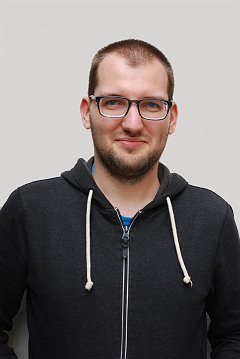
Davide Solda is a Researcher in the Knowledge-Based Systems group at Vienna University of Technology. His work focuses on formal methods in artificial intelligence, particularly temporal logic and knowledge representation. Research interests include: computational logic, multi-agent systems, epistemic planning, and automated reasoning techniques. His investigations bridge theoretical foundations with practical applications in system verification. Recent publications demonstrate consistent focus on temporal extensions of logical frameworks, with progressive applications in multi-agent scenarios and runtime verification contexts.
Krishnendu Chakrabarty is the Fulton Professor of Microelectronics in the School of Electrical, Computer and Energy Engineering at Arizona State University (ASU). He also serves as CTO of the SWAP Hub for the Department of Defense Microelectronics Commons and Director of the ASU Center for Semiconductor Microelectronics (ACME). Previously, he was the John Cocke Distinguished Professor and Chair of Electrical and Computer Engineering at Duke University. Education: B.Tech from IIT Kharagpur (1990), M.S.E. and Ph.D. from the University of Michigan (1992, 1995). His research focuses on 3D integrated circuits, hardware security, AI accelerators, and microfluidic biochips. He has authored 27 books, 930 peer-reviewed papers, and holds 24 patents. His work has been supported by NSF, DARPA, NIH, and industry partners like Intel and NVIDIA. Key awards include NSF CAREER Award, IEEE Technical Achievement Awards, Humboldt Research Award, and Distinguished Alumnus from IIT Kharagpur. He advises 44 PhD graduates and collaborates with industry leaders such as Synopsys and Cisco. His leadership roles include Editor-in-Chief of IEEE Transactions and Fellowships in ACM, IEEE, and AAAS. Research highlights include pioneering test methodologies for 3D ICs, developing AI-driven biochip solutions, and securing hardware against cyber-physical threats. His labs and teams focus on advancing semiconductor technology and healthcare applications through interdisciplinary innovation.
Hong Li is an Associate Research Scholar in the Department of Neuroscience at Yale University's Yale School of Medicine. Their research focuses on molecular mechanisms of cortical developmental malformations in neurodevelopmental and psychiatric disorders, employing animal models and integrative methodologies including molecular biology, genetics, morphology, and transcriptomics. Dr. Li holds a DPhil from the University of Helsinki (2007) and an MD from Anhui University (1997). Their work aims to advance understanding of neuropsychiatric diseases and develop therapeutic strategies. Educational Background: DPhil in Neuroscience, University of Helsinki (2007) MD, Anhui University (1997) Research Interests: Investigating molecular pathways underlying cortical development abnormalities, with emphasis on translational research to bridge basic science and clinical applications. Techniques include advanced genetic engineering, transcriptomic profiling, and cross-disciplinary approaches combining neuroscience and molecular biology. Advising & Grants: No specific grants or trainees listed in available materials, though their publications suggest collaborative research in quantum computing, embedded systems, and telecommunication networks. Recent work includes cross-domain contributions to quantum error correction systems and LLM-based robotic applications. Professional Contributions: Active in systems engineering, publishing on operating systems design, FPGA-based quantum decoders, and secure memory management. Their work bridges biomedical research with computational and hardware innovations.
Daniel Kang is an Assistant Professor at the Siebel School of Computing and Data Science, University of Illinois. His research focuses on machine learning systems, cybersecurity for AI models, and database optimization for unstructured data. He specializes in developing robust systems for large language models (LLMs), including defenses against adversarial attacks and benchmarking frameworks for AI agents. His work bridges machine learning and systems research, addressing challenges such as prompt injection vulnerabilities, zero-day exploit mitigation, and privacy-preserving inference via zero-knowledge proofs. He has contributed to tools like LEAP for processing unstructured data and AIDB for ML-driven databases. Key collaborations include studies on AI safety, vulnerability exploitation, and ethical AI evaluation. His research outputs emphasize practical applications of ML systems in cybersecurity, data engineering, and interdisciplinary domains like social science analytics.
Gian Carlo Cardarilli is a researcher specializing in digital hardware design and machine learning acceleration. His work focuses on FPGA implementations, Residue Number System (RNS) architectures, and reconfigurable computing for applications in wireless communication, edge AI, and fault-tolerant systems. Key collaborations with institutions like IEEE and ACM through publications. Active in translating theoretical algorithms into practical hardware solutions for real-time systems. Research interests include: Optimizing deep learning models for heterogeneous platforms. Developing radiation-hardened memory systems. Creating energy-efficient signal processing architectures. Advancing reconfigurable functional units for embedded processors. His article analyses span fields like Quantum Cellular Automata , Variable Fractional Delay Filters , and RNS-Based Position Estimation , reflecting a trend toward adaptive, low-power, and domain-specific hardware.
Prof. A.D. Pimentel holds a full professorship at the Informatics Institute of the University of Amsterdam, leading the Parallel Computing Systems (PCS) group within the Systems and Networking Lab. His research focuses on multi-core and multi-processor systems, emphasizing performance, energy efficiency, dependability, and productivity in system design and runtime management. He earned his PhD and MSc in Computer Science from the University of Amsterdam in 1998 and 1993, respectively. Current roles: Chair of PCS group, Board member of Advanced School for Computing and Imaging (ASCI), and ICT Research Platform Nederland (IPN) Teaching: Courses on Multi-core Processor Systems, Embedded Software, and Architecture Research interests span edge AI, sustainable computing, and system-level modeling. Recent work includes innovations in energy-efficient scheduling, thermal management in 3D-stacked systems, and adaptive CNN inference at the edge. Over 25 years of contributions to embedded systems design space exploration and hardware/software co-design have been recognized through awards like the IEEE CEDA Outstanding Service Award (2025). Awards: IEEE DATE Fellow (2025), NWO Knowledge & Innovation Covenant grant lead Active in conference organization, serving as General Chair for Embedded Systems Week (2026) and Design Automation and Test in Europe (DATE 2024). Engages in cross-disciplinary projects like improved secure semiconductor evaluation (ISSE) and energy labeling for digital services.
Alberto Bacchelli is an Associate Professor of Empirical Software Engineering at the University of Zurich (UZH), leading the Zurich Empirical Software Engineering Team (ZEST). He joined UZH in 2017, having previously worked as an Assistant Professor at Delft University of Technology (Netherlands), where he earned tenure. His research focuses on improving software quality, developer effectiveness, and code review practices through empirical studies and tool development. Bacchelli holds a PhD from the University of Lugano, with internships at Microsoft Research. He has received prestigious awards, including the MSR Ric Holt Early Career Achievement Award (2020) and the 10-year Most Influential Paper Award from SANER. His work spans code review efficiency, software security, and developer tools. In his personal life, he balances family time with a passion for photography, particularly through his sister Chiara’s wedding photography work. Affiliations: University of Zurich (since 2017), Delft University of Technology (2013–2017), Microsoft Research (internships 2012–2013). Education: PhD in Computer Science (University of Lugano, 2013), Master/BS in Computer Science (University of Bologna), studies at Université Libre de Bruxelles. His research interests center on understanding software engineering challenges and designing tools/methods to enhance practices. Notable projects include studies on code review strategies, developer cognition, and security in collaborative environments. He emphasizes bridging theory and practice, aiming for real-world impact through tools like PyDriller and frameworks for mining software repositories. Awards highlight his contributions to code review and software engineering education. He actively engages in teaching, mentoring, and advancing open-source practices. His team, ZEST, explores topics such as code review dynamics, developer productivity, and empirical methods to improve software processes.
Dr. Yiming Qiu is an Assistant Professor at the Department of Computer Science , University of Hong Kong (HKU). Prior to joining HKU, he worked as a Postdoctoral Researcher co-hosted by Prof. Ang Chen at the University of Michigan CSE and Prof. Sylvia Ratnasamy at UC Berkeley EECS. He earned his PhD in Computer Science and Engineering from the University of Michigan, following a three-year PhD journey at Rice University and BS studies at Beijing University of Posts and Telecommunications (BUPT). Current Role: Assistant Professor, University of Hong Kong Postdoctoral Affiliation: University of Michigan CSE, UC Berkeley EECS Education: PhD (University of Michigan), BS (BUPT) Dr. Qiu's research focuses on systems, networking, and security , with a specific emphasis on applying program analysis , formal reasoning , and machine learning techniques to advance cloud automation and datacenter networks . His work bridges theoretical rigor with practical applications in network function offloading, programmable switches, and AI-driven cloud management. Dr. Qiu's recent publications (2025-2020) highlight trends in cloud infrastructure management, AI agents for scientific experimentation, SmartNIC offloading, and formal methods for network security. Key contributions include best paper awards and frameworks for runtime programmable networks. Scientific Awards: Best Paper Award at APNet 2025 Service: Journal reviewer (IEEE/ACM Transactions on Networking, Computer Networks, IEEE JSAC), Conference reviewer (ASPLOS, APSys, WWW, P4 Workshop), NSF Innovation Corps Entrepreneur lead Teaching: Teaching Assistant for Secure and Cloud Computing (Rice COMP 436/536, 2020-2021)
Peter M. Chen is the Arthur F. Thurnau Professor in the Department of Electrical Engineering and Computer Science (EECS) at the University of Michigan, part of the College of Engineering. He leads research in operating systems, distributed systems, and persistent memory technologies. His work includes foundational contributions to virtualization (e.g., ReVirt), reliable memory systems (Rio), and non-volatile memory semantics. He is a member of the Software Systems Lab and collaborates with the Computer Engineering Lab. Education and affiliations: Ph.D. in Computer Science (implied through career trajectory), affiliated with EECS and multiple labs at U-M. His research interests span speculative execution, security in distributed systems, and high-performance storage. He has advised over 20 graduate students, many of whom have contributed to seminal papers in systems research. Awards include the Arthur F. Thurnau Professorship and multiple best paper awards at top conferences like OSDI and SOSP. His work on ReVirt pioneered virtual machine logging for intrusion analysis, and Rio revolutionized reliable memory caching. Current projects focus on persistent memory programming models and wear management in NVM technologies. Key grants and teams: Active in NSF-funded projects on persistent memory systems and security. Collaborates with industry through partnerships in cloud computing and mobile systems optimization. His lab develops open-source tools like Rio and Vista, emphasizing practical system implementations alongside theoretical contributions.
Jacob Laurel is an Assistant Professor in the School of Computer Science at Georgia Institute of Technology. His research focuses on static analysis of programming languages, particularly in probabilistic and differentiable programming. He actively recruits PhD students starting Fall 2025 for work in these areas. Research interests include static analysis techniques for probabilistic/differentiable languages, compiler optimizations, and formal methods for ensuring correctness in AI systems. His work spans topics like abstract interpretation, automatic differentiation, and uncertainty quantification in distributed systems. Notable contributions include the Diamont framework for uncertainty monitoring in distributed programs, the Statheros compiler for low-precision probabilistic inference, and foundational work on higher-order automatic differentiation analysis. He has served on program committees for OOPSLA, SAS, ECCV, and WFVML. Teaching includes a special topics course on probabilistic/differentiable programming in Spring 2025.
Mohammad Naiseh is a Lecturer in Data Science & AI at Bournemouth University, Faculty of Science and Technology, Department of Computing and Informatics. He holds a PhD in Human-Centred AI from the same institution and is actively engaged in research on Explainable AI, trust calibration, and ethical autonomous systems. He is also a Visiting Researcher at the University of Southampton (2023–2024) and a Fellow of the UKRI Trustworthy Autonomous Systems (TAS) Hub. His educational background includes a PhD in Explainable AI (2021), an MSc in Computer Science, and a PGCE in Education Practice (2024). He is a Fellow of the Higher Education Academy (2024) and was a finalist for the 2025 AI & Robotics Research Awards. Naiseh’s research focuses on Human-Centred AI, Explainable AI (XAI), and Human-AI interaction, particularly in healthcare and autonomous systems. His work emphasizes trust calibration, ethical design, and societal impact. He has led and contributed to projects on explainability in human-swarm systems, clinical decision support, and digital wellbeing. His research bridges technical AI design with human factors, aiming to create socially beneficial and trustworthy systems. His recent publications (2023–2025) span topics such as trust in autonomous vehicles, XAI frameworks (C-XAI), group-AI interaction, social XAI, and explainability in cybersecurity and swarm robotics. These works reflect a strong interdisciplinary trend, combining AI, psychology, ethics, and human factors, with applications in healthcare, law enforcement, and transportation. Finalist for the 2025 AI & Robotics Research Awards (UKRI TAS Hub, 2025) Fellow of the Higher Education Academy (Advance UK, 2024) Honourable Mention Paper at the first International Symposium on Trustworthy Autonomous Systems (2023) Naiseh supervises PhD students, including Djamel Eddine Derias, and has taught courses on Explainable and Ethical AI, Deep Learning, and Research Methods. He has secured grants from UKRI and Horizon Europe, including projects like PRESERVE, REFORMIST, and Extreme XP. He actively contributes to curriculum design for Trustworthy Autonomous Systems and serves as a peer reviewer for journals such as AI and Society , International Journal of Human-Computer Interaction , and Artificial Intelligence in Medicine . He is involved in research labs and teams such as the UKRI Trustworthy Autonomous Systems Hub and collaborates with Southampton and Poole Hospitals and the Met Police Cyber Crime Unit. His work is supported by a strong network including Pro2 Network+, Responsible AI UK, and the RAI UK skills working group.
Nicolas SANNIER is a Postdoctoral Researcher at the University of Luxembourg's Interdisciplinary Centre for Security, Reliability and Trust (SnT), specifically within the Software Verification and Validation (SVV) research group led by Prof. Lionel Briand. He holds a PhD in Computer Science from the University of Rennes (France, 2013). His research focuses on regulatory compliance, legal requirements engineering, and the application of model-driven engineering, natural language processing, and machine learning to analyze legal and regulatory texts. Key areas include GDPR compliance for software systems, automated regulatory change analysis, and formalization of legal policies. Previously, he worked at EDF, Inria, and other institutions. His work bridges academic research with practical applications in industries such as finance and nuclear energy. He develops frameworks for extracting semantic legal metadata, simulating legal policies, and automating compliance checks using runtime verification techniques. His expertise includes natural language processing for legal texts, automated cross-reference resolution, and technology transfer projects. His research has produced tools like MatrixMiner and frameworks for regulatory requirements modeling (e.g., INCREMENT). He emphasizes long-term sustainability of safety requirements repositories and addresses challenges in variability and traceability in complex systems. Current trends in his publications focus on AI-driven compliance solutions, GDPR privacy concerns in mobile apps, and automated analysis of financial regulations.
Dmitriy Traytel is an Associate Professor at the Department of Computer Science (DIKU), Faculty of Science, University of Copenhagen, where he leads the Software, Data, People & Society (SDPS) section. He earned his PhD from TU München under the supervision of Tobias Nipkow in 2015 and previously held a senior researcher position at ETH Zürich's Information Security Group. His primary research interests include interactive theorem proving, runtime verification, logic, automata, decision procedures, and coinduction. He works extensively with the Isabelle/HOL proof assistant, developing foundational theories and verified tools. His work bridges theoretical logic and practical system verification, focusing on correctness, expressiveness, and scalability. The recent publications highlight a strong focus on verified runtime monitoring, formalization of logical systems, and efficient query evaluation. Key themes include the development of formally verified monitoring tools (e.g., TimelyMon, WhyMon, VeriMon), foundational work on corecursion and datatypes in Isabelle, and translations of logical formalisms into executable and verifiable code. Several publications have received distinguished paper awards, indicating high impact in the programming languages and verification communities. Distinguished Paper Award, POPL 2025: 'Barendregt Convenes with Knaster and Tarski: Strong Rule Induction for Syntax with Bindings' Distinguished Paper Award, POPL 2023: 'Admissible Types-to-PERs Relativization in Higher-Order Logic' Distinguished Paper Award, ATVA 2018: 'Optimal Proofs for Linear Temporal Logic on Lasso Words' Best Student Paper Award, FSCD 2016: 'Formal Languages, Formally and Coinductively' Traytel has (co)supervised numerous PhD, MSc, and BSc students, many of whose projects contribute directly to his research agenda in verified systems and formal methods. He is actively involved in the academic community, serving on program committees for POPL, ITP, RV, and CPP, and has chaired conferences such as CPP 2023 and 2024. His tools, including TimelyMon, VeriMon, and WhyMon, are practical outcomes of his research, enabling scalable, explainable, and trustworthy runtime verification. He leads a research group focused on trustworthy stream processing, distributed streaming computations, and explainable monitoring. His work often involves collaboration with researchers at ETH Zürich and other institutions, particularly in the areas of security and monitoring.
Vineet Rajani is a Lecturer in the School of Computing at the University of Kent. He is affiliated with the Programming Languages and Systems group and the Cyber Security group, and is a core member of the Institute of Cyber Security for Society (iCSS). His primary research interests lie in logic and verification , security and privacy , and causal inference with machine learning . His work focuses on formal methods for enforcing information flow control, type systems for secure programming, and the intersection of machine learning with program verification. He has made significant contributions to the understanding of labeling granularity, amortized cost analysis, and runtime enforcement in dynamic information flow systems. His recent publications span top venues including CSF, POPL, OOPSLA, and JCS, with research trends emphasizing type-theoretic foundations for security, probabilistic program analysis , and web-based information flow policies . His work often involves logical and semantic modeling of security properties and their implementation in real systems. Scientific Awards: Distinguished Paper Award, POPL 2019 Distinguished Paper Award, CSF 2018 RS3 Best Paper Award, CSF 2015 Vineet actively mentors students and encourages prospective PhD candidates to apply. He has received research grants supporting his work in programming languages and security, though specific grant titles are not listed. His research is conducted within collaborative teams at Kent and through long-standing partnerships with researchers from MPI-SWS and other institutions. He is involved in academic service, including organizing workshops like PLAS, and contributes to the broader research community through publications and collaborations.
Farinaz Koushanfar is a Professor in the Electrical Engineering and Computer Science department at the University of Michigan's College of Engineering. With an impressive h-index of 65 and over 27,000 citations, she has established herself as a leading researcher in hardware security and privacy-preserving computing. Her research interests span hardware security, integrated circuit protection, physical unclonable functions, hardware trojans, logic locking, and privacy-preserving machine learning. Koushanfar's work addresses critical security challenges throughout the semiconductor supply chain, developing innovative solutions for IP protection, anti-counterfeiting, and secure hardware design. Analysis of her recent publications reveals a strong focus on the intersection of hardware security and machine learning, particularly in federated learning security and privacy-preserving deep neural network inference. Her research shows a clear trajectory from foundational hardware security mechanisms toward more complex systems-level security challenges in emerging computing paradigms. Throughout her career, Koushanfar has made significant contributions to both theoretical frameworks and practical implementations in hardware security, with numerous highly influential publications that have shaped the field.