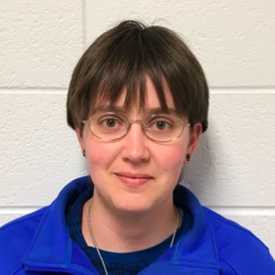
Alicia Kollár is the Chesapeake Assistant Professor of Physics at the University of Maryland, affiliated with the Joint Quantum Institute (JQI) and Quantum Technology Center. She holds a B.A. from Princeton University (2010) and a Ph.D. from Stanford University (2016). Her research focuses on quantum simulation using superconducting circuits, particularly leveraging coplanar waveguide (CPW) lattices to explore hyperbolic geometries, gapped flat bands, and photon-mediated spin models. Her work bridges condensed matter physics, quantum optics, and topological systems, with applications in quantum error correction and novel quantum materials. Key projects include creating artificial photonic materials in circuit QED, studying driven-dissipative systems, and developing experimental platforms for Floquet engineering. She has pioneered hyperbolic lattice designs enabling non-Euclidean quantum simulations and contributed to protocols for verifying quantum advantage. Her lab actively seeks postdocs and graduate students, emphasizing interdisciplinary approaches to quantum science and technology. Notable awards: NSF CAREER Award (2021), Princeton Materials Science Postdoctoral Fellowship (2017) Research groups: AMPED, JQI, Quantum Information and Computer Science (QuICS) Key collaborations: Andrew Houck (Princeton), JQI theorists Recent breakthroughs include demonstrating autonomously stabilized Floquet states and proposing efficient quantum verification protocols. Her work has been featured in PRX Quantum, Physical Review A/X, and Nature Communications.
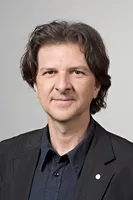
Professor James Zanotti is a faculty member at the University of Adelaide, holding the position of Professor/Reader in the School of Physics, Chemistry and Earth Sciences within the Faculty of Sciences, Engineering and Technology. His research focuses on advanced theoretical and computational studies of particle physics, particularly in the realm of lattice Quantum Chromodynamics (QCD). He specializes in exploring nucleon structure, quark dynamics, and the internal forces within protons using lattice simulations. His work includes groundbreaking studies on transverse force distributions, parity-odd structure functions, and the application of the Feynman-Hellmann theorem to nucleon matrix elements. Professor Zanotti is actively involved in supervising Masters and PhD students in these areas. His recent research highlights include mapping proton force distributions, constraining beyond-Standard-Model physics through nucleon charges, and investigating collective magnetic states in materials. He is affiliated with Adelaide's physics department and accessible via james.zanotti@adelaide.edu.au.
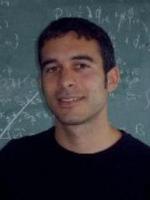
Richard Silberglitt is a Senior Physical Scientist at RAND and Professor of Policy Analysis at the RAND School of Public Policy, where he conducts interdisciplinary research at the nexus of science, technology, and public policy. With over 50 years of experience across academia, government, and industry, he is a leading expert in technology foresight, energy systems, and R&D portfolio management. His research focuses on emerging technologies , science and innovation policy , energy security , and nanotechnology . He has developed influential methodologies such as an energy scenario analysis framework and the PortMan portfolio management system, both widely applied in U.S. and international contexts. His work supports strategic planning in defense, public safety, and economic development. His recent publications reflect a strong trend toward technology foresight , critical materials supply chains , quantum technology assessment , and public sector innovation . These works often employ scenario planning, Delphi methods, and data-driven analytics to inform high-stakes policy decisions. Member, American Physical Society Member, Materials Research Society Member, American Ceramic Society As a subject matter expert, Silberglitt has advised the United Nations, U.S. Department of Defense, National Security Agency, and multiple federal agencies. He has chaired the International Advisory Board of the APEC Center for Technology Foresight and delivered testimony to U.S. Congressional committees on critical materials and technology policy. His research has been supported by grants and contracts from the U.S. Army, Navy, CDC, and National Institute of Justice. He has led major initiatives on law enforcement technology, transportation safety ( The Road to Zero ), and international technology foresight. His work often involves collaborative teams and cross-sector partnerships to address complex technological and policy challenges.
Laura Fumagalli is an Associate Professor (Reader) in Condensed Matter Physics at the University of Manchester's Department of Physics & Astronomy and a staff researcher at the National Graphene Institute. She holds a M.Sc. in Electronic Engineering (2002) from the Polytechnic University of Milan and École Supérieure d'Electricité, and a PhD in Physics (2006) from the Polytechnic University of Milan. Her research focuses on dielectric properties of nanoscale systems, including confined water, biomolecules, 2D materials, and the development of scanning dielectric microscopy (SDM). Key achievements include an ERC Consolidator Grant (2018) for the Liquid2DM project and a Royal Microscopical Society Medal (2021). Current research positions include leadership in the ERC-funded Liquid2DM project and supervision of postdoctoral researchers like Dr. Simone Benaglia. Ongoing funding includes the UKRI-MSCA fellowship (2023-2024) and Royal Society instrumentation grants. Past positions include lecturer roles at the University of Barcelona, where she earned prestigious fellowships (Juan de la Cierva, 2009; Ramon y Cajal, 2014). Teaching responsibilities include leading the Frontiers of Solid-State Physics course and tutoring foundational physics modules. Her lab (Schuster Building Lab 1.09 and NGI) hosts a dynamic team of PhD students and postdocs investigating confined liquids, biomolecules, and 2D heterostructures. Notable students include M. Souilamas (2020-2024) and H. Read (2019-2023), whose theses focused on confined water and biological surfaces. Publications span topics like interfacial water dynamics, lipid membrane structures, and ferroelectricity in 2D materials. Her work bridges materials science and biophysics, addressing fundamental questions in nanoscale dielectric behavior with applications in both fields.
Prof. Ueli K. Heiz is a Professor and Principal Investigator at the Technical University of Munich (TUM), leading the Cluster Catalysis and Advanced Spectroscopy group within the Department of Chemistry. His research focuses on the unique properties of atomic-scale clusters in the non-scalable size regime, exploring their applications in catalysis (nanocatalysis, asymmetric catalysis, photocatalysis) and energy conversion. He develops advanced experimental tools like ECSTM (Electrochemical Scanning Tunneling Microscopy) and UHV (Ultra-High Vacuum) systems for studying cluster dynamics and reactivity. Key research areas include clusters at solid-liquid interfaces, gas-phase cluster kinetics, and ambient pressure photocatalysis. His group investigates how quantum size effects and precise atomic structures influence catalytic performance. Associated with TUM’s Chair of Physical Chemistry , his work bridges fundamental chemistry with practical applications in sustainable energy technologies. The group collaborates with initiatives like the Munich Catalysis Alliance (MuniCat) and operates specialized facilities such as the Magnetron Sputtering Cluster Source and Spectroscopy labs. His research has led to advancements in understanding reaction mechanisms on size-selected clusters, including methane coupling, alcohol photocatalysis, and enantiospecific surface interactions. Funding sources include the Collaborative Research Centre (CRC) and other institutional grants. While no personal awards are explicitly listed, his contributions to catalysis and spectroscopy methodologies are highlighted through high-impact publications in Journal of the American Chemical Society and Angewandte Chemie .
Mihalis Dafermos is the Lowndean Professor of Astronomy and Geometry at the Department of Pure Mathematics and Mathematical Statistics (DPMMS) within the Faculty of Mathematics at the University of Cambridge. He is a leading researcher in mathematical general relativity and partial differential equations, with particular expertise in black hole physics. His research expertise spans: Partial Differential Equations General Relativity Black Hole Stability and Dynamics Mathematical Analysis of Spacetime Singularities Wave Equations on Curved Spacetimes Cosmic Censorship Conjectures Dafermos's publications reveal a systematic progression from foundational work on Schwarzschild and Reissner-Nordström black holes to sophisticated analyses of Kerr black holes across various parameter regimes. His research consistently focuses on mathematical rigor in addressing fundamental questions about black hole stability, interior structure, and the behavior of fields in strong gravitational environments. A significant portion of his work investigates the Cauchy horizon stability, blue-shift instabilities, and cosmic censorship, contributing substantially to the mathematical foundations of general relativity. He is an active member of the Relativity and Gravitation research group at Cambridge, collaborating with prominent researchers including Igor Rodnianski, Georgios Holzegel, and others. His work has been published in the most prestigious mathematical physics journals including Acta Mathematica, Annals of Mathematics, and Communications in Mathematical Physics.
A. Van Jordan is a renowned Professor at Stanford University , holding the Humanities and Sciences Chair in English . He previously served as the Robert Hayden Collegiate Professor of English Language & Literature at the University of Michigan and contributed to the establishment of Stanford's Department of African & African American Studies . His work bridges poetry, film analysis, and social critique. Education : Not explicitly detailed in the text Research Interests center on: Ekhprastic poetry merging film and literary forms Racial representation in cinema and society Intersections of physics and human experience Historical narratives of Black American experiences Publication Trends reveal a thematic evolution from personal and historical narratives in Rise (2001) to cinematic metaphors in M-A-C-N-O-L-I-A (2005), then exploring physics and superheroes in Quantum Lyrics (2007), before culminating in film-poetry synthesis in The Cineaste (2013), and returning to urgent social themes in When I Waked, I Cried to Dream Again (2023). Scientific Awards include: Hurston/Wright Legacy Award (2024) Guggenheim Fellowship (2007) United States Artists Fellowship (2009) Lannan Literary Award in Poetry (2015) Whiting Writers Award PEN/Oakland Josephine Miles Award Pushcart Prize Advising & Grants : While specific grant details are absent, Jordan's career demonstrates extensive mentorship through teaching roles at multiple institutions. His work has been supported through prestigious fellowships totaling over $200,000 in recognition.
Ramses Martinez is an Assistant Professor in the Department of Industrial Engineering and Biomedical Engineering at Purdue University . He holds a B.A. in Applied Physics from Universidad Autonoma de Madrid (2004) and a Ph.D. in Physics and Materials Science from the Spanish National Research Council (CSIC) in 2009. Prior to joining Purdue, he conducted postdoctoral research in the lab of Prof. George M. Whitesides at Harvard University, focusing on nanofabrication, microfluidics, and soft robotics. Education B.A. in Applied Physics, Universidad Autonoma de Madrid (2004) Ph.D. in Physics and Materials Science, Spanish National Research Council (CSIC) (2009) His research bridges soft robotics , flexible electronics , and nanofabrication , with a focus on creating self-powered e-textiles , omniphobic paper-based devices , and programmable mechanical metamaterials . His work has led to over 25 publications and 9 patents, emphasizing practical applications in health monitoring and industrial automation . Notable projects include waterproof electronic decals for biofluid monitoring, smart bandages for chronic wound detection, and laser nanoforming methods for scalable metallic structures. His research has been recognized through the Fulbright Fellowship and the Marie Curie IOF Grant .
Dr. Adelina Ilie is a Research Professor in the Department of Physics at the University of Bath, where she leads research in Nanoscience and Nanotechnology through multiple interdisciplinary centers including the Centre for Nanoscience and Nanotechnology, Condensed Matter Physics CDT, Centre for Therapeutic Innovation, Condensed Matter and Quantum Materials group, and NanoBioElectronics research. Her research spans fundamental to applied studies of functional nanomaterials with designed atomic-scale behavior. Specializing in graphene and related 2D materials as well as 2D molecular networks, her group employs advanced scanning probe microscopy techniques under ultra-high vacuum and cryogenic conditions to engineer quantum properties for novel applications in nanoelectronics, spintronics, and biomedical sensing. Her recent publications reveal strong trends in quantum materials engineering, particularly in superlattice structures, hybrid 2D systems, and bio-nano interfaces. The research demonstrates sophisticated manipulation of electronic, optical, and thermal properties at the atomic scale, with increasing focus on biomedical applications in recent years. Dr. Ilie actively supervises doctoral students and has served as external examiner for PhD theses at prestigious institutions including University of Cambridge (2024, 2021), University of Oxford (2018), and University of Southampton (2011). Her research is supported by significant grants from EPSRC, MRC, Sir Halley Stewart Foundation, and University of Bath. Her laboratory maintains state-of-the-art facilities for atomically-resolved scanning probe microscopy (STM and AFM) in ultra-high vacuum and cryogenic environments, complemented by chemical vapor deposition systems for nanomaterial fabrication. She maintains active collaborations across Bath's departments of Pharmacy & Pharmacology, Chemistry, and Biology & Biochemistry, as well as with international research institutes specializing in nanoscience.
Avi Goldfarb is Professor of Marketing at the Joseph L. Rotman School of Management, University of Toronto, where he holds the Rotman Chair in Artificial Intelligence and Healthcare. He serves as Chief Data Scientist at the Creative Destruction Lab and Research Associate at the National Bureau of Economic Research (NBER). His academic career spans 2002-2012 as Assistant and Associate Professor, becoming Professor of Marketing in 2012. Rotman Chair in Artificial Intelligence and Healthcare (2018-present) Professor of Marketing (2012-present) Research Associate, NBER (2014-present) Chief Data Scientist, Creative Destruction Lab (2015-present) Research Interests : Specializing in digital economics and the economics of artificial intelligence, his work bridges technology, marketing, and public policy. Key focus areas include: Digital economics and platform behavior AI adoption in healthcare systems Quantum computing economic implications Privacy regulation and data markets AI's impact on labor and inequality General purpose technology frameworks Publication Trends : His recent work spans AI implementation strategies across industries, digital behavior economics, and emerging technology commercialization. Key subfields include AI adoption patterns, digital privacy frameworks, quantum computing applications, and workplace health safety analytics. Scientific Recognition : INFORMS Society of Marketing Science Long Term Impact Award (2018) Roger Martin Award for Excellence in Teaching (2017) Leadership Roles : Former Senior Editor at Marketing Science (2016-2021), with editorial board memberships at Management Science, Journal of Marketing Research, and Journal of Economics and Management Strategy. He contributes to the Acceleration Consortium and Schwartz Reisman Institute for Technology and Society.
Xifan Wu is a Professor of Physics at Temple University, specializing in computational methods and materials science. His research focuses on first-principles computational approaches, particularly exploring the locality of Wannier orbitals to address physical problems in solids and liquids. Key interests include superlattice design and applications of order-N exact exchange functionals like PBE0 and GW quasi-particle approximations. He has authored numerous high-impact publications in journals such as Physical Review Letters and Physical Review B , covering topics like ferroelectric superlattices, X-ray absorption spectroscopy, and the dielectric properties of electrolyte solutions. His work bridges quantum mechanical models with machine learning potentials, advancing large-scale simulations of complex materials. Education/Background: Not explicitly detailed in the provided text. Grants/Awards: No specific awards listed, but his research is supported by Temple University’s Center for the Computational Design of Functional Layered Materials (CCDM). Labs/Teams: Collaborates with teams focused on computational design and materials modeling, possibly through Temple’s physics department and affiliated research centers. His recent work explores molecular-scale insights into electrical double layers at oxide-electrolyte interfaces and the impact of ions on X-ray spectra, demonstrating expertise in linking theoretical models with experimental phenomena.
Dr. Rico Friedrich is a computational materials scientist leading the "Autonomous Materials Thermodynamics - AutoMaT" research group, jointly operated by the Chair of Theoretical Chemistry at Technische Universität Dresden and the Helmholtz-Zentrum Dresden-Rossendorf (HZDR). His work focuses on data-driven computational design of advanced materials for information technology and energy applications through the DRESDEN-concept research alliance. His research spans several cutting-edge areas: Discovery and design of 2D non-van der Waals materials with novel electronic and magnetic properties Data-driven modeling of high-entropy ceramics based on entropy maximization principles Development of computational methods for accurate thermodynamic stability prediction, particularly the coordination corrected enthalpies (CCE) method Applications of artificial intelligence in materials design Dr. Friedrich's publication record shows a strong trend toward computational materials discovery, with significant contributions to understanding non-van der Waals 2D materials and high-entropy ceramics. His work bridges theoretical developments with practical applications, resulting in publications in high-impact journals including Nature, Nano Letters, and Advanced Electronic Materials. His key scientific contributions include: Development of the coordination corrected enthalpies (CCE) method for accurate formation enthalpy calculations Creation of the AFLOW-CCE module implemented in the AFLOW software ecosystem Discovery of novel 2D non-van der Waals materials with ultra-low exfoliation energies Formulation of the disordered enthalpy-entropy descriptor (DEED) for high-entropy ceramics Dr. Friedrich actively mentors the next generation of materials scientists, currently supervising PhD students and postdoctoral researchers in his AutoMaT lab. His research group collaborates extensively within the DRESDEN-concept research alliance, leveraging computational resources and expertise across multiple institutions to advance materials science and engineering.
Ross J. Kang is a Canadian mathematician currently serving as an Associate Professor at the Korteweg–de Vries Institute for Mathematics within the Faculty of Science at the University of Amsterdam since 2022. He is an active member of the Discrete Mathematics and Quantum Information group and the NETWORKS consortium. Previously, he held positions as Assistant/Associate Professor at Radboud University Nijmegen (2014-2022), Assistant Professor at Utrecht University (2013), and Researcher at Centrum Wiskunde & Informatica (2012-2013). His academic journey includes postdoctoral positions at Durham University (2010-2012) and McGill University (2008-2010), where he was advised by Bruce Reed and Louigi Addario-Berry. DPhil in Mathematics, University of Oxford (2008) - Thesis: 'Improper colourings of graphs', advised by Colin McDiarmid BSc (Hons) in Mathematics and Computer Science, University of Victoria (2003) - Governor General's Silver Academic Medal recipient Ross J. Kang's research focuses on probabilistic and extremal combinatorics, random discrete structures, graph coloring, geometric graphs, and algorithms. His work bridges theoretical mathematics with practical applications, exploring fundamental questions in discrete mathematics. He has made significant contributions to understanding graph coloring problems, particularly in the contexts of list coloring, distance coloring, and strong coloring. His research often employs probabilistic methods to establish bounds and structural properties in graph theory. Kang's work on the hard-core model, local occupancy method, and triangle-free graphs has advanced our understanding of the interplay between local constraints and global structure in discrete systems. Analysis of his recent publications reveals a strong emphasis on graph coloring problems, particularly list coloring variants and their extensions. His work frequently explores the relationship between graph structure (such as degree constraints, girth, or forbidden subgraphs) and coloring properties. A notable trend is his development and application of the local occupancy method to establish improved bounds for chromatic numbers in various graph classes. His research also demonstrates a consistent interest in extremal problems, seeking optimal configurations under specific constraints, particularly in the context of triangle-free graphs and geometric representations. NWO Open Competition M-1 grant entitled 'Asymptotic triangle-free structure (3Free)', 2022-2026 NWO Vidi grant entitled 'On the edge: theory and techniques at the frontiers of edge-colouring', 2017-2023 NWO Veni grant entitled 'Generalised colouring for random graph models', 2012-2015 Van Gogh travel grants (2020-2021 with Marthe Bonamy; 2016-2017 with Louis Esperet) Governor General's Silver Academic Medal (2003) Ross J. Kang has successfully supervised multiple PhD students including Eoin Hurley (defending May 2025), Stijn Cambie (defended April 2022), and François Pirot (winner of 2020 prix Charles Delorme). His research is supported by significant grants from the Netherlands Organisation for Scientific Research (NWO), including the prestigious Open Competition M-1 grant. Kang is actively involved in the academic community through his editorial role at Combinatorial Theory, co-organization of conferences like the Dutch Days of Combinatorics, and leadership in initiatives such as Innovations in Graph Theory, a diamond open access journal he helped launch in August 2023. As a member of the Discrete Mathematics and Quantum Information group at the University of Amsterdam and the NETWORKS consortium, Kang collaborates with researchers across various institutions. He has established strong international connections through his Van Gogh travel grants and participation in collaborative projects like the Sparse (Graphs) Coalition sessions. His research group focuses on theoretical aspects of discrete mathematics with connections to quantum information science, and he maintains active collaborations with researchers across Europe and North America.
Nikita Kavokine serves as Tenure Track Assistant Professor at École Polytechnique Fédérale de Lausanne (EPFL) within the School of Basic Sciences . His dual appointments span the Institute of Chemical Sciences and Engineering (ISIC) and the School of Chemical Sciences and Engineering (SCGC) , where he leads the Quantum Plumbing Lab (LNQ) and contributes to graduate teaching. Based at Building CH A2 398 in Lausanne, he maintains active research and instructional roles across EPFL's chemistry and chemical engineering programs. His research pioneers quantum nanofluidics and nanoscale transport phenomena , focusing on electron-ion coupling mechanisms in confined geometries. Key investigations include quantum friction in water-carbon interfaces, hydroelectric energy conversion through nanochannels, and plasmon-hydron resonances in two-dimensional materials. His work bridges condensed matter physics, electrochemistry, and fluid dynamics to develop fundamental principles for next-generation nanofluidic devices and quantum sensors. Analysis of his 15 most recent publications (2023-2025) reveals three dominant research thrusts: quantum-enhanced energy conversion (evident in hydroelectric drag and electron cooling studies), non-classical ion transport (including ionic Coulomb blockade and interaction confinement), and emergent quantum hydrodynamics (momentum tunneling, collective modes). These publications consistently integrate advanced numerical methods with nanoscale experimental systems, establishing new paradigms for solid-liquid quantum interactions. Kavokine currently supervises three PhD students: Gispert Peter , Lu Hao , and Rigaux Killian David . His teaching portfolio includes graduate courses in Statistical Mechanics for Chemistry and Nanofluidics , emphasizing theoretical frameworks for many-particle systems and nanoscale fluid dynamics. Research funding supports his laboratory's exploration of quantum effects in nanofluidic channels, though specific grant details are not provided in source materials. The Quantum Plumbing Lab (LNQ) operates at the forefront of nanoscale quantum transport research, utilizing advanced nanofabrication and characterization techniques to probe electron-ion coupling phenomena. The lab's interdisciplinary team combines expertise in quantum physics, electrochemistry, and fluid dynamics to investigate fundamental limits of energy conversion and transport at atomic scales, with particular focus on graphene-based systems and angstrom-scale confinement.
Tomotada Ohtsuki is a Professor at the Research Institute for Mathematical Sciences (RIMS) at Kyoto University, where he conducts research in low-dimensional topology. His work focuses on quantum invariants of knots and 3-manifolds, with particular expertise in perturbative invariants and the LMO invariant. Ohtsuki's research primarily explores the intricate relationships between quantum topology and geometric structures. He has made significant contributions to understanding the asymptotic expansion of the Kashaev invariant and developing refined invariants for 3-manifolds. His research bridges abstract mathematical concepts with concrete computational frameworks, advancing our understanding of topological structures in three dimensions. Through his work on open problems in low-dimensional topology, he has helped shape research directions in the field. Organizer of the annual Low-dimensional Topology Seminar at RIMS Editor of the Problems on Low-dimensional Topology series (2010-2024) Organizer of the Intelligence of Low-dimensional Topology research meetings (2010-2025) Editorial board member for Quantum Topology journal In 2023, Ohtsuki received the prestigious Minister of Education, Culture, Sports, Science and Technology Award for Science and Technology in the Research category, recognizing his significant contributions to mathematical topology. His work has established important connections between quantum invariants and classical topological structures, influencing both pure mathematics and theoretical physics. Ohtsuki actively mentors emerging researchers through his seminar organization and collaborative research projects. He has participated in numerous joint research initiatives at RIMS, contributing to Japan's position as a global leader in mathematical research. His work with the International Joint Usage and Research Center at RIMS has fostered international collaborations in low-dimensional topology. He maintains strong connections with the global topology community through editorial work for leading journals and organization of international research meetings. His 'Problems on Low-dimensional Topology' collections have become essential references that guide research directions worldwide.