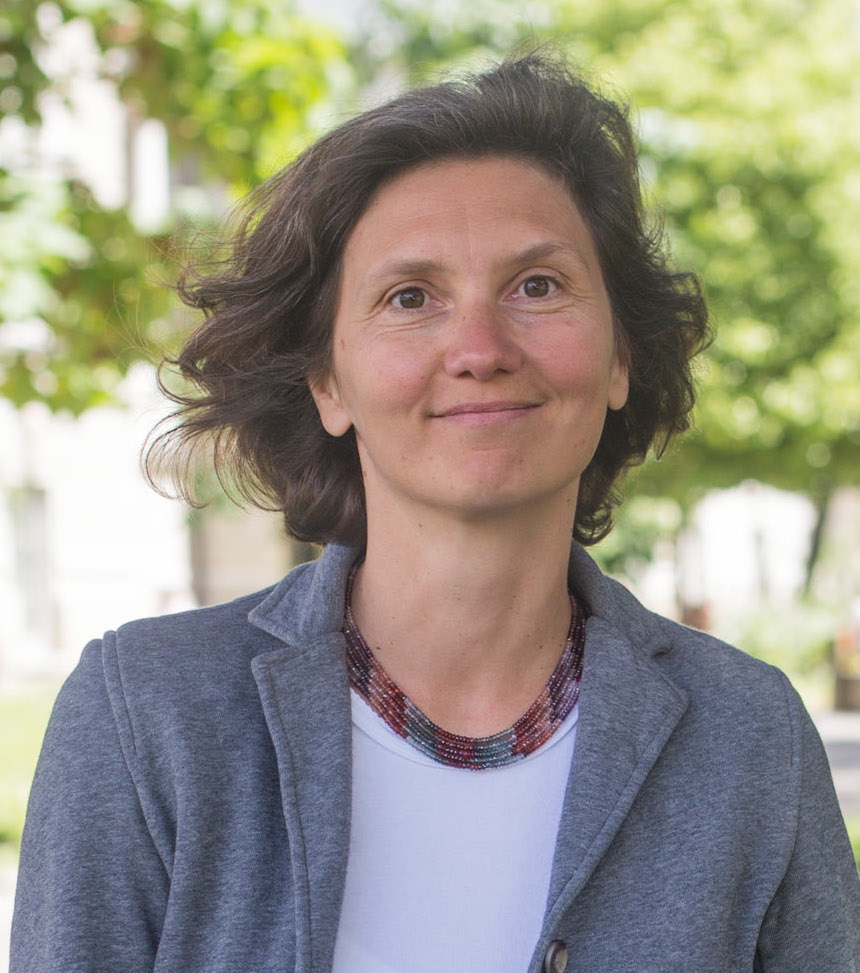
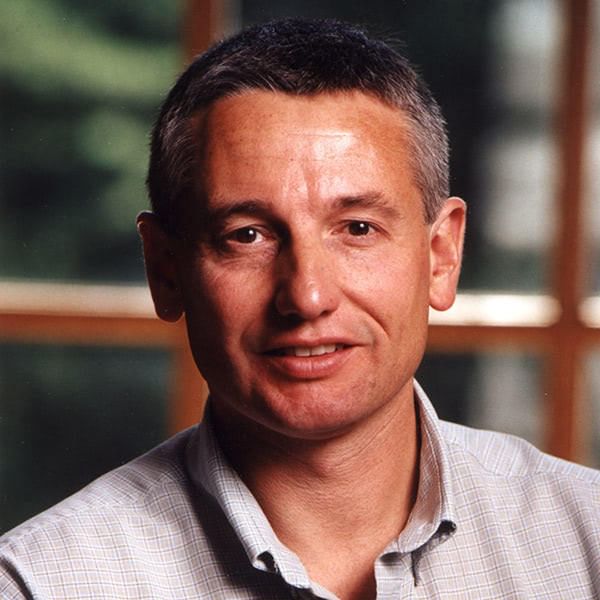
Sam Lindley is a Reader in Programming Language Design and Implementation at the School of Informatics, University of Edinburgh. He holds a UKRI Future Leaders Fellowship in Effect Handler Oriented Programming. His research focuses on foundational aspects of programming languages, including effect systems, session types, type theory, and functional programming. Key research interests span algebraic effects, concurrency models, type systems for resource management, and language implementation techniques. Lindley's work bridges theory and practice, addressing challenges in systems programming, web technologies (e.g., WebAssembly), and compiler design. Recent publications (2023–2025) emphasize effect handlers for low-level languages (e.g., C, WebAssembly), modal type systems for memory management, and formal semantics for concurrent systems. His work often explores how advanced type systems can improve expressivity and efficiency in programming models. Scientific Awards: UKRI Future Leaders Fellowship Labs/Teams: Laboratory for Foundations of Computer Science (LFCS) Grants: Active funding via UKRI Fellowship
Jonathan Balkind is an Assistant Professor in the Department of Computer Science at the University of California, Santa Barbara (UCSB). His research focuses on the intersection of computer architecture, programming languages, and operating systems, with an emphasis on pragmatic system design and open-source hardware. He leads the ArchLab at UCSB and is affiliated with the OpenPiton project, an open-source manycore research framework. Education includes a PhD and MA in Computer Science from Princeton University (adviser: Prof. David Wentzlaff), an MSci in Computing Science from the University of Glasgow (advisers: Prof. Joseph Sventek and Dr. John O'Donnell), and exchange studies at UCSB. His work has been supported by awards such as the NSF Early CAREER Award (2023) and the Open Hardware Trailblazer Fellowship (2022). Research interests span heterogeneous computing, cache-coherent systems, FPGA integration, and domain-specific architectures. Notable projects include the 25-core Piton chip, the CIFER SoC with embedded FPGA, and the DECADES manycore processor. Recent publications address fused-kernel operating systems (Stramash), control logic synthesis, and hyperloop data-center architectures. His awards reflect contributions to open-source hardware and academic mentorship, including Siebel Scholarship (2018), Gordon Y.S. Wu Fellowship (2013–2017), and multiple teaching/research recognitions. He actively collaborates with industry (e.g., Microsoft Research, ARM) and advises on open-source projects.
Simon Foster is a Senior Lecturer in the Department of Computer Science at the University of York. His research focuses on formal methods, theorem proving (using tools like Isabelle/HOL and Agda), and the verification of cyber-physical systems. He holds a PhD and MComp from the University of Sheffield. Research Interests: Foster specializes in formal semantics, unifying theories of programming, and functional programming. His work addresses challenges in verifying complex systems, including robotic control software and safety-critical applications. He has contributed to projects like CyPhyAssure and RoboCalc, emphasizing assurance case generation and probabilistic modeling. Recent Work Trends: His recent publications (2022–2025) emphasize scalable verification techniques for cyber-physical systems, probabilistic modeling, and formal verification of robotic systems using Isabelle/HOL. Key themes include hybrid systems theorem proving, assurance case automation, and the integration of formal methods with robotic state machines. Grants & Projects: He led the CyPhyAssure project (2018–2021) and contributed to the H2020 INTO-CPS initiative. His roles include Research Fellowships in safety-critical systems and model-driven architectures. Labs & Teams: Active in the High Integrity Systems group at York, focusing on formal methods for safety-critical systems and collaborative tool development for systems engineering.
Laura Pozzi is a Full Professor at the Faculty of Informatics, Università della Svizzera italiana (USI), Switzerland, since 2015. She previously held positions as Associate Professor (2011–2015) and Assistant Professor (2005–2011) at USI. Prior to joining USI, she was a postdoctoral researcher at EPFL's Processor Architecture Laboratory (2001–2005), a research engineer at STMicroelectronics (2000), and an Industrial Visitor at UC Berkeley (2000). Education: MS and PhD in Computer Engineering from Politecnico di Milano, Italy (1996–2000). Her research focuses on the interaction between compiler and architecture design, particularly in embedded systems , with key areas including approximate computing , coarse-grained reconfigurable arrays (CGRAs) , high-level synthesis (HLS) , and fuzz testing . She has led projects on automated design space exploration, compiler optimizations for reconfigurable architectures, and error estimation in approximate circuits. Recent Publications span topics like SAT-based mapping for CGRAs , grammar-based fuzzing of shell interpreters , and approximate logic synthesis , reflecting her interdisciplinary work bridging hardware/software co-design and software verification. Scientific Awards: Credit Swiss Best Teaching Award IEEE DAC Best Paper Award Leadership Roles: Co-Program Chair, IEEE Symposium on Application Specific Processors (SASP) Editorial Board Member, IEEE Design and Test Students: Current: Rodrigo Otoni (Postdoc), Morteza Rezaalipour (PhD), Riccardo Felici (PhD), Cristian Tirelli (PhD) Alumni: Ilaria Scarabottolo (PhD/Postdoc), Lorenzo Ferretti (PhD/Postdoc), Georgios Zacharopoulos (PhD), Giovanni Ansaloni (PhD/Postdoc), Paolo Bonzini (PhD)
Yassine Lakhnech is a Professor at the University Joseph Fourier (Grenoble 1), leading the 'Distributed and Complex Systems' research team within the VERIMAG laboratory. His work focuses on computer security, cryptography, formal verification, and programming language semantics. He has been actively involved in coordinating major interdisciplinary research initiatives like the PERSYVAL-lab, which addresses cyber-physical systems (CPS) challenges. His research bridges computational and formal approaches, with contributions to cryptographic protocol analysis, information flow control, and automated theorem proving. Key projects include the development of tools like HERMES for cryptographic protocol verification and involvement in ANR-funded projects such as Verso, PROSE, and AVOTE. He has also organized international conferences and workshops, including the Canada-France MITACS Workshop on Foundations & Practice of Security and the Eighth ACM/IEEE International Conference on Formal Methods and Models for Codesign. His publications span over 147 papers, with an h-index of 25 and g-index of 42, reflecting significant contributions to formal methods, security protocols, and hybrid systems. Despite his role as Vice President of Research, he maintains active scientific productivity, emphasizing the integration of theoretical and practical advancements in CPS and security.
Fred Popowich is a Professor in the School of Computing Science at Simon Fraser University (SFU), Canada. He holds adjunct positions at Dalhousie University's Faculty of Graduate Studies and is an Associate Member of SFU's Department of Linguistics and Cognitive Science Program. His academic career began post-PhD (Cognitive Science/Artificial Intelligence, University of Edinburgh, 1989) and has spanned over three decades at SFU. Education: PhD in Cognitive Science/Artificial Intelligence (University of Edinburgh, 1989); M.Sc. and B.Sc. in Computing Science (Simon Fraser University and University of Alberta, 1985/1982). Research focuses on natural language processing (NLP), machine translation, intelligent systems, and big data applications. He directs SFU’s Big Data Initiative and leads the Natural Language Laboratory, supervising MSc/PhD students in computing science. His work includes developing systems for smart homes, toxic language detection in social media, and energy grid analysis. Industry roles include co-founding Axonwave Software (as CTO/President) and contributing to technology commercialization. Current projects address EV charging impacts, personalized learning systems, and real-time load monitoring. Publications span machine translation, sentiment analysis, and NLP applications in education and energy systems. His work bridges theoretical computer science with practical applications in healthcare, smart cities, and education.
Dr. Jiabin Luo is a Senior Lecturer in Business Analytics at Aston University's Aston Business School, within the College of Business and Social Sciences. She holds a PhD in Management Science from the University of Southampton and has held academic and research roles at institutions including Coventry University and De Montfort University. Her research focuses on optimization and decision-making in logistics, supply chain management, maritime shipping, and production planning. She is Programme Co-Director of the MSc Degree Apprenticeship in Digital & Technology Solutions Specialist. Education: PhD in Management Science, University of Southampton, UK MSc in Risk and Stochastics, London School of Economics and Political Science, UK MSc in Statistics, University of Nottingham, UK BSc in Mathematics, Zhongshan University, China PGCert in Learning and Teaching in Higher Education Research Interests: Transportation and logistics optimization Maritime shipping and port operations Production planning and inventory management Supply chain management and sustainability Fuzzy optimization and scenario-based modeling Recent Research Trends: Her work emphasizes optimization techniques in logistics systems, including automated container terminals, intermodal transport, and risk management. Recent articles explore machine learning for credit risk prediction and geospatial analysis of traffic datasets. Awards and Memberships: Fellow of The Higher Education Academy Member of The Operational Research Society Member of British Academy of Management Grants and Collaborations: Newton Researcher Links: Strategy & Policy Innovation in Supply Chain Management (2018) Newton Researcher Links: Emission Control in Green Port Development (2017) EPSRC Grant: Resilience of Manufacturing Supply Networks (2013–2016)
Wei Li is a Professor at the School of Computer Science and Engineering, Beihang University (since 1986), and Director of the State Key Laboratory of Software Development Environment (since 1992). He has held visiting positions at institutions including the University of Minnesota and Universität Saarlandes. Education: Ph.D. in Computer Science, University of Edinburgh (1979–1983) B.Sc. in Mathematics, Peking University (1961–1966) Research Interests span Mathematical Logic, Concurrent Programming Languages, Satisfiability Problems, Artificial Intelligence, Software Crowdsourcing, and Big Data. His work includes foundational contributions to logical frameworks for belief revision and specification evolution, with applications in software trustworthiness and constraint satisfaction. Publication Trends reveal a focus on formal methods (R-calculus, open logic systems), software crowdsourcing, and phase transitions in constraint satisfaction problems. His research integrates theoretical rigor with practical applications in information science and engineering. Scientific Awards include: Chinese Government Award for Publishing (2017) Tsiolkovsky Medal (2007) National Prize of First Class for Achievements in Education (2005) Ho Leung Ho Lee Prize (1998) Academician, Chinese Academy of Sciences (1997) He also supervised 8 post-docs, 52 Ph.D., and over 100 graduate students.
Prof. Dr. Peter Sanders is a full professor in Theoretical Computer Science at the Karlsruhe Institute of Technology (KIT), leading the Algorithm Engineering group. His academic career includes a doctoral degree from Karlsruhe University and research stints at institutions like the Max Planck Institute for Informatics. He specializes in algorithm theory and engineering, focusing on parallel computing, large-scale data processing, and graph partitioning. His research bridges theoretical foundations with practical implementations, emphasizing real-world applications in optimization, route planning, and distributed systems. Education: Ph.D. in Computer Science, Karlsruhe University (1996) Bachelor/Master studies at Karlsruhe University (1988-1996) Research Interests: Algorithm design and analysis Parallel and distributed algorithms Graph algorithms and partitioning Algorithm engineering for big data High-performance computing Publications: Over 250 papers, emphasizing parallel algorithms, distributed systems, and graph theory. Recent work includes scalable SAT solving, hypergraph partitioning, and distributed string sorting. His contributions have advanced practical applications in route planning, load balancing, and large dataset processing. Awards: Recipient of the prestigious Leibniz Prize (DFG) and Baden-Württemberg State Research Prize. He coordinated the DFG Priority Program on Algorithm Engineering and is an active reviewer for major funding bodies. Consulting: Engages with companies like SAP and Google, focusing on optimization, route planning, and database algorithms. Leads projects on algorithm scalability and real-world problem-solving. Labs/Teams: Heads the Algorithm Engineering group at KIT, fostering collaborations in distributed computing and algorithmic research.
Peter Maurer is a Senior Lecturer in Media and Communication Research at Karlstad University's Department of Geography, Media and Communication. He holds a doctorate from Freie Universität Berlin (2011) and a master's in political science from Johannes Gutenberg-Universität Mainz. His research focuses on populist communication, political journalists' perceptions of media, automated frame analysis, and digital media dynamics. Maurer currently teaches in the Digital Media and Analysis (DMA) program, convening courses like Media Audiences in the Digital Age and Digital Methods . He leads the Journalistic Role Performance project (2021-2024) as Co-Principal Investigator and is Sweden's representative in the COST Action OPINION network. Notable grants include an Ander Foundation award (2025-2029) for studying disinformation detection via computational methods. His work bridges media studies with political science, emphasizing digital platforms' role in contemporary communication. Publications highlight crisis communication (e.g., pandemic reporting), transnational comparisons of media systems, and the intersection of populism with social media. His research often employs computational methods to analyze large-scale data, such as automated frame detection in journalists' tweets. Labs/Teams: NODE research group at Karlstad University, COST OPINION Tools working group Grants: SEK 7.5M Ander Foundation grant, Faculty of Arts and Social Sciences funding (2024)
Fatima Fabião is an Assistant Professor at the Lisbon School of Economics and Management (ISEG), University of Lisbon, where she has been affiliated since 1990. Her work bridges mathematical methodologies with economic and financial theory, focusing on growth models, optimal control, and differential equations. She teaches courses in mathematical analysis, difference equations, and complex equations in economics and management programs. Affiliations: ISEG – University of Lisbon (since 1990) Roles: Course coordinator for key subjects like Mathematical Analysis III and Difference Equations Her research explores economic growth dynamics through modified Solow models incorporating time delays, optimal resource extraction strategies via control theory, and financial applications of Black-Scholes equations. She has also contributed to pedagogical innovations integrating mathematical logic into primary education.
Stephen Taylor is a Professor of Computer Engineering at Dartmouth College's Thayer School of Engineering. His research focuses on cybersecurity, distributed computing, and embedded systems security. He has held leadership roles including DARPA Program Manager and Air Force Research Laboratory IPA. Taylor's work includes foundational contributions to the National Cyber Range and Air Force Cyber Experimentation Environment. Education: BSc in Computer Systems from Essex University (1982), MSc in Computer Science from Columbia University (1985), and PhD in Computer Science from the Weizmann Institute (1989). Research emphasizes resilient operating systems for cloud computing, security mechanisms for embedded systems, and large-scale experimentation infrastructure. Awards include the USAF Exemplary Civilian Service Medal and Secretary of Defense Medal for Public Service. Teaches courses on microprocessors, software design, and cyberspace technology. Advises on multi-disciplinary projects and has authored 4 books and over 25 journal articles. His lab explores hardware-software co-design for cyber resilience and soil-based sustainable computing.
Thomas E. Trail is a Senior Behavioral Scientist at RAND Corporation and a Professor of Policy Analysis at the RAND School of Public Policy. His work bridges behavioral science and public policy, with a strong emphasis on military and civilian family well-being. He is based at RAND, a leading policy research organization, where he leads multiple high-impact studies on military families, caregiver support, and stress-related outcomes. Ph.D. in Social Psychology, Princeton University M.S. in Applied/Experimental Psychology, Virginia Tech Postdoctoral Scholar, UCLA Trail's research focuses on how stress affects relationships and health outcomes among couples, particularly in military contexts. His expertise spans military families, poverty, food insecurity, marriage and divorce, and caregiver mental health. He designs and evaluates interventions aimed at reducing family stress and improving support systems. His recent publications reveal a consistent focus on military family readiness, deployment impacts, and program evaluation. Key themes include the effectiveness of non-medical counseling, spouse employment programs like MyCAA, and the hidden challenges faced by military caregivers. His work often informs policy decisions at the Department of Defense and Congress. Trail has received no explicitly listed scientific awards in the provided text, but his body of work—including over 60 research outputs—demonstrates significant scholarly impact. He has led evaluations of major military programs, developed policy tools, and contributed to national studies on caregiver burden and family resilience. While there is no mention of formal students or advisees, Trail leads research teams and contributes to mentoring through collaborative projects. He has secured funding for and directed large-scale studies such as the Today's Army Spouse Panel and evaluations of National Guard Youth ChalleNGe. His future work appears to center on long-term outcomes of military support programs and the socioeconomic challenges facing service members and their families. Trail is actively involved in research labs and teams focused on military family policy, behavioral health, and program evaluation at RAND. He has developed methodological tools for assessing program effectiveness and continues to publish on emerging issues like food insecurity in the armed forces. His work is instrumental in shaping evidence-based policies for military communities.
Nasia Anam is an Assistant Professor in the Department of English at the University of Nevada, Reno, where she teaches Global Anglophone Literature and related courses in postcolonial and migration studies. She joined the university in 2018 and is affiliated with the Core Humanities program. Her academic background includes prior teaching roles at Princeton University and Williams College. Ph.D., Comparative Literature, University of California, Los Angeles (2016) M.A., English Language and Literature, University of Michigan, Ann Arbor (2007) A.B., English Literature, University of Chicago (2004) Her research centers on migration, displacement, and spatial representations of Muslim communities in literature, drawing from interdisciplinary methods in Postcolonial Studies, Ethnic Studies, South Asian and North African Studies, Islamic Studies, and Urban Studies. She employs a comparative framework across Anglophone, Francophone, and Bangla-language literary traditions. Her recent publications explore themes such as the Global Anglophone as a genre, refugee encampments as colonial spaces, dystopian migration narratives, and the racialization of Muslim migrants. These works appear in journals like Interventions , Journal of Narrative Theory , and ASAP/Journal , reflecting a strong focus on post-9/11 literary responses and the evolving categorization of global literature. She has no listed scientific awards or fellowships in the provided text. Nasia Anam mentors students through graduate-level courses and research supervision in areas such as migration literature, postcolonial theory, and global cities. Though no formal list of advisees is provided, her involvement in advanced seminars like ENG 783 and ENG 788 indicates active engagement in graduate education. She has not disclosed external grant funding, but her ongoing book projects and edited volume suggest sustained scholarly productivity. She is currently working on two major projects: Muslim Heterotopias: Colonial Logics of Space in Literatures of Migration , which examines spatial control of Muslim migrants in Western literature, and a second book comparing colonial and postcolonial Bengali labor figures. Additionally, she is editing a volume on post-9/11 Muslim perspectives across literature, film, and visual art, indicating leadership in shaping contemporary discourse.
Bart Bogaerts is an Associate Professor in the Department of Computer Science at KU Leuven's Faculty of Engineering Science. He is affiliated with the Declarative Languages and Artificial Intelligence (DTAI) research unit and is a member of Leuven.AI - KU Leuven Institute for Artificial Intelligence. Bogaerts serves on the Council of the Faculty of Engineering Science as senior academic staff and participates in the Programme Committee for Artificial Intelligence curriculum development. His research focuses on foundational aspects of logic programming and knowledge representation, with particular expertise in approximation fixpoint theory, higher-order logic programming, and non-monotonic reasoning. Bogaerts investigates the theoretical underpinnings of stable model semantics, justification frameworks, and executable query languages. His work bridges theoretical computer science with practical applications in artificial intelligence and knowledge-based systems. Bogaerts' publication record demonstrates consistent contributions to top venues in logic programming and artificial intelligence. His recent work shows increasing focus on category-theoretic approaches to approximation theory, distributed web traversal specifications, and certified model expansion techniques. The publications reveal a strong emphasis on formal methods with applications spanning from theoretical mathematics to practical AI systems. As a promotor for multiple significant research projects, Bogaerts leads investigations into certified answer set programming (CertifASP), first-order model expansion (CertiFOX), proof generation for combinatorial optimization, distributed configuration problems, and knowledge integration paradigms. These projects, funded through 2028-2029, demonstrate his leadership in advancing the theoretical foundations of AI and logic programming. Bogaerts is actively involved in teaching courses on knowledge representation and reasoning, contributing to the development of next-generation AI researchers. His work within the DTAI research unit positions him at the forefront of declarative AI approaches in Belgium's leading research university.