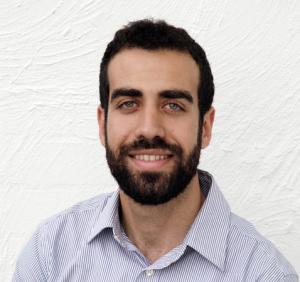
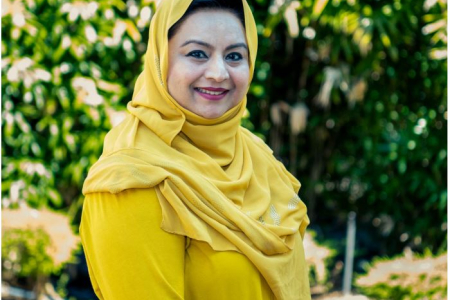
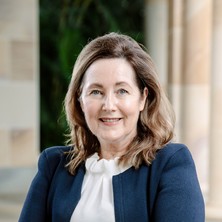
Dr James Helal is the Assistant Dean for Sustainability and a Lecturer in Construction Management at the Melbourne School of Design (MSD), University of Melbourne. His research focuses on integrating life cycle assessment and computational tools into the structural design of tall buildings, emphasizing embodied carbon reduction. He is recognized for developing software frameworks that automate environmental impact analysis in early-stage structural design. Dr Helal teaches materials, structures, and life cycle assessment in construction management. His pedagogical excellence has earned prestigious awards, including the Edward Brown Award for Teaching Excellence. He coordinates the construction major in the Bachelor of Design program. His research addresses structural optimization, tall building sustainability, and environmental flows. Key contributions include frameworks for reducing carbon emissions in tall building design and critiques of decorative architectural elements' environmental impact. Awards: Structures Best Research into Practice Prize (Institution of Structural Engineers) Open Award for Excellence in Teaching (Faculty of Architecture, Building and Planning) Edward Brown Award for Teaching Excellence (University of Melbourne) Advising & Grants: Coordinates construction curriculum but no explicit student advisee list is provided in texts. His work aligns with sustainability-focused research grants. Labs/Teams: Engaged with MSD’s Future Cities Practice and Construction Innovation initiatives.
Ajmal Mian is a Professor of Computer Science at the University of Western Australia (UWA), affiliated with the School of Physics, Maths and Computing. He holds an Australian Research Council Future Fellowship (2022) and leads research in Artificial Intelligence, Computer Vision, and Machine Learning. His work focuses on 3D computer vision, adversarial AI defense, and explainable AI. His research interests include 3D point cloud analysis, face recognition, human action recognition, and remote sensing. He has published over 300 papers and secured major grants from ARC, NHMRC, and DARPA, totaling millions in funding. He has supervised 29 PhD students and mentored 12 postdoctoral researchers. Key projects include 3D diffusion models for scene generation, robust 3D vision systems, and defense against AI deception attacks. He serves as a fellow of IAPR, an ACM Distinguished Speaker, and has editorial roles at IEEE Transactions on Neural Networks and Pattern Recognition. Research Awards: HBF Mid-Career Scientist of the Year, West Australian Early Career Scientist of the Year, IAPR Best Scientific Paper Award. Grants: ARC Discovery Projects, National Intelligence & Security Discovery grants, DARPA grants for AI security. His teaching spans computer vision, machine learning, and programming courses. Collaborations include defense, medical, and agricultural applications.
Christopher Turbill is an Associate Professor in Animal Science at Western Sydney University's School of Science, where he maintains an active research program focused on animal physiological ecology. He is affiliated with the Hawkesbury Institute for the Environment and serves as a Principal Investigator on multiple research projects while accepting HDR candidates for supervision. PhD from University of New England (2006) Thesis: Thermoregulatory Ecology of Tree-roosting Bats Supervised by Prof. Fritz Geiser Postdoctoral fellowships from Austrian Science Fund and Australian Research Council (DECRA) Former ecologist with NSW Government Professor Turbill's research integrates thermal and metabolic physiology with behavioral ecology to understand animal-environment interactions. His work has revealed significant ecological consequences of controlled body temperature variation in mammals and birds, linking these processes with metabolic energy expenditure, activity patterns, and life-history strategies. He specializes in bat biology and investigates conflicts between human environmental change and animal conservation requirements. His research keywords include ecophysiology, thermoregulation, energy expenditure, life-history ecology, body temperature, torpor, hibernation, and wildlife conservation. Analysis of Turbill's recent publications reveals a strong focus on thermal biology and conservation physiology, particularly regarding bats and birds. His work examines how animals manage energy through torpor, respond to climate change through thermal regulation, and adapt to anthropogenic disturbances. The research spans field studies of flying-foxes, microbats, and passerine birds across Australian ecosystems, with increasing emphasis on conservation applications related to white-nose syndrome, fire impacts, and wind energy development. Turbill leads significant research projects including the Ecology of the eastern horseshoe bat and its sensitivity to fire impacts (2024-2027), Vulnerability of Australian bats to white-nose syndrome (2021-2026), and Torpor use and burrowing behaviour in an arid zone passerine (2024). His work attracts funding from diverse sources including the Australian Research Council, Department of Planning and Environment, and various conservation organizations. Professor Turbill directs the BatsLab research group, which maintains a virtual hub for bat research at Western Sydney University. His team employs advanced methodologies including thermal imaging, GPS tracking, and physiological monitoring to study animal responses to environmental challenges. Current work focuses on developing conservation interventions for heat-stressed flying-foxes and assessing vulnerabilities of Australian bat species to emerging diseases.
Dr. Louise Alexander is an Associate Professor in Mental Health Nursing at Deakin University's School of Nursing & Midwifery (Faculty of Health). She holds prior academic roles including Senior Lecturer (ACU, 2018–2023) and Lecturer positions (ACU and Holmesglen Institute). Her research focuses on mental health nursing workforce sustainability, stigma reduction, simulation-based education, and curriculum development. Key interests include nurse resilience, pandemic impacts on healthcare workers, and improving student attitudes towards mental illness. Education: PhD from Deakin University; GCHE qualification Certifications: University of Melbourne's Emerging Leaders & Management Program (2021–2022) Teaching: Leads courses in forensic mental health, therapeutic communication, and health promotion Research Highlights: Recent work examines pandemic trauma among nurses, alcohol consumption trends post-COVID, and leadership's role in workforce retention. Her studies emphasize qualitative methods and integrative reviews to address systemic challenges in mental health nursing education and practice. Awards/Grants: No explicit awards listed; research supported by institutional collaborations. Active in developing transition-to-practice programs and evaluating simulation-based training efficacy. Labs/Teams: Collaborates with interdisciplinary teams on mental health workforce resilience and stigma reduction initiatives. Engages in national and international nursing education networks.
Professor Shaun Larkin is a part-time academic at the School of Public Health , University of Sydney, specializing in Health Policy and Financing . He is affiliated with the Leeder Centre for Health Policy, Economics and Data and a member of the Charles Perkins Centre . With a career spanning executive roles at HCF and non-executive directorships in health startups, his work bridges academia and industry. Education : Harvard Business School alumnus with a HlthScD, MBA, MHSc, and BHA. His research focuses on health economics , health policy , and health services management , emphasizing: Translational research in healthcare financing Trends in private-public healthcare partnerships Price transparency in private health insurance Leadership in health systems Chronic disease management Quality use of medicines His publications reveal a trajectory from foundational work in: Psychiatric services data standardization (2000) Heart disease and diabetes management (2013-2015) Telehealth interventions (2017-2018) Private sector policy frameworks (2019-2020) Saudi Arabian health reforms (2022-present) Private equity in healthcare (2025) As an advisor, he currently supervises research students on topics including: Quality use of medicines in Saudi Arabia Sustainable financial models for private hospitals Patient-reported outcome measures in Australia He also contributes to the Leeder Centre and engages with global health startups as an investor and advisor.
Dr. Ly Fie Sugianto is an Associate Professor in the Department of Accounting at Monash Business School, Monash University. Her research focuses on the integration of data analytics, artificial intelligence, and machine learning in accounting and business systems, with applications in the energy sector and organizational behavior. Monash Business School, Monash University Department of Accounting Specialization: Accounting Information Systems, Data Analytics, AI Her research interests span Accounting Information Systems , Agent-Based Simulation , Decision Support Systems , and Technology Adoption . She applies computational methods to study competitive dynamics in deregulated electricity markets and the impact of digital tools on employee well-being and organizational resilience. The recent publications reflect a strong trend in using AI and simulation to analyze complex socio-technical systems, particularly in energy markets and leadership dynamics. Keywords across her work include agent-based modeling , data analytics , servant leadership , and enterprise social media , indicating interdisciplinary research at the intersection of information systems, management, and public policy. Her scientific awards include competitive grants from the ARC (SPIRT/Linkage) , the Australia Indonesia Governance Research Partnership (AIGRP) , and the Sumitomo Foundation . ARC Grant: Dispatch Optimisation in the Australian National Electricity Market Sumitomo Foundation: Technology Use and Employee Well-Being AIGRP: Governance and MSME Resilience during Pandemic Dr. Sugianto has advised research projects and collaborated with industry partners such as Western Power , Ecogen Energy , and AEMO . She is currently accepting PhD students and leads externally funded research initiatives. Her work contributes to UN Sustainable Development Goals related to industry innovation and responsible consumption. She is affiliated with research teams focusing on intelligent decision support systems and digital transformation in business , with active collaborations in Australia and Indonesia.
Dr. Rene Ferdinands is a Lecturer at the University of Sydney's School of Health Sciences, specializing in sports biomechanics, particularly in cricket and golf. He leads research programs focused on optimizing techniques and minimizing injury risks, such as lumbar load analysis in fast bowlers and spin bowling biomechanics. His work includes developing 3D models for analyzing bowling actions and spin delivery mechanics. Education: MSc and PhD from the University of Waikato. Research Themes: Cricket biomechanics, golf swing dynamics, equine biomechanics, and injury prevention. Professional Roles: Editor of the Cricket Coaching Information service for the International Society of Biomechanics in Sports, Honours Committee Member. His research interests span biomechanical analyses of sports techniques, including the development of smart cricket balls for performance assessment and injury mitigation. Key contributions include refining bowling action legality criteria and advancing understanding of lumbar kinetics in elite athletes. He actively supervises Honours and PhD students in biomechanics research across cricket, golf, and other sports. Notable grants include studies on hydration status in cricket performance (2008), lumbar injury prevention (2013), and biomechanical modeling of fast bowling (2009). His work bridges applied research with practical applications in sports technology and athlete development. Dr. Ferdinands collaborates with the Biomechanics Research Team at the University of Sydney, focusing on innovative tools like smart balls and advanced motion analysis techniques to improve sports performance and safety.
Dr. Farha Sattar is a Lecturer in Education (Mathematics) at the Faculty of Arts and Society, Charles Darwin University. With over thirty years of teaching experience in Mathematics, Science education, GIS, Remote Sensing, and e-Learning technologies at undergraduate and postgraduate levels, Dr. Sattar brings extensive expertise to her academic role. She holds a PhD in Geospatial Science from Charles Darwin University, focusing on Spatial Mathematical Modelling for 3D Gully Mapping and Erosion Quantification. Her educational background includes: PhD in Geospatial Science (Three Dimensional Gully Mapping and Erosion Quantification within a Geoinformatics Framework), Charles Darwin University (2012) Prior academic experience at several Asian and European universities Dr. Sattar's research spans multiple interdisciplinary fields with a strong focus on the intersection of education and technology. Her primary research interests include Mathematics Education, STEM Education, Geoscience Education, Spatial Mathematical Modelling, Drone Technology, Remote Sensing, Geographic Information Systems, and Innovative Pedagogies such as experiential learning and inquiry-based approaches. She has developed expertise in cognitive development, particularly in fostering critical and creative thinking skills through iSTEM approaches. An analysis of Dr. Sattar's recent publications reveals a consistent trajectory toward integrating emerging technologies like drones, augmented reality, and geospatial artificial intelligence into educational contexts. Her work demonstrates a progression from foundational geospatial research on erosion mapping to innovative applications in STEM education. Recent publications increasingly focus on drone technology for educational purposes, spatial data infrastructure for policy development, and computational thinking development through technology-enhanced learning. Dr. Sattar has received numerous accolades for her contributions to education and research: NT Science Week Awards – Inspired NT STEM Hero of the Year award (2021) Long Service Recognition Award (2023) Finalist, CDU Alumni Award (2023) Multiple Best Presentation Awards (2008, 2010, 2017) Australian College of Educators - 2021 College Medal Nominee As a supervisor, Dr. Sattar mentors postgraduate research students including Ayesha Farhan, who is working on "A Framework for Cognitive Development: Fostering Critical and Creative Thinking Skills, Using iSTEM Approach." She actively secures research funding through various projects such as "DBELaSTEM: Drone-Based Experiential Learning and STEM Education," "STEM_D & VR: Youth STEM Learning and Empowerment with Drones and VR," and "CodProg Drone Lab." Her research is supported by grants from NT Government projects and other external funding sources. Dr. Sattar leads the CodProg Drone Lab, an innovative research space exploring drone technology applications in education. She is a certified drone pilot and aeronautical radio operator, which enables her to bridge theoretical knowledge with practical applications. Her work with the "Flying Forward: Drones, STEM Equity, and Indigenous Empowerment" initiative demonstrates her commitment to community engagement and addressing educational disparities through technology.
Dr. Alyas Widita is an Assistant Professor in the Urban Design program at Monash University, Indonesia. He is actively involved in research and teaching, focusing on urban planning, transportation, and smart city technologies. He serves as the Program Coordinator for Urban Design and teaches courses such as Urban Design Studio: Smart City and Smart City Technologies. Education: Ph.D. in City and Regional Planning, Georgia Institute of Technology, United States Dr. Widita's research centers on the built environment, transportation systems, and urban analytics, with a strong emphasis on developing Asian cities. His work explores congestion impacts of mass transit, ride-hailing effects on vehicle ownership, rural-urban migration, walking behavior, and spatial patterns of MSMEs. He employs advanced data analytics and causal evaluation methods to inform urban policy. His recent publications span high-impact journals such as Transport Reviews , Journal of Planning Education and Research , and Travel Behaviour and Society . The research trend shows a consistent focus on data-driven urban policy, sustainable mobility, and equity in urban development across Indonesia and Southeast Asia. Scientific Awards and Recognition: No specific awards listed, but research widely cited and featured in media outlets. Dr. Widita has secured and contributed to multiple research projects funded by international and national agencies, including the World Bank, Korea Transport Institute (KOTI), Central Bank of Indonesia, and Georgia Department of Transportation. He is currently leading or co-leading projects on Jakarta’s subsidence, flood risk management using remote sensing, and the Citarum River revitalization. He collaborates extensively with researchers across disciplines and institutions. His work contributes to UN Sustainable Development Goals, particularly those related to sustainable cities and communities. He is accepting PhD students interested in the built environment, transportation, and urban analytics in developing Asia. He is involved in key labs and research teams including the Citarum Action Research Program (CARP), Intelligent and Dynamic Remote Sensing for Flood Risk, and interdisciplinary urban analytics initiatives at Monash Indonesia.
Professor Hala Zreiqat AM is a leading biomedical engineer at The University of Sydney , serving as the Director of the ARC Training Centre for Innovative BioEngineering . A Fellow of all major Australian academies (AAS, ATSE, FAHMS, FRSN), she develops 3D printed bioceramics for bone regeneration while championing diversity through initiatives like the IDEAL Society and BIOTech Futures mentorship program. Her work bridges academia, clinical practice, and industry in musculoskeletal research . Research Focus: Her lab creates synthetic bone scaffolds that mimic natural bone architecture, strength, and porosity, enabling non-rejected bone regeneration via patient-matched implants. Key applications include orthopaedic, dental, and maxillofacial repair , with over $18M in competitive funding and multiple patents. Current projects explore AI-driven scaffold performance prediction and anti-senescence strategies for aging-related bone loss. Scientific Trends: Recent publications highlight 3D printed nanovoxelated ceramics , antisenescence biomaterials , and multifunctional theranostic platforms . Her team integrates machine learning for scaffold design, atom probe tomography for interface analysis, and two-photon imaging for cellular monitoring in 3D environments. 2021-2022 Fulbright Senior Scholar 2018 NSW Premier's Woman of the Year 2019 Eureka Prize for Innovative Use of Technology Fellow of Australian Academy of Science (2021) Over $18M in research funding Teaching & Leadership: She designed core courses like Tissue Engineering and Nanomaterials in Medicine , mentoring 158 students in 2020 alone. As Chair of CAAR (2020-2023), she strengthens Australia-Arab collaborations. Her lab trains early-career researchers , with alumni now in academia and industry.
Stephen Roberts is a Professor at the Australian National University (ANU) in the College of Science, Department of Mathematics. He is the lead developer of the ANUGA open-source hydrodynamic modeling software, which simulates dam breaks, floods, and tsunamis for governments and engineers. Roberts has made significant contributions to computational mathematics, particularly in numerical methods for partial differential equations, sparse grid data fitting, and finite element approximations scaling to millions of data points. MSc, Flinders University (1980) PhD, University of California, Berkeley (1985) His research interests include: Computational methods for shallow water wave equations Development of Python-based scientific computing frameworks Global sensitivity analysis and uncertainty quantification Adaptive mesh algorithms for fluid dynamics Recent publications focus on energy-stable numerical schemes, multiscale flood simulation, and convergence analysis in sensitivity methods. Roberts actively collaborates with environmental agencies and has led major computational science education programs at ANU. Stephen serves as Treasurer of the Computational Mathematics Group (ANZIAM) and leads projects in: Parallelization of hydrodynamic models CO2 leak detection via atmospheric measurements Optimization of sparse grid combinations His work combines theoretical advancements with real-world applications in disaster risk reduction and climate policy.
Associate Professor Bambang Trigunarsyah holds a position at RMIT University since 2018, affiliated with the School of Property, Construction and Project Management (PCPM). He earned his BSc in Civil Engineering from Colorado School of Mines, a Master's in Civil Engineering (Construction Management) from the University of Indonesia, and a PhD in Engineering Project Management from the University of Melbourne. His career spans industry roles, including project engineering in Indonesia's oil and gas sector, academic leadership at the University of Indonesia, and international teaching/research appointments at Queensland University of Technology (QUT) and King Fahd University of Petroleum and Minerals in Saudi Arabia. Research interests focus on post-disaster reconstruction, infrastructure project governance, constructability of infrastructure, and project management in developing countries. Notable projects include risk management frameworks using blockchain, circular economy in Saudi construction, and BIPV energy solutions. He actively supervises HDR students in areas like public-sector project success determinants and thermal environment studies. Bambang serves as Higher Degree Research Delegate Authority (HDR DA) for the School of PCPM and teaches postgraduate project management programs. Professional memberships include AIPM, PMI, and ASCE. His industry advisory roles include Indonesia's National Construction Service Development Board (2002-2007) and Australia-Indonesia Centre's Infrastructure Cluster (2016-2018). Recent research emphasizes BIM applications in infrastructure preservation, risk assessment methodologies, and climate-resilient construction. His work bridges theory and practice, addressing challenges in emerging economies and complex project environments.
Francisco Barillas Bedoya is an Associate Professor at the School of Banking and Finance within the UNSW Business School, University of New South Wales. His research focuses on theoretical and empirical asset pricing, particularly portfolio choice, asset pricing tests, macrofinance, and term structure of interest rates. He has published extensively in top-tier journals like the Journal of Finance and Management Science. PhD from New York University MA from University of British Columbia BSc from Trent University His recent publications analyze Sharpe ratios for model comparison, speculative behavior in bond markets, and risk premia in fixed income markets. While no formal awards are listed, his work intersects financial economics, econometrics, and computational methods. Office: Level 3, Room 333C, Ref E12 Email: f.barillas@unsw.edu.au
Dr. Zara Ersozlu is a Senior Lecturer in Mathematics Education within the School of Education at the University of Newcastle, Australia. With a distinguished international career spanning multiple continents, she has held academic positions at prestigious institutions including North Carolina State University (USA), Gazi and Gaziosmanpasa Universities (Turkey), National Taiwan Normal University (Taiwan), The University of Western Australia, Murdoch University, and Deakin University. Her academic journey includes tenured positions as an Associate Professor and leadership roles as Department Head and Chair in teacher education disciplines. Currently, she teaches undergraduate and postgraduate courses in mathematics education, including Effective Pedagogies in Primary Mathematics, K-6 Mathematics, K-6 Numeracy, and Digitally Supported Learning. Dr. Ersozlu earned her Doctor of Philosophy from Firat University in Turkey and her Master of Art from Sakarya University. Her extensive academic preparation is complemented by five years of practical teaching experience in public schools prior to entering academia. This blend of theoretical knowledge and practical classroom experience informs her approach to teacher education and educational research. At the broadest level, Dr. Ersozlu's research investigates solutions to real-life problems impacting people's well-being, success, and capacity to achieve. Her scholarly work spans primary and secondary mathematics education, the psychology of mathematics (including metacognition, self-regulation, and anxiety), cross-cultural educational studies, teacher education, virtual simulated learning environments, and educational assessment. She has increasingly focused on the transformative potential of AI and machine learning in education, exploring how these technologies alter teaching, learning, and research processes. Her methodological expertise encompasses both quantitative and qualitative approaches, allowing her to effectively analyze both small and large educational datasets. Analysis of Dr. Ersozlu's recent publications reveals a strong emphasis on mathematics anxiety, teacher education, and the integration of technology in learning environments. Her work demonstrates a consistent focus on practical applications of educational research to address real-world challenges in mathematics education. The interdisciplinary nature of her research connects educational psychology, technology integration, and cross-cultural perspectives, with particular attention to how these elements intersect in teacher preparation and student learning outcomes. 2023 ATEA Research Recognition Award from the Australian Teacher Education Association 2021 Fellow of the Higher Education Academy (Advance HE, UK) 2010 Fellowship Program for Postdoctoral Researchers from the Council of Higher Education of Turkey Dr. Ersozlu is deeply committed to mentoring the next generation of scholars, currently supervising four PhD students and having successfully guided ten students to completion. Her grant portfolio includes significant funding for projects such as Best Practice Guidelines for RPL in Initial Teacher Education Programs ($60,000), Exploring the Reciprocal Relationship Between Mathematics Anxiety and Mathematical Resilience ($2,599), and multiple conference travel awards. She serves as an Associate Editor for several prominent journals including the International Electronic Journal of Mathematics Education and as Editor for Interdisciplinary STEM Education. Her editorial work reflects her standing as a respected voice in mathematics education research. Dr. Ersozlu's academic leadership extends to her role in developing innovative teaching approaches that integrate virtual simulation technology and learning analytics. Her work with TeachLivE™, a mixed-reality classroom simulation platform, demonstrates her commitment to creating authentic learning experiences for teacher education students. Through these initiatives, she bridges the gap between educational theory and classroom practice, preparing future educators to effectively implement evidence-based teaching strategies in diverse learning environments.
Professor Janet McColl-Kennedy is a leading figure in marketing and service science at The University of Queensland's Business School. She serves as Program Lead for Innovation Pathways (FaBA) and co-founded the Service Innovation Alliance (SIA) research hub, focusing on customer experience, AI, digital transformation, and sustainability. With Fellow status in the Academy of the Social Sciences in Australia and the Australian and New Zealand Marketing Academy, she holds international recognition including Research.com's World's Best Business Scientists ranking and the Christopher Lovelock Career Contributions to the Services Discipline Award (2025). University of Queensland Business School Honorary Visiting Professor, Cambridge Service Alliance Research Collaborator, University of Cambridge Her research spans customer experience management, service ecosystems, digital transformation, and healthcare services. She has pioneered frameworks for customer value co-creation and service recovery strategies, integrating AI and behavioral science. Her 2019 paper on customer experience insights was implemented by a major B2B organization, while her work on value co-creation improved outcomes at Lutheran Community Care. Recent publications focus on AI impacts in food and beverage services, sustainable service ecosystems, and digital health interventions. She has secured over $89 million in competitive grants, including multiple ARC Linkage and Discovery Projects, and leads cross-disciplinary teams with institutions like Cambridge University and Arizona State University. 2024 - ARC College of Experts appointment 2023 - Bo Edvardsson Industry Impact in Services Award 2022 - Elected Fellow of Academy of the Social Sciences in Australia 2021 - Clarivate Highly Cited Researcher 2018 - Ranked most influential marketing academic in Australia With over 220 publications and a Google Scholar H-index of 62, she has mentored 15 PhD students and examined theses at multiple universities. Her teaching spans 30+ years across undergraduate, postgraduate, and executive programs in Australia, USA, Italy, China, and Korea, with awards for blended learning and corporate education.