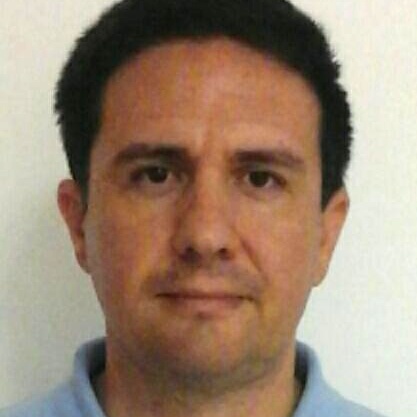
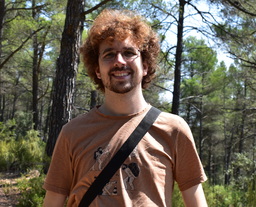
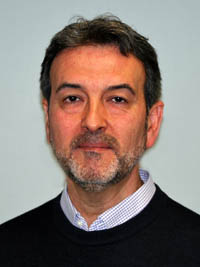
David Lopez Vilariño is a Professor at the Department of Electronics and Computing, Faculty of Physics, University of Santiago de Compostela. He holds a PhD in Electronics from the same university (2001), specializing in active contour algorithms and FPGA implementations. His research focuses on LiDAR data processing, reconfigurable computing architectures, and embedded vision systems. He is a member of the ARQCOMP (Computer Architecture) and Artificial Vision research groups. Education: PhD in Electronics (2001), thesis on 'Active contours at the pixel level: design and implementation on cellular network architectures' under Dr. Diego Cabello Ferrer. Research interests include: LiDAR-based 3D modeling for urban and environmental applications FPGA acceleration for high-performance computing Reconfigurable hardware architectures for embedded vision systems Real-time video surveillance and motion estimation His work bridges hardware-software co-design with advanced sensing technologies, particularly in geomatics and medical imaging applications.
Jose Matias Cutillas Lozano is an Adjunct Professor (part-time) at the University of Murcia's Faculty of Informatics, affiliated with the Department of Computer Science and Systems Engineering. He is associated with the Scientific Computing and Parallel Programming research group. His doctoral thesis (2014) focused on modeling and auto-optimization of parallel metaheuristics and hyperheuristics applied to optimization problems in science and engineering, supervised by Dr. Domingo Giménez Cánovas. His research interests span parallel computing, metaheuristics, hyperheuristics, optimization algorithms, scientific computing, and computational biology. He has also contributed to interdisciplinary studies involving medical applications of computational methods and educational technology integration. Publications demonstrate expertise in hybrid metaheuristics for vector autoregression, parallel hyperheuristics in molecular docking (HYPERDOCK), and computational solutions for medical diagnostics (e.g., echocardiography analysis). Recent work addresses urban flood risk modeling under climate change and ICT integration in education. Dr. Cutillas has no explicitly listed scientific awards but maintains active collaboration through his research group. His work emphasizes multi-level parallelism and optimization techniques, with applications spanning engineering, medicine, and education.
Juan Piernas Canovas is an Associate Professor in the Faculty of Informatics at the University of Murcia, affiliated with the Department of Computer Engineering and Technology. He leads research in the Computer Architecture and Parallel Systems group, focusing on high-performance computing infrastructures. His doctoral work developed transactional file systems with metadata-data separation, establishing frameworks for efficient distributed storage architectures. Current projects optimize parallel processing and computational resource management.
Humberto Martinez Barbera is an Associate Professor at the University of Murcia's Faculty of Informatics, affiliated with the Department of Information and Communication Engineering. His research focuses on robotics, control systems, and telematics engineering. He holds a PhD from the University of Murcia (2001) with a thesis on distributed architectures for autonomous mobile robots. His work emphasizes robotics navigation, sensor fusion, and autonomous systems. Notable projects include the MIMICS project (intelligent transport systems) and contributions to RoboCup robotic football. He has supervised research on AGV coordination, fuzzy logic applications, and underwater robotics. His recent publications span multi-GPU acceleration, underwater grasping, and sensor calibration. He has contributed to international collaborations like the French-Spanish L3M SPL Team. Key technical areas include distributed control architectures, Kalman filtering for attitude estimation, and fluid-structure interaction in sailing vessels. His work bridges theoretical advancements with practical applications in autonomous vehicles and industrial automation.
José R. Herrero is an Associate Professor in the Computer Architecture Department (DAC) at the Universitat Politècnica de Catalunya (UPC), affiliated with the Barcelona School of Informatics (FIB). His primary research area is High Performance Computing (HPC), focusing on parallel algorithms, dense linear algebra, and multicore processor optimization. He has held administrative roles including Vice-Dean for Academic Studies (2010–2013) and Vice-Dean for Institutional and International Relations (2013–2015) at FIB. Education: PhD in Computer Science from UPC (2006), Postgraduate in Training of University Professors (1997), and a Computer Science degree (1993). Teaching experience includes over 15 courses in Computer Architecture, Operating Systems, and Parallel Programming at both undergraduate and graduate levels. Research interests span HPC, parallel computing, and algorithm design. His work emphasizes optimizing matrix computations and linear algebra libraries for modern architectures. Notable contributions include advancements in sparse Cholesky factorization, task-parallel algorithms, and energy-efficient computing. Recognition includes UPC's Teaching Mention for Outstanding Quality (2009, 2014, 2019) and a Certificate of Merit for contributions to scientific computing workshops. He advises numerous PhD students and collaborates internationally, including visiting roles at GeorgiaTech and École Polytechnique de Montréal.
Manuel Hermenegildo is a distinguished academic holding dual appointments as a Full Professor at the Polytechnic University of Madrid (Spain) and a Distinguished Professor at the IMDEA Software Institute. He earned his Ph.D. in Computer Science from the University of Texas at Austin in 1986. His roles include Founding Director of IMDEA Software (2007–2017) and former Director of Spain's national research funding agency. He leads the CLIP Lab (UPM) and contributes to the Ciao programming language and CiaoPP analysis tool. Education: Ph.D. in Computer Science, University of Texas at Austin (1986) Research focuses on global program analysis, verification, debugging, parallelism, and logic programming. He has authored over 250 papers and received prestigious awards like the ACM Fellowship and Spain's Julio Rey Pastor Prize. His leadership roles span international organizations such as INRIA's Scientific Board and the European Association for Programming Languages and Systems (EAPS). Key contributions include static analysis frameworks, energy-aware programming models, and educational tools like the Ciao Prolog Playground. Notable collaborations include the ENTRA project for whole-system energy transparency. His work emphasizes practical applications of formal methods, with projects funded by national and international grants. Advises on policy and research strategy for EU and Spanish science initiatives.
Miguel García Folgado is a Momentum Postdoctoral Researcher at the Institute of Corpuscular Physics (IFIC) under CSIC, with a PhD in Astroparticle Physics from the University of Valencia. He holds dual expertise in theoretical physics research and high-performance computing (HPC) systems administration. His academic journey includes a BSc and MSc in Physics from the University of Valencia, followed by a PhD exploring dark matter models and deep learning applications (2016-2021). He has held postdoctoral positions at the Polytechnic University of Valencia and IFIC, focusing on AI-driven climate change solutions and particle physics phenomenology. Research interests span dark matter phenomenology, deep learning applications in physics and environmental science, and HPC infrastructure optimization. His work integrates theoretical physics with computational tools like TensorFlow/PyTorch and C++ for high-performance simulations. He has developed predictive models for urban traffic, wildfire emissions, and political sentiment analysis using NLP techniques. Miguel is actively involved in maintaining the GLUON HPC cluster at IFIC, managing distributed storage systems (e.g., MinIO), and automating workflows via Ansible. He has authored multiple peer-reviewed articles in journals like JCAP and JHEP, and his doctoral work earned the Extraordinary Doctorate Award. His technical skills include system administration (Linux/RedHat), database management (MySQL/PostgreSQL), and static website development using Hugo.
Dr. José Manuel Claver Iborra is a Full Professor at the Department of Computer Science, School of Engineering (ETSE-UV), University of Valencia. He holds a PhD in Computer Science (Parallel and Distributed Computing program) from the Technical University of Valencia and an MSc in Physics (specialized in Electronics and Computer Science) from the University of Valencia. As an IEEE Senior Member, he focuses on cloud computing, video coding, parallel/distributed systems, reconfigurable computing, and network protocols for real-time applications. Current Research: Cloud-based video encoding, GPU acceleration for DNA analysis, FPGA-based network protocols, and indoor localization systems Academic Leadership: Coordinator of the UV-Tirant node in the Spanish Supercomputing Network (RES) His recent publications analyze GPU-based motion estimation, heterogeneous computing for video standards (H.264/AV1), and QoS scheduling algorithms. He supervises PhD and Master's theses on sensor networks, FPGA programming platforms, and parallel applications. Scientific Awards IEEE Senior Member He has directed funded projects on cloud infrastructure, distributed video processing, and reconfigurable systems since the 1990s.
Juan Felipe García Sierra is a Professor at the University of León, affiliated with the College of Industrial, Computer and Aerospace Engineering within the Department of Mechanical, Computer and Aerospace Engineering. His academic career focuses on interdisciplinary research bridging robotics, computer architecture, and cybersecurity with applications in pharmacology and medical informatics. He earned a PhD in 2011 with the thesis Contributions to visual attention computation and application to the control of a humanoid robot , supervised by Dr. Vicente Matellán Olivera and Dr. Miguel Carriegos Vieira. Education: PhD (2011) from Universidad de León Research Interests García Sierra's work spans robotics (particularly humanoid robot control, augmented reality teleoperation, and elderly assistance systems), cybersecurity (malware analysis, secure coding standards, mobile application security), and medical applications (pharmacology teaching, respiratory training devices). His recent publications explore dynamic electricity tariff optimization, sports supplementation ethics, and workplace health risks in the hospitality industry. Scientific Contributions Developed visual attention models for RoboCup competitions Innovated parallel computation techniques for centrality measures in graphs Created robotics-based teaching tools for pharmacology education He has collaborated extensively with CAFE CIBERSEGURIDAD research groups and applied robotics to unconventional domains like animal herding and elderly assistance.
Kevin Jiokeng is an Assistant Professor in Computer Science at Ecole Polytechnique, working in the Epizeuxis team (Networks research team of LIX laboratory). His research focuses on wireless networks, ubiquitous computing, and their applications in localization technologies, mobile healthcare, and smart environments. Current affiliations: Ecole Polytechnique (since 09/2024), INRIA Lille (03/2022-08/2022), Toulouse INP (PhD, 10/2018-01/2022) Research interests: Wireless networks, ubiquitous computing, localization, mobile healthcare, and smart environments. His recent work involves AI-based network intrusion detection, wireless sensing generalizability, and machine learning applications in smart networking. Scientific achievements: Best student paper award at CoRes 2020 Second prize (ex æquo) of PhD Dissertation Award (GDR RSD & ASF, 2023) 200k€ ANR Young Researcher Program grant (2024) Advising and service: Co-advises two PhD students (Stanislas Lucinski and Lucien Dikla) and serves as reviewer/committee member for IEEE INFOCOM, ACM IMWUT, IEEE WiMob, IEEE CSCN, IEEE SMARTCOMP, ACM SIGCOMM, ACM CoNEXT, and AlgoTel/CoRes conferences.
Naama Ben-David serves as an Assistant Professor at the Technion - Israel Institute of Technology. Prior to this position, she completed a three-year postdoctoral fellowship at VMware Research following her PhD in the Computer Science Department at Carnegie Mellon University, where she was supervised by Guy Blelloch. Her academic foundation includes undergraduate studies at the University of Toronto. Her educational pathway features: PhD in Computer Science from Carnegie Mellon University Undergraduate degree from the University of Toronto Dr. Ben-David's research establishes theoretical frameworks for concurrent systems, specializing in performance cost analysis of concurrent programs through rigorous mathematical methods. Her work bridges theoretical computer science with practical implementations, extending to concurrent data structures and parallel/distributed algorithm design where she actively explores scalability limitations and optimization strategies. Her scholarly recognition includes: Honorable Mention in CMU's School of Computer Science Dissertation Award 2022 PODC Doctoral Dissertation Award NSERC PGSD scholarship Microsoft Research PhD Fellowship During her doctoral studies, she received significant funding through the NSERC PGSD scholarship and Microsoft Research PhD Fellowship. The available documentation does not specify current research grants, student supervision activities, or laboratory affiliations at the Technion.
Ramon Sangüesa Sole is a Professor at Universitat Politècnica de Catalunya (UPC) within the School of Computer Science and Department of Computer Science . He is a member of the IDEAI-UPC (Intelligent Data Science and Artificial Intelligence Research Group) and KEMLG (Knowledge Engineering and Machine Learning Group). Fields of Interest : Artificial Intelligence, Machine Learning, Technoculture, Science Communication, Social Innovation Education : Doctor in Computer Science (UPC) His research focuses on integrating AI with social and environmental contexts, developing algorithmic transparency frameworks, and creating sociotechnical systems. Key projects include democratizing AI through citizen participation and applying machine learning to urban planning and educational innovation. His work emphasizes ethical considerations and interdisciplinary collaboration. Recent publications analyze topics like algorithmic transparency, urban AI applications, and student engagement technologies. Awards include the DISTINCIÓ JAUME VICENS VIVES for research excellence and the 8è Premi a la Qualitat en la Docència Universitària for educational innovation. Sangüesa leads projects in AI-driven design, environmental decision support systems, and personalized learning frameworks.
Jose Francisco Llosa Espuny is a faculty member at the Universitat Politècnica de Catalunya (UPC), affiliated with the Faculty of Computer Science of Barcelona (FIB) and the Department of Computer Architecture. He is a key member of the PM - Programming Models research group and has been involved in numerous competitive R&D projects related to high-performance computing and computer architecture. University: Universitat Politècnica de Catalunya School: Faculty of Computer Science of Barcelona Department: Department of Computer Architecture Research Group: PM - Programming Models Email: josepll@ac.upc.edu ORCID: 0000-0001-7740-3148 His research focuses on advanced computer architecture topics, particularly VLIW processors, software pipelining, register allocation, and compiler optimizations for high-performance and low-power systems. He has also made significant contributions to computer science education, exploring active learning, problem-based learning, and the use of interactive response systems for formative assessment. His recent publications and projects, including the European Master for HPC Curriculum and various HPC education initiatives, highlight his ongoing engagement in both technical research and pedagogical innovation. The articles reflect a strong trend in optimizing processor architectures for performance and energy efficiency, as well as improving teaching methodologies in computer science. He has been involved in significant research projects funded by the Spanish government and the European Union, such as those under the HORIZON 2020 program and various national R&D plans. Llosa Espuny has advised doctoral students, including Manoj Gupta and Francisco Zalamea, indicating his role in mentoring the next generation of researchers. He has collaborated extensively with leading figures in the field, such as Mateo Valero and Eduard Ayguadé, on numerous publications and projects. His work is associated with the Barcelona Supercomputing Center, a key entity in national and European high-performance computing efforts.
Juan Jose Costa Prats is a researcher in the Department of Computer Architecture at the Universitat Politècnica de Catalunya (UPC), affiliated with the Escola Tècnica Superior d'Enginyeria de Telecomunicació de Barcelona. He is a key member of the CRAAX - Centre de Recerca d'Arquitectures Avançades de Xarxes, contributing to advanced research in computing systems and network architectures. His work is deeply integrated into competitive R&D projects, including Horizon Europe and national initiatives focused on digital innovation and infrastructure. Research Interests: Costa Prats specializes in high-performance and distributed computing, with a strong focus on parallel programming models (especially OpenMP), software distributed shared memory (SDSM), cloud computing, virtualization, and cybersecurity. His recent work emphasizes secure and resilient computing systems, particularly through RISC-V-based architectures, hypervisor extensions, and runtime malware detection using opcode analysis and machine learning. He also contributes to educational innovation through remote datacenter laboratories. Publication Trends: His recent publications (2021–2024) reflect a shift toward secure, trustworthy computing environments, especially in cloud and IoT contexts. Themes include RISC-V virtualization, intrusion detection using transfer learning, GPS spoofing detection, and secure development frameworks like Vitamin-V. These works highlight a convergence of system architecture, security, and machine learning. Scientific Awards: No specific awards mentioned in the provided text. Advising and Grants: While no formal students are listed, Costa Prats collaborates extensively with leading researchers such as Beatriz Otero, Ramon Canal, and Javier Verdú. He participates in numerous competitive R&D+i projects funded by the Spanish government and the European Union, including Horizon Europe, RIS3CAT, and national research programs, focusing on cloud resilience, intelligent cloud management, and RISC-V ecosystem development. Labs and Teams: He is an active member of the CRAAX research group at UPC, which works on advanced computing architectures. His research often involves collaboration with the Barcelona Supercomputing Center. His projects, such as Vitamin-V and Remote DasaLAB, indicate involvement in both secure computing environments and innovative educational platforms.
Ramon Canal Corretger is a Full Professor in the Department of Computer Architecture at the Faculty of Informatics of Barcelona (FIB), Universitat Politècnica de Catalunya (UPC). He previously served as Vice Dean of Postgraduate Studies at FIB and leads the VirtuOS (Virtualization and Operating Systems) research group. His work bridges computer architecture, hardware security, and system-level reliability. Doctorate from UPC, co-supervised at the University of Wisconsin-Madison Sabbaticals at Harvard University (2006–2007) and the University of Cyprus (2019–2020) Active leadership in EU-funded projects such as Vitamin-V (Horizon Europe) His research focuses on microarchitecture, processor and memory design, reliability under variability, and security at the hardware-software interface. He explores low-power multicore architectures, virtualization optimizations, and secure RISC-V-based systems. His recent work integrates AI for intrusion detection and privacy-preserving federated learning in fog computing environments. The most recent publications demonstrate a strong trend toward security, reliability, and trustworthy computing , particularly in RISC-V ecosystems and cloud/edge infrastructures. There is increasing emphasis on hardware-software co-design , attack detection via performance monitoring , and energy-efficient secure accelerators using emerging technologies like neuromorphic and photonic computing. Scientific Awards: HiPEAC Paper Awards (2017, 2010) IEEE Senior Member (2016) Fulbright Award (2006) IBM Faculty Award (2000) Best Student Paper at HPCA-6 (2000) Multiple teaching excellence recognitions from UPC and AQU Catalunya First Prize in Epson Foundation Rosina Ribalta Award (2001) He has advised several PhD students including Manish Rana, Zoran Jaksic, and Shrikanth Ganapathy, many of whom received honors such as the Intel Doctoral Student Programme recognition. His research is supported by competitive grants from the Spanish government, EU Horizon programs, and industry collaborations. He is actively involved in the design of secure, reliable, and efficient computing systems for future cloud and embedded applications. He leads the VirtuOS research group, which focuses on virtualization, operating systems, and hardware-software interface optimization. The group contributes to open-source RISC-V initiatives and participates in large-scale European R&D projects targeting trustworthy computing infrastructures.