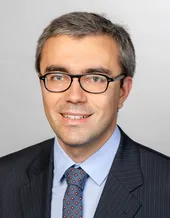
Andrea Cozza is a Professor at the University of Paris, leading research in the Electrical and Electronic Engineering of Paris department. Her work focuses on electromagnetics, signal processing, and reverberation chamber applications. She specializes in time reversal techniques for fault detection, antenna measurement, and field synthesis. Key research areas include improving chamber efficiency through advanced stirring methods and analyzing energy distribution in complex media. Dr. Cozza has authored over 50 publications, including seminal works on time-reversal imaging , soft-fault localization in cables , and statistical modeling of reverberation chambers . Her patents cover novel measurement systems and methods for generating uniform electromagnetic fields. Notable contributions include the development of the TREC (Time-Reversal in Reverberation Chambers) framework for optimizing radiated stress testing. Her research emphasizes practical applications in wireless communications, antenna testing, and material characterization. Collaborations with industry partners highlight her expertise in bridging theoretical electromagnetic principles with real-world engineering challenges.
Prof. Stefano PANUNZI is an Associate Professor at the University of Molise, affiliated with the Division of Engineering (DiBT) and the Biosciences and Territory Department. His research focuses on urban architecture, sustainable regeneration of buildings, telecontiguity systems, and architectural narratives. He explores innovative solutions such as building exoskeletons for urban sustainability and urban cableways. His work integrates technology, cultural heritage, and environmental strategies. Key projects include PalindRoma (urban narratives), Maple Leaf City (biomechanical urban models), and Telecontiguity Systems (online collaboration infrastructure). He has contributed to urban planning studies in Rome and historical metropolitan mapping using remote sensing. His research bridges architecture with multimedia education and sustainable design, addressing both practical and theoretical challenges in urban development. Prof. PANUNZI's publications span over three decades, highlighting his enduring contributions to architectural innovation and urban studies. While no awards are explicitly mentioned, his prolific output reflects significant academic engagement. His advising and grants are not detailed in the provided texts, but his projects imply collaborative research initiatives and academic partnerships. Lab involvement includes the development of telecontiguity systems for distributed education and urban reverse engineering frameworks. His work often emphasizes transforming underutilized urban spaces into dynamic, sustainable environments through interdisciplinary approaches.
BETTAYEB Belgacem is an Associate Professor at the Engineering and Numerical Tools department of CESI. His research focuses on Production Management in Industry 4.0, including optimization of production processes, control of cyber-physical systems, and human-centered manufacturing. He holds a PhD in Industrial Engineering from the University of Grenoble Alps (2012) and advanced degrees in Optimization and Systems Safety (MSc, 2005) and Industrial Systems Engineering (MEng, 2004). Current research projects include the RIN AntiHPert Project, OPTIMAN project, and ReCPPS internal project. He supervises PhD students such as Candice DESTOUET (2022–2025) and Nourddine BOUAZIZ (2022–2025), with Merouane MAZAR having defended his thesis in 2022. His work spans topics like supply chain optimization, human-robot collaboration, and stochastic scheduling under uncertainty. Key contributions include publications on multi-agent systems for collision avoidance, resilient scheduling in Industry 5.0, and fog-supported monitoring in smart factories. His research integrates simulation, optimization algorithms, and machine learning to address challenges in modern manufacturing systems.
Dr. Céline Calvino is a Research Fellow and Junior Group Leader at the University of Freiburg's Living, Adaptive and Energy-autonomous Materials Systems (liv MatS) Cluster of Excellence. She holds a PhD in polymer chemistry from the University of Fribourg (2018) and completed postdoctoral research at the University of Chicago. Her work focuses on developing recyclable, light-responsive, and mechanochromic polymers to address challenges in sustainability and materials science. Calvino has secured significant funding, including a €469,000 grant from the Baden-Württemberg Stiftung for the 'PhotoPolyNet' project collaborating with Prof. Marc Hillmyer. She leads a team of PhD students and postdocs, advancing innovations like strain-sensing polymers and bio-inspired self-toughening materials. Notable awards include the Horst Freisler Project Award (2021) and recognition in the Women Interactive Materials Awards 2024. Education: MSc in Chemistry (University of Fribourg), PhD in Polymer Chemistry (Adolphe Merkle Institute, Fribourg), Postdoc at University of Chicago. Research emphasizes renewable materials, mechanoresponsive systems, and smart polymers for environmental sustainability. Her group's work spans polymer synthesis, material characterization, and interdisciplinary applications in energy and environmental science. Key collaborations include projects on recyclable thermosets and light-driven polymer networks. Publications highlight advancements in mechanochromic materials, cellulose nanocrystals, and adaptive polymer design. Grants and awards reflect her contributions to both fundamental and applied research in materials science.
Prof. Olga Battaia is a Full Professor in the Department of Operations Management and Information Systems at Kedge Business School, serving as Associate Dean for Research. She holds a PhD from École des Mines de Saint-Étienne (2007), recognized with the Best PhD Thesis Award. Her expertise spans Supply Chain Management, Sustainable Manufacturing, Operations Research, and Combinatorial Optimization. She has co-authored over 200 publications and supervised 11 PhD students. Current research focuses on reconfigurable manufacturing systems, human-robot collaboration, and sustainability in supply chains. Editorial Roles: Associate Editor for Journal of Manufacturing Systems, IISE Transactions, Omega. Memberships: CIRP (International Academy for Production Engineering), IFAC Technical Committee 5.2. Research highlights include optimizing vaccine allocation (2025), human-robot ergonomics (2024), and closed-loop supply chain equity (2023). Awards include the 2007 Best Thesis Award. Advising: Co-supervised 11 PhD students. Active in European projects and international conference organization.
Dr. Deepak Akiwate is a University Fellow specializing in aeroacoustics at the University of Salford's School of Science, Engineering & Environment, where he focuses on installed propeller noise prediction and control. Previously, he worked at the Rolls-Royce University Technology Centre at the University of Southampton, conducting research on noise prediction for new propeller-driven aircraft architectures. His educational background includes: PhD in Mechanical & Aerospace Engineering from IIT Hyderabad (2014-2019) M. Tech in Mechanical Design from IIT Hyderabad (2012-2014) Bachelor of Engineering in Mechanical Engineering (2006-2010) Dr. Akiwate's research spans the critical domain of aeroacoustics with particular emphasis on propeller noise mechanisms, propeller-wing interactions, and innovative noise control solutions. His work bridges theoretical modeling, experimental validation, and practical applications in aerospace engineering. He has made significant contributions to understanding noise generation in unmanned aerial systems, fixed-wing VTOL configurations, and overlapping propeller systems, with applications for urban air mobility. His research integrates cutting-edge additive manufacturing techniques to develop novel acoustic metamaterials and noise control structures. Analysis of his publication record reveals a clear research trajectory from fundamental acoustic material properties to complex aeroacoustic systems. Early work focused on additive manufactured acoustic materials and periodic structures, while more recent publications center on propeller noise mechanisms in practical aircraft configurations. His research shows strong industry collaboration, particularly with Rolls-Royce and Boeing, and addresses critical challenges in developing quieter aircraft for future urban air mobility applications. His scientific recognition includes: University Fellowship in Aeroacoustics (2023-2028) Young Professional Grant from International Institute of Noise Control Engineering (2019) Prime Minister's Fellowship Scheme for Doctoral Research (2015-2019) Excellence in Research award from IIT Hyderabad (2016) Gold Medal from Rajarambapu Institute of Technology (2014) Dr. Akiwate actively contributes to the academic community as an Early Career Editorial Board member for the journal Drones, peer reviewer for the Journal of Sound and Vibration and Journal of the Acoustical Society of America, and as an organizer for the Quiet Drones 2024 conference. He has secured research funding through projects like FANTASIA (Future Noise Technologies And Systems Integration Analytics) with Rolls-Royce and AKT With Greenjets. As an early career representative for UKAN+ Physical Acoustics, he plays a key role in connecting academic research with industry applications in acoustics engineering. His work is centered within the Acoustics Innovation Institute at the University of Salford, where he collaborates with multidisciplinary teams to address complex noise challenges in aerospace applications. He has organized significant events including the UK Acoustics Network Plus workshop on Careers in Acoustics and served as session chair for AIAA conferences on propeller noise.
Vladimir A. Pozdin is an Assistant Professor in the Department of Mechanical and Materials Engineering at Florida International University (FIU). He holds a secondary appointment within the university and is actively involved in research and academic leadership. His work focuses on advanced materials and wearable technologies with applications in healthcare monitoring and biomedical engineering. Research Interests: Wearable health monitoring systems In-situ sensing for medical diagnostics Flexible electronics integration Microphysiological systems modeling Light-responsive materials for biomedical applications His research emphasizes developing innovative wearable devices for real-time health tracking, including systems like wireless functional near-infrared spectroscopy for cognitive monitoring and smart wound dressings. He also explores microphysiological systems to model biological barriers and study cellular responses under hypoxic conditions. His work intersects materials science, biomedical engineering, and clinical applications, with a focus on translating lab innovations into practical healthcare solutions. Publications Trends: Recent articles highlight advancements in wearable sensor design, light-controlled peptide ligands for protein purification, and microfluidic models for tissue engineering. These studies often bridge organic electronics, molecular engineering, and clinical diagnostics to address unmet needs in personalized medicine and regenerative therapies. Awards & Recognition: No scientific awards explicitly mentioned in the provided texts. Advising & Grants: Details on student advising and funded grants are not available in this dataset. However, his involvement with initiatives like the CELL-MET and PATHS-UP Engineering Research Centers (ERCs) suggests participation in collaborative, industry-linked projects. Labs & Teams: Affiliated with FIU’s CELL-MET ERC (Cellular Microphysiological Models for Engineering and Toxicology) and PATHS-UP ERC (Personalized Advanced Therapeutic and Health Solutions Using Microphysiological Systems), focusing on translating microphysiological research into clinical and industrial applications.
Michael Rivera is an Assistant Professor of Computer Science at the ATLAS Institute, University of Colorado Boulder. He directs the Utility Research Lab—a highly interdisciplinary group that invents and investigates digital manufacturing technology by combining materials science, computational fabrication, and sustainable design practices. His research has been published in premier human-computer interaction venues including ACM CHI, UIST, DIS, and IMWUT, and featured in national media outlets such as NPR's All Things Considered, Ars Technica, and CBS News. Dr. Rivera earned his Ph.D. and M.S. in Human-Computer Interaction from Carnegie Mellon University's Human-Computer Interaction Institute, where he was advised by Scott Hudson. Prior to CMU, he completed a M.S.E in Computer Graphics and Game Technology and a B.S.E in Digital Media Design at the University of Pennsylvania, and worked as a software engineer at Facebook. Michael Rivera's research focuses on sustainable digital fabrication techniques that democratize access to manufacturing tools while addressing environmental concerns. His work explores bio-based materials, computational recycling approaches, and low-cost fabrication methods. The Utility Research Lab has developed innovative projects including the Desktop Biofiber Spinning Machine for Smart Textiles Design and techniques for 3D Printing with Spent Coffee Grounds. His research bridges materials science, computational design, and human-centered approaches to create more accessible and environmentally responsible fabrication technologies. Rivera's publication record shows a clear trajectory toward increasingly sophisticated computational approaches to sustainable manufacturing. His recent work emphasizes material recycling processes, biofiber development, and computational design pipelines that enable disassembly and reuse of fabricated objects. This research direction reflects a commitment to addressing the environmental impact of digital fabrication while expanding its accessibility to diverse users and contexts. CRA/CCC Computing Innovation Fellowship Google CMD-IT Dissertation Fellowship Carnegie Mellon University Sansom Endowed Presidential Fellowship Adobe Research Fellowship Honorable Mention Xerox Technical Minority Scholarship Dr. Rivera is actively recruiting PhD students to join the Utility Research Lab, demonstrating his commitment to mentoring the next generation of researchers in human-computer interaction and digital fabrication. His research has been supported by prestigious fellowships including the NSF/CRA Computing Innovation Fellowship. He collaborates extensively with researchers across institutions, as evidenced by his co-authorship with scholars from various universities. The Utility Research Lab, directed by Dr. Rivera, serves as a hub for interdisciplinary innovation in digital fabrication. The lab has developed several notable projects that reflect its mission to advance science and engineering while positively impacting people, society, and the environment through sustainable design practices. Current work focuses on computational approaches to material recycling, biofiber design, and novel animation techniques that make fabrication more accessible and environmentally responsible.
Mingkui Wei is an Associate Professor at the Department of Cyber Security Engineering , George Mason University (Fairfax campus). His research focuses on network security, particularly application-layer threats, using mathematical modeling, simulation, and machine learning to combat cyber threats. Previously, he held a faculty position in Computer Science at Sam Houston State University before joining George Mason in 2021. Education: PhD in Computing Engineering, North Carolina State University (2016) MS in Information Systems, Southeast University (China, 2008) His research interests span cutting-edge cybersecurity domains including serverless computing vulnerabilities, CDN-assisted attacks, biometric authentication systems, and smart grid security. Notable contributions include analyzing adversarial hidden link threats via large language models and developing defenses against Wi-Fi spoofing using geolocation APIs. His work also addresses cache exploitation risks and real-time latent fingerprint analysis using smartphones. Recent publications (2021–2024) highlight trends in serverless computing security , CDN exploitation , and web application hardening . Major themes include mitigating DoS attacks through function-level exploitation, enhancing CDN-based geolocation security, and improving phishing detection via machine learning. Awards: No awards explicitly mentioned in the provided text. Advising & Grants: No advising/grant details provided. His research has been published in top-tier venues like IEEE INFOCOM, Usenix Security, and ACM CCS. Labs/Teams: Active in the Cyber Security Engineering research community at George Mason University.
Hao-Wei Chen is an Assistant Professor in the Department of Information Operations and Technology Management at the John B. and Lillian E. Neff College of Business and Innovation, University of Toledo. His academic roles include teaching and research in operations management and supply chain optimization. He holds a PhD in Industrial and Systems Engineering from the University of Minnesota (2011), a Master of Science in Computer Science from Eastern Michigan University (2005), and a Bachelor of Science in Electronic Engineering from Fu Jen Catholic University (2001). Dr. Chen's research focuses on supply chain management, healthcare operations, retail logistics, and quality management. His work explores topics such as fast-ship commitment contracts, inventory risk mitigation, multi-panel clinic resource allocation, and paratransit service efficiency. He has published extensively in journals like Production and Operations Management and IIE Transactions . In 2015, he received the IIE Transactions Best Paper Award for his work on scheduling and logistics. His research bridges theoretical models with practical applications, addressing real-world challenges in retail supply chains, healthcare systems, and transportation networks. He advises on inventory policies, demand-responsive transit systems, and quality improvement initiatives in industrial settings.
Dr. Saravanan Kuppusamy (SK) is an Associate Professor at Rowan University's William G. Rohrer College of Business. He holds a Ph.D. in Operations Management from the University of Cincinnati, along with an M.S. in Industrial Engineering from West Virginia University and a B.S. in Mechanical Engineering from Coimbatore Institute of Technology. His research focuses on sustainable operations, supply chain management, inventory control, transportation optimization, additive manufacturing, and food supply chains. Prior to academia, he accumulated extensive industry experience at Schneider Logistics, PepsiCo, Kimberly-Clark, and Case New Holland across logistics, manufacturing, and consumer goods sectors. Dr. Kuppusamy teaches courses in global supply chain management, supply chain analytics, and business logistics. His publications appear in leading journals including European Journal of Operational Research and Transportation Research Part E.
Jos Winkelman is a Senior Lecturer in Chemical Engineering at the Faculty of Science and Engineering , University of Groningen . His work focuses on catalytic conversion of biomass, pyrolysis technologies, and green chemistry applications. Research areas: Lignin valorization, catalytic pyrolysis, biobased chemicals, reaction kinetics Key collaborations: H.J. Heeres, F. Picchioni, B. Sridharan Recent publications analyze molten salt pyrolysis, furan-maleimide network kinetics, and biomass-derived chemical synthesis. Notable projects include BTX production from polypropylene and hydrocarbon fuels from lignin.
Zhen Zhang is a Researcher at Purdue University's School of Materials Engineering , focusing on interdisciplinary research at the intersection of materials science and biomedical analysis. Their work emphasizes advanced proteomic and metabolomic methodologies using mass spectrometry. University: Purdue University School: School of Materials Engineering Position: Researcher Research Interests Materials Science (e.g., polyoxometalate-based materials) Bioanalysis (e.g., lipid and protein profiling) Proteomics and microprotein discovery Metabolomics and lipidomics Development of chemical labeling techniques Applications in disease diagnostics Publication Trends Zhang's recent publications highlight: Innovative RNA-binding proteome profiling via labeling approaches Lipid metabolism studies in fetal heart defects and asymptomatic COVID-19 Advanced LC-MS methodologies for trace sample analysis Development of polyoxometalate materials for pollutant removal and biomedical applications Exploration of microproteins in cancer and cardiovascular diseases Contact Email: zhan2395@purdue.edu
Alessio Zaccone is a Rudolf Mößbauer Tenure Track Professor at the Technical University of Munich's Institute for Advanced Study, specializing in the Theory of Soft Matter. Previously, he was an Oppenheimer Research Fellow at the Cavendish Laboratory, University of Cambridge. His academic journey includes a PhD in chemical physics from ETH Zurich and postdoctoral work at Cambridge. Politecnico di Torino (undergraduate) Technische Universität Berlin (MSc thesis) ETH Zurich (PhD in chemical physics) Zaccone's research focuses on understanding the relationship between molecular interactions and the collective behavior of condensed matter systems. He investigates mechanical response, morphology, and phase transition behavior in disordered atomic and molecular solids such as metallic glasses and amorphous polymers, as well as colloidal suspensions and biomolecular self-assembling systems. His work combines theoretical physics approaches with computer simulations to uncover fundamental principles governing soft matter behavior. Analysis of his publications from 2011-2016 reveals a consistent focus on soft matter physics, particularly the mechanical properties of disordered materials. His work spans theoretical modeling of polymer networks, colloidal interactions, metallic glasses, and nanoparticle systems. Key themes include nonaffine deformation in amorphous materials, phase transitions in complex fluids, and the relationship between microscopic structure and macroscopic mechanical properties. Scientific Awards: Swiss National Science Foundation (SNF) Professorship (2014) Oppenheimer Fellowship (2011) Alexander von Humboldt Fellowship (2010) Swiss National Science Foundation (SNF) post-doctoral Fellowship (2010) ETH Medal Award for outstanding PhD thesis Zaccone has established significant research collaborations across institutions including ETH Zurich, University of Cambridge, and Technical University of Munich. His work has been supported by prestigious fellowships from Swiss National Science Foundation, Alexander von Humboldt Foundation, and the Oppenheimer Fund. His research bridges theoretical physics with practical applications in materials science and nanotechnology. As a member of the Theory of Soft Matter focus group at TUM-IAS, Zaccone contributes to interdisciplinary research on soft condensed matter systems, working alongside researchers from physics, chemistry, and materials science backgrounds to advance understanding of complex materials behavior.
Guang Li is an Assistant Professor of Management Science and a Scotiabank Scholar at the Smith School of Business, Queen's University. Her research focuses on revenue management, customer choice modeling, and intersections between operations management and marketing, accounting, and finance. She has been funded by NSERC and published in top journals like Operations Research and Manufacturing & Service Operations Management . Education: Ph.D. in Operations Management (2016) – University of Southern California M.Eng. in Materials Science and Engineering (2008) – MIT M.Sc. in Advanced Materials (2008) – National University of Singapore B.Eng. in Materials Engineering (2007) – Nanyang Technological University Research Interests: Guang’s work spans revenue optimization, retail operations, strategic pricing, and sustainability. She employs discrete choice models, NLP, and data analytics to address challenges in supply chains, consumer behavior, and social media impact on mental health. Articles Trends: Recent studies (2023–2025) highlight strategic pricing under consumer learning, remanufacturing technology portfolios, and pandemic-driven retail shifts. Earlier work (2015–2018) explores nested logit models and charitable inventory planning. Awards: Scotiabank Scholar (Queen’s University) Advising & Grants: Funded by NSERC, her projects address retail resilience, customer choice dynamics, and eco-friendly operations. No advisee names are listed in the provided texts. Affiliations: Cross-appointed at the Scotiabank Centre for Customer Analytics, Queen’s University.