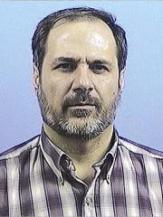
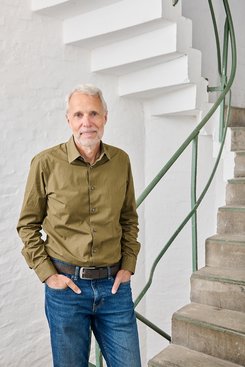
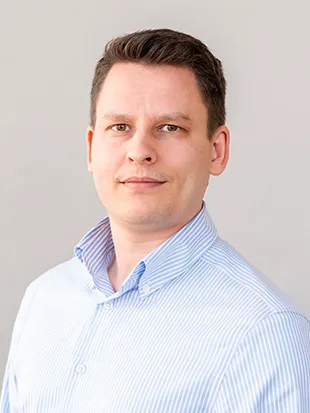
Hossein Saidi is a Professor in the Department of Electrical and Computer Engineering at Isfahan University of Technology, Iran. His research spans High Speed Switching Networks, QoS Algorithms in Broadband Networks, Internet Security, Cryptography, Wireless Networks, Information Theory, and Coding. Research Interests: High Speed Switching Networks, QoS Algorithms, Internet Security, Cryptography, Wireless Networks, Information Theory, Coding Email: hsaidi@iut.ac.ir His recent publications focus on Software-Defined Networking (SDN), Blockchain Consensus, Wireless IoT, and Energy Management Systems. Key themes include network optimization, security protocols, distributed systems, and hardware design.
Kalyanmoy Deb is a Professor at the Department of Electrical and Computer Engineering, Michigan State University. Previously affiliated with Indian Institute of Technology Kanpur and Indian Institute of Technology Madras, he is a leading researcher in evolutionary algorithms and multi-objective optimization. Research Focus : Multi-Objective Optimization, Genetic Algorithms, Constraint Handling, Machine Learning-assisted Optimization Key Contributions : Development of NSGA (Non-dominated Sorting Genetic Algorithm) series, hybridization of machine learning with evolutionary algorithms, fidelity evaluation techniques Scientific Accomplishments : With over 347 publications and 19,618 citations, his work on NSGA algorithms has become foundational in evolutionary computation. His recent research explores mixed-fidelity evaluations, innovized knowledge extraction, and neural architecture search.
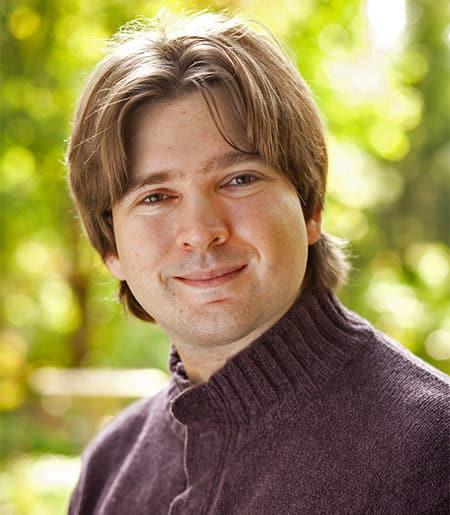
James R. Wilcox is an Assistant Professor of Computer Science at the University of Washington , where he teaches courses like Introduction to Programming , Foundations of Computing , and Operating Systems . His research focuses on programming languages , formal methods , and distributed systems verification . PhD, University of Washington BS, Williams College (2013) Wilcox's research bridges software engineering and formal verification , with applications to distributed systems, concurrent programming, and tools like mypyvy for verification. He has published extensively in top venues such as POPL , PLDI , and CAV , emphasizing compositional techniques and proof assistants like Coq. He has received two Distinguished Paper Awards (PLDI 2015, PLDI 2020) and contributes to frameworks like Verdi for verifying distributed systems. Outside academia, he is a baritone in Seattle's choral ensembles and an avid long-distance cyclist.
Dejan Filipovic is a Professor and holds the Hudson Moore Jr. Chair in Engineering at the University of Colorado Boulder, where he leads the Antenna Research Group (ARG) in the Department of Electrical, Computer, and Energy Engineering. His research focuses on advanced antenna systems for applications including communications, radar, and electronic warfare, with particular emphasis on antenna theory and design. Professor Filipovic's research specializes in antenna theory and design with emphasis on applications of electrically small antennas (ESAs) , simultaneous transmit and receive (STAR) , and wideband microwave and millimeter wave communication systems. His work addresses challenging problems in electronic warfare front-ends, spectrum sensing, and direction finding applications, often incorporating innovative fabrication techniques including 3D printing for rapid prototyping. Analysis of Professor Filipovic's recent publications reveals a consistent focus on wideband antenna systems spanning from HF through millimeter-wave frequencies (0.5-110 GHz). His research group demonstrates expertise in retrodirective and direction-finding arrays , full-duplex communication systems , and the application of additive manufacturing to antenna design. A notable trend is the integration of machine learning techniques to enhance traditional antenna system performance, particularly in direction finding applications. Key scientific recognition includes: NSF Graduate Fellowship Award (awarded to students in his group) Honorable Mention by the NSF Graduate Research Fellowship committee Silver medal in Student Paper Competition at the 2021 ACES Conference Excellence in Outreach Award for departmental and community contributions Professor Filipovic has mentored numerous graduate students to completion of their degrees, with recent thesis defenses including Gabriel A. (MSc on Deployable Electrically Small Folded Cylindrical Helix HF Antenna), Dong-Chan Son (PhD on Wideband, Highly Directional Antennas), and Songyi (PhD on Unconventional Arrays for HF and Other Applications). His research group maintains strong industry and defense connections, as evidenced by visits from notable figures such as Dr. Heidi Shyu, Under Secretary of Defense for Research and Engineering. The ARG laboratory operates a sophisticated research facility featuring an NSI 700S-30 Spherical near-field/far-field measurement system (1-110 GHz), multiple vector network analyzers including Agilent PNAx with OML extensions, and advanced 3D printing capabilities for rapid antenna prototyping. Current research projects include the Signal Processing Electronic Attack RF (SPEAR) Front-End, Flexible and Modular RF Systems for Space Constrained Decoys, and Circulator In Aperture (CIA) research.
Kirstin Petersen is an Associate Professor in the Department of Information Science at Cornell University's Bowers College of Computing and Information Science. She leads the Collective Embodied Intelligence Lab, focusing on collective robotic systems that exhibit emergent intelligent behaviors through local interactions. Her research interests center on collective robotic construction, swarm robotics, soft robotics, and human-robot interaction. Petersen's work explores how groups of simple robots can collaborate to build complex structures, with applications ranging from construction to agriculture. She investigates the principles of embodied intelligence, where the physical form and environment of robots contribute to their capabilities, reducing the need for complex centralized control. Her publication trends show a consistent focus on distributed robotic systems, with recent work expanding into agricultural robotics, human-drone interaction, and novel actuation methods using phase-changing materials. Her research bridges theoretical principles of collective behavior with practical implementations in soft and modular robotic systems. Petersen has advised numerous graduate students who have become prominent researchers in robotics, including Steven Ceron, Nialah Wilson-Small, and Jiahe Chen. Her lab has secured funding for projects related to swarm construction, agricultural monitoring, and soft robotic systems. She leads the Collective Embodied Intelligence Lab at Cornell, which brings together researchers from computer science, mechanical engineering, and biology to develop novel approaches to collective robotic systems. The lab emphasizes both theoretical foundations and practical implementations, with projects ranging from tiny modular robots to agricultural drones.
Amanda M. Holland-Minkley is a Professor at Cornell University, USA, with a focus on computer science education and curriculum design. Her work emphasizes integrating liberal arts principles into computing programs and developing identity-focused pedagogical frameworks. Education: PhD in Computer Science from Cornell University (2004) Her research interests include curriculum innovation, interdisciplinary teaching, and aligning liberal arts values with computing education. She has co-authored numerous publications in journals like J. Comput. Sci. Coll. and conferences such as SIGCSE, often collaborating with peers like Jakob Barnard and Grant Braught. Recent articles highlight her contributions to creating distinctive computing curricula for liberal arts institutions, using structured design processes, and redefining program-level outcomes. She has no listed scientific awards or student advisement records in the provided data.
Andrew Lowell is an Assistant Professor in the Department of Chemistry at Virginia Polytechnic Institute and State University (Virginia Tech), affiliated with the College of Science. His research focuses on natural products, biosynthetic enzymes, and their application in developing new antibiotics. He leads the Lowell Lab, which investigates enzymatic catalysts for drug synthesis and combats antibiotic resistance through innovative strategies like bidentate antibiotics. Education: B.S. Chemistry, Washington State University, 2003 M.S./Ph.D. Organic Chemistry, University of Pennsylvania, 2008 Visiting Scholar, University of Pennsylvania, 2009–2012 Postdoctoral Fellow, Life Sciences Institute, University of Michigan, 2012–2018 Research Interests: The Lowell group explores natural product discovery, biosynthetic pathway elucidation, and biocatalyst-driven chemical synthesis. Key areas include engineering antibiotic candidates (e.g., blasticidin S derivatives), optimizing pleuromutilin-based drugs, and designing bidentate antibiotics to tackle resistant pathogens like MRSA. They integrate organic chemistry, molecular biology, and computational methods to advance drug development. Publications Trends: Recent work emphasizes semisynthetic antibiotic optimization, polyketide synthase engineering, and computational drug design. Key topics include thermorubin synthesis, pleuromutilin epimers, and ribosomal binding studies. Awards: Travel Award, Future of Bioscience (2017) University of Michigan Outstanding Postdoctoral Award (2014–2015) Gardner Stacey Research Endowment (2002–2003) Lab & Future Work: The Lowell Lab at Virginia Tech prioritizes bidentate antibiotic development and enzymatic pathway interrogation. They collaborate on imaging probes for atherosclerosis and investigate glycomaterials with inherent antibacterial properties.
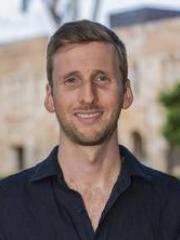
Dr William Woodgate is a Lecturer in the School of the Environment at The University of Queensland and holds dual appointments as an Amplify Research Fellow and Principal Investigator at the CSIRO/TERN-OzFlux Tumbarumba tall forest research site. His research focuses on scaling remote sensing technologies to monitor vegetation productivity and health, particularly using sun-induced chlorophyll fluorescence (SIF) and integrating LiDAR, optical, and thermal imagery. He has been an ARC DECRA Fellow and leads the Tumbarumba flux tower site, one of Australia’s longest-running and globally significant environmental monitoring sites. His research interests span remote sensing applications in climate science, ecosystem monitoring, and environmental satellite product validation. Recent work emphasizes bridging leaf-to-canopy-scale observations and advancing models for evapotranspiration, carbon fluxes, and vegetation structure analysis. Key achievements include contributions to FLUXCOM-X scaling frameworks, development of thermal and hyperspectral proximal sensing systems (THEMS), and validation of satellite products using ground-based measurements. Awards include the ARC DECRA Fellowship (2019) and UQ Amplify Research Fellowship. Collaborations span institutions globally, including CSIRO, TERN, and international research networks like OzFlux. His work addresses critical challenges in climate resilience, water resource management, and ecosystem health through innovative sensing technologies.
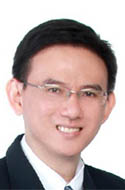
Dr. Kong Kian Hau is a Senior Lecturer at the Department of Civil and Environmental Engineering, National University of Singapore (NUS). He holds a PhD in Civil Engineering (2004) and multiple professional certifications, including Chartered Engineer (UK) and Singapore-registered Professional Engineer. His expertise spans structural engineering, sustainable materials, and seismic design. He has contributed to national codes like BC3:2013 and co-authored an IStructE book on seismic design. Dr. Kong has over 13 years of industry experience in construction projects, including roles as Project Manager and Senior Consultant for residential, commercial, and infrastructure works across Singapore and internationally. Education: PhD (Civil Engineering), NUS (2004) M.Sc. in Advanced Structural Design, NUS (2002) B.Eng. (Civil Engineering, 1st Class Honours), NUS (1999) Research Interests: Structural Repair & Retrofitting Sustainable Building Materials Seismic Design & Dynamic Analysis Precast Concrete Systems Tall Building Systems Professional Activities: Member of IStructE (UK), ACI, RILEM, and CTBUH. Served on global panels like IStructE’s Global Seismic and Dynamic Events (2016–2018, 2024–present). Awarded NUS President Graduate Fellowship (2002) and IStructE/IES Service Awards (2013–2014). Teaching: Leads M.Sc. courses in structural assessment, precast concrete technology, and advanced concrete design. Supervises capstone projects on bridges and modular systems.
David Zywina is an Associate Professor in the Department of Mathematics at Cornell University, part of the College of Arts and Sciences. He holds a Ph.D. from the University of California, Berkeley (2008). His research focuses on number theory and arithmetic geometry, particularly studying compatible Galois representations associated with arithmetic objects like elliptic curves and Drinfeld modules. His work explores the arithmetic properties of these objects and their connections to the Inverse Galois Problem. Teaching includes advanced courses such as MATH 6370 (Algebraic Number Theory) and MATH 7370 (Topics in Number Theory) in Spring and Fall 2025. He also supervises research and reading projects (MATH 4900/4901). Publications span topics including class field theory, elliptic curves, and Galois representations. Key works include studies on splitting fields of characteristic polynomials and maximal Galois actions. Zywina’s research bridges abstract algebraic structures with concrete problems in number theory.
Theresa Windus is a Distinguished Professor and Department Chair at Iowa State University's Department of Chemistry. She leads the Windus Group, which develops computational models to solve environmental and energy challenges, with research focusing on high-performance computing, software interoperability, heavy metal systems, and quantum chemistry methods. Her group specializes in massively parallel algorithms for state-of-the-art computational resources. Her research spans multiple disciplines including: Scalable ab initio Monte Carlo methods GPU implementations of quantum integrals Exascale computing development (NWChemEx project) Rare earth element extraction Aerosol nucleation modeling Her recent publications explore computational chemistry software sustainability, GPU-accelerated quantum chemistry, nanopore modeling, and rare earth element extraction. She has mentored numerous graduate students including Alex, Erin, Daniel Turley, and Zach who received prestigious scholarships.
Dr. Nikola Simidjievski is a Research Fellow at the University of Cambridge's Department of Computer Science and Technology. His research focuses on machine learning applications in natural sciences, including oncology, neuroscience, and biomedical informatics. He specializes in multimodal data integration, dynamic systems modeling, and explainable AI techniques. Simidjievski contributes to interdisciplinary projects such as AI-driven space research and Earth observation systems (e.g., AIAtlas). His work emphasizes computational methods for small-sample biomedical data and interpretable neural networks. Education background not explicitly stated, but his research spans computational biology, aerospace telemetry analysis (e.g., Mars Express spacecraft), and environmental modeling. He collaborates on projects like GalaxAI for spacecraft data analysis and PATHS for medical imaging. Key tools developed include Healnet for biomedical data fusion and RO-FIGS for tabular ensemble methods. No scientific awards listed. Advising no listed students, but contributes to academic initiatives like the Human Brain Project's neuroscience training programs. Engages in open-source projects (e.g., AITLAS toolbox for Earth observation). Current research trends include tabular data augmentation methods (TabEBM, TabMDA) and efficient transformer-based models for medical imaging (PATHS).
Prof. Andreas Kramer is a Professor of Product Design/CAD at the Bremen University of the Arts (HfK Bremen), leading the discipline since 2001. He holds a degree in Industrial Design from the Bergische Universität Wuppertal and has worked in design studios such as Budde&Piltz and archeDesign. His teaching focuses on foundational CAD skills, product design collaborations with traditional craftsmanship (e.g., Silbermanufaktur Koch und Bergfeld), and mentoring BA/MA projects. He offers courses like 'Tools I - Grundlagen Produktdesign' and 'Produktdesign und Kunsthandwerk,' emphasizing sustainability and digital fabrication. His works have received international recognition, and he actively participates in initiatives like the 'Bremen Goes Sustainable' funding program and eco-design talks. Education: Industrial Design, Bergische Universität Wuppertal Professional Experience: Freelance Product Designer since 2001 Research interests include integrating traditional craftsmanship with modern technologies, sustainable product design, and computational design tools. He advises students on individual projects, modular courses, and oversees thesis work through structured workshops and peer reviews. Notable collaborations include projects with the Silbermanufaktur Koch und Bergfeld, while institutional contributions include mentoring programs addressing study organization, digital adaptation, and career planning. He participates in initiatives such as the 'madeby' platform connecting students with industries.
Daniel Albert is an Assistant Professor of Management at Drexel University's LeBow College of Business. He serves on the Drexel University Standing Committee on Artificial Intelligence and is a Senior Fellow at The Wharton School’s Mack Institute of Technology Management. Previously, he held a tenure-track position at the University of Wisconsin-Milwaukee. His academic journey includes a Ph.D. from the University of St. Gallen, Switzerland, and research scholar roles at the Wharton School, University of Pennsylvania. Dr. Albert's research explores strategic management, organizational design, and innovation through computational modeling and empirical analysis. His work integrates psychology and neuroscience principles to study cognition and complex decision-making, with applications in financial services and healthcare industries. Current investigations focus on generative AI in strategic contexts, organizational structure optimization, and behavioral strategy experiments using large language models. Thematic analysis of his publications reveals three dominant clusters: computational approaches to organizational design (43%), cognitive and behavioral strategy frameworks (36%), and AI applications in management/education (21%). His work exhibits increasing methodological sophistication, with recent publications leveraging large-scale data analytics and AI simulation techniques to examine strategic decision-making patterns. Notable Scientific Recognition: Sumantra Goshal Award for Research & Practice (2021) Distinguished Paper Award from Academy of Management (2022) Research Methods Paper Prize from Strategic Management Society (2024) Freddie Reisman Award for scholarly impact (2022) Innovation in Teaching Award for AI integration (2022) Dr. Albert teaches strategy and competitive advantage courses across MBA and Executive MBA programs, incorporating generative AI tools for experiential learning. He provides editorial leadership for the Journal of Organization Design and has served on review boards for Long Range Planning and Organization Science . His research collaborations involve interdisciplinary teams from Wharton's Mack Institute and Drexel's AI initiative, focusing on technology-driven organizational innovation.
Prasit Bhattacharya is an Assistant Professor in the Department of Mathematical Sciences at New Mexico State University (NMSU), affiliated with the College of Arts & Sciences. His research expertise spans Algebraic Topology, Algebraic Geometry, and Number Theory. He can be reached at prasit@nmsu.edu . His research interests focus on advanced topics within algebraic topology, including equivariant geometry, homotopy groups of spheres, Steenrod algebra operations, and motivic homotopy theory. He explores structures such as vector bundles, spectral sequences, and cohomology modules, often addressing disconnected spaces and modular algebraic frameworks. Recent publications highlight trends in motivic homotopy theory, equivariant orientation, and the application of spectral sequences like the Adams spectral sequence. His work also addresses foundational questions in stable homotopy groups and higher associativity of spectra. No scientific awards are explicitly listed in the provided information. His advising and grant activities remain unspecified, as no students or grants are mentioned. The person’s affiliation with specific labs or research teams is not detailed in the text.